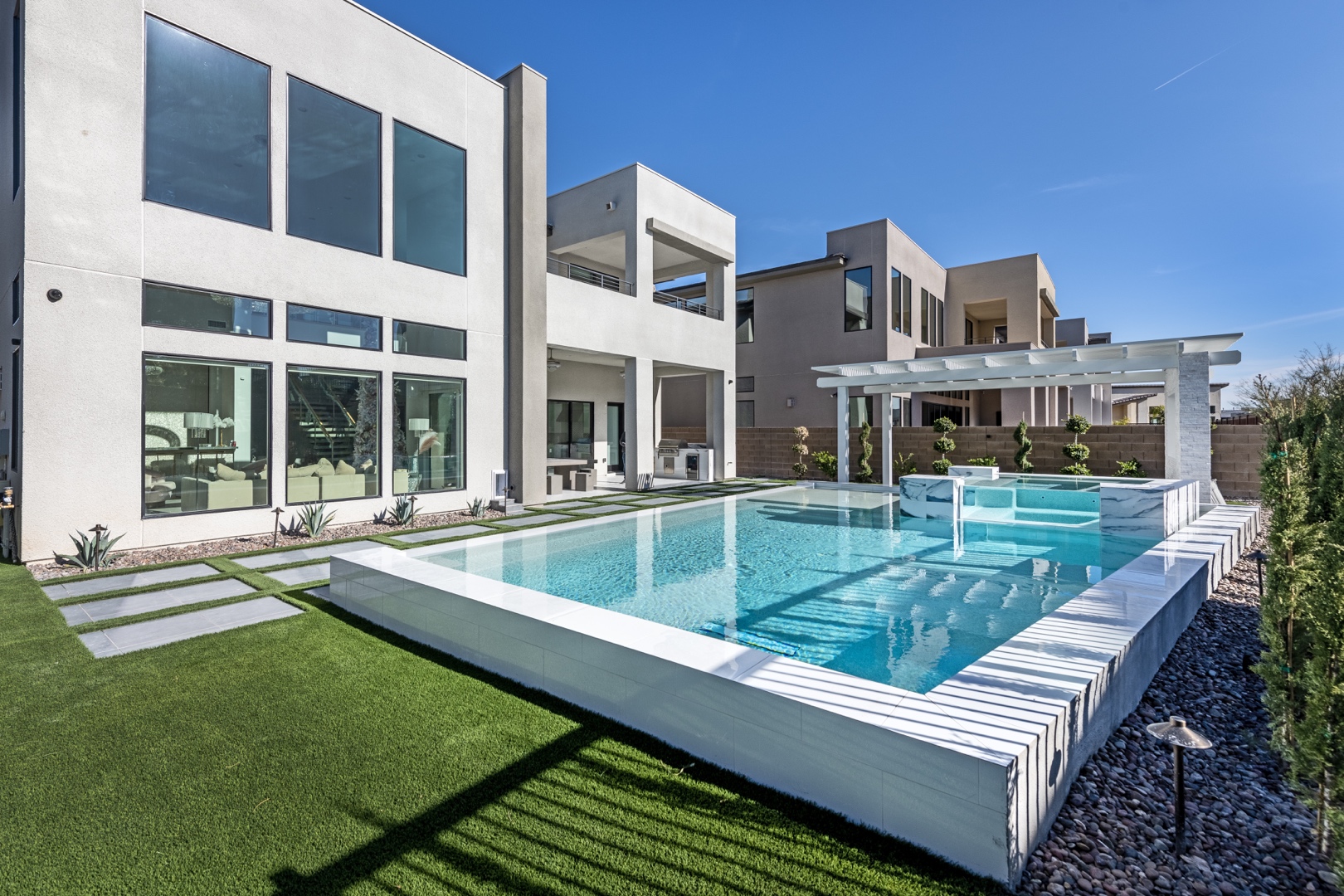
A patio that looks beautiful in a showroom can become difficult to enjoy by midafternoon in Las Vegas. Under intense desert sun, surface temperature, glare, expansion, fading, and maintenance demands all become part of the design decision. To choose heat resistant patio materials well, homeowners need to look beyond color and first cost toward how each finish will perform underfoot, around water, beside fire features, and through years of high-heat exposure.
For a custom outdoor environment, the patio is not simply a background surface. It connects the pool, spa, outdoor kitchen, shade structure, landscape, and furnishing plan into one livable setting. The right material supports the way you entertain and relax while protecting the value of a significant property investment.
Start With Surface Temperature, Not Just Appearance
No hardscape material remains truly cool in direct Southern Nevada sun. The objective is to select finishes that absorb less heat, release heat more quickly, and provide comfortable routes between key outdoor living areas. Material color, density, texture, installation method, and shade coverage all influence how a patio feels at 3:00 p.m. in July.
Light, mid-tone, and naturally variegated colors generally perform better than dark charcoal, espresso, black, or heavily saturated tones. Dark surfaces absorb more solar energy and can become uncomfortably hot, even when the material itself is durable. That does not mean a darker finish is always off the table. It may be appropriate for a covered dining terrace, a shaded courtyard, or an accent border where it will not be the primary barefoot walking surface.
Texture requires balance. A lightly textured or brushed finish can improve traction around pools and reduce glare, but a deeply rough surface may be uncomfortable for bare feet and harder to clean. In a luxury pool environment, a thoughtfully selected texture should feel refined rather than aggressive.
Choose Heat Resistant Patio Materials by Zone
One material does not need to do every job. A more successful outdoor plan often uses complementary surfaces based on exposure, function, and visual importance. This approach creates distinction without making the property feel pieced together.
Pool Decks and Barefoot Areas
Pool decks demand the most careful material selection because they are regularly used without shoes. Travertine remains a respected choice for high-end desert pool environments. Its natural porosity and lighter colors can help it feel cooler than many dense, dark hardscape options. Tumbled or brushed finishes also provide a relaxed, elegant texture that suits both contemporary and Mediterranean-inspired properties.
Travertine requires professional material selection and installation. Quality varies, and proper setting materials, grout details, drainage preparation, and joint planning are essential. In freeze-thaw climates, its performance considerations are different, but Las Vegas homeowners must still account for irrigation overspray, pool chemistry, and the maintenance expectations of natural stone.
Porcelain pavers are another strong option, particularly for modern designs. Premium exterior-rated porcelain can offer excellent color consistency, stain resistance, and low water absorption. Many collections convincingly reproduce stone or concrete while providing a controlled, durable surface. However, not every porcelain product is suitable for a pool deck. The selected finish must be rated for exterior wet use, provide appropriate slip resistance, and be installed over a properly engineered base or pedestal system.
Main Patios and Entertaining Terraces
For broad entertaining areas, large-format concrete pavers, architectural concrete, natural stone, and porcelain can all perform beautifully. Concrete pavers give designers flexibility with patterns, border detailing, curves, and repair access. Their modular construction can also be an advantage when future service work is needed around landscape lighting, irrigation, or utilities.
Cast-in-place concrete can be cost-effective and highly customizable, but it needs disciplined detailing to look and perform like a premium finish. A pale integral color, controlled joint layout, quality curing, and an appropriate texture make a substantial difference. Decorative coatings and some stamped patterns can become hot or visually dated if selected without regard for the home’s architecture. Concrete should be designed as a lasting architectural surface, not treated as an afterthought.
Natural stone brings variation and permanence that manufactured products cannot fully duplicate. Limestone, sandstone, and select flagstone can work well when their density, finish, color range, and sourcing are appropriate for the project. A stone sample viewed indoors is not enough. It should be evaluated outdoors in direct sun, near the home’s exterior palette, and alongside pool water or landscape materials when those elements are part of the plan.
Outdoor Kitchens, Fire Features, and Covered Spaces
Around an outdoor kitchen or fire feature, heat resistance means more than cool walking surfaces. Countertops, veneer stone, grout, cabinet finishes, and adjacent paving must tolerate radiant heat, grease, weather, and repeated cleaning. Dense natural stone, properly specified porcelain, and masonry products are often excellent choices, but clearances and construction details must align with appliance requirements and local code.
Covered patios allow greater freedom with darker or more dramatic materials because overhead structures reduce direct solar exposure. Even so, reflected heat from surrounding walls, glazing, or a nearby pool can raise temperatures. The design team should consider the entire microclimate, not just whether a roof is present.
Do Not Overlook Installation and Drainage
A beautiful paver or stone can fail prematurely when installed over an inadequate base. In the Las Vegas Valley, intense sun and dry conditions can conceal problems until seasonal rain, irrigation leaks, or settlement reveal them. Proper excavation, base preparation, edge restraint, compaction, expansion planning, and drainage are construction essentials, not upgrades.
Drainage deserves particular attention around pools, covered patios, and outdoor kitchens. Water should be directed away from structures and managed so it does not undermine paving, collect at thresholds, or create slippery areas. Surface slopes, channel drains, scuppers, and landscape grading should be coordinated early in the design process, before final materials are ordered.
Joint materials also matter. Sand-set pavers, mortared stone, and porcelain systems each have different requirements. Using the wrong grout, bedding material, or sealant can lead to staining, cracking, movement, or difficult repairs. A licensed design-build contractor brings value by coordinating the surface choice with the engineered construction assembly underneath it.
Design for Shade and Reflection
The coolest patio material can only do so much when it receives uninterrupted desert sun all day. Shade is often the most effective comfort upgrade available. Pergolas, solid patio covers, cantilever umbrellas, shade sails, and mature desert-adapted trees can reduce direct exposure while giving the landscape depth and structure.
Placement is just as important as the shade feature itself. A dining area used in the evening may need western exposure control, while a poolside lounge zone may benefit from partial afternoon shade without blocking desirable winter sunlight. Photorealistic design visualizations can help homeowners see how paving colors, shade structures, furniture, and planting work together before construction begins.
Also consider reflected heat. White walls, expansive windows, artificial turf, water, and neighboring hardscape can all alter how a space feels. A patio planned as part of a complete environment will be more comfortable than one selected in isolation.
Balance Maintenance With the Look You Want
Every material involves trade-offs. Natural stone offers character and a high-end finish, but it may require periodic sealing and more attentive cleaning. Porcelain is low maintenance and highly consistent, though it can lack the depth and variation some homeowners want from real stone. Concrete pavers are versatile and serviceable, but their joints need occasional attention. Cast concrete can create a clean, tailored look, yet cracks and joint lines must be anticipated as part of the system.
The best choice is rarely the material with the lowest initial price or the most dramatic sample. It is the one that suits the architecture, your maintenance preferences, the project’s exposure, and the daily use of each patio zone. For a pool-centered backyard, that decision should also coordinate with coping, waterline tile, decking transitions, and drainage elevations.
A Patio Should Support the Entire Outdoor Living Plan
Premium hardscape is a long-term construction decision. At Green Planet Landscaping & Pools, material selections are evaluated within the larger master plan, including pool engineering, masonry, landscape, lighting, water use, access, and permitting requirements. This level of coordination helps prevent a beautiful patio from becoming the weak link in an otherwise exceptional outdoor environment.
Before finalizing a surface, view full-size samples in the actual installation area, at several times of day. Walk on them in direct sun, place them beside the pool finish and exterior walls, and ask how the proposed installation will manage drainage, movement, and future service needs. A patio designed for the desert should invite you outside when the day is at its brightest, not ask you to wait for sunset.