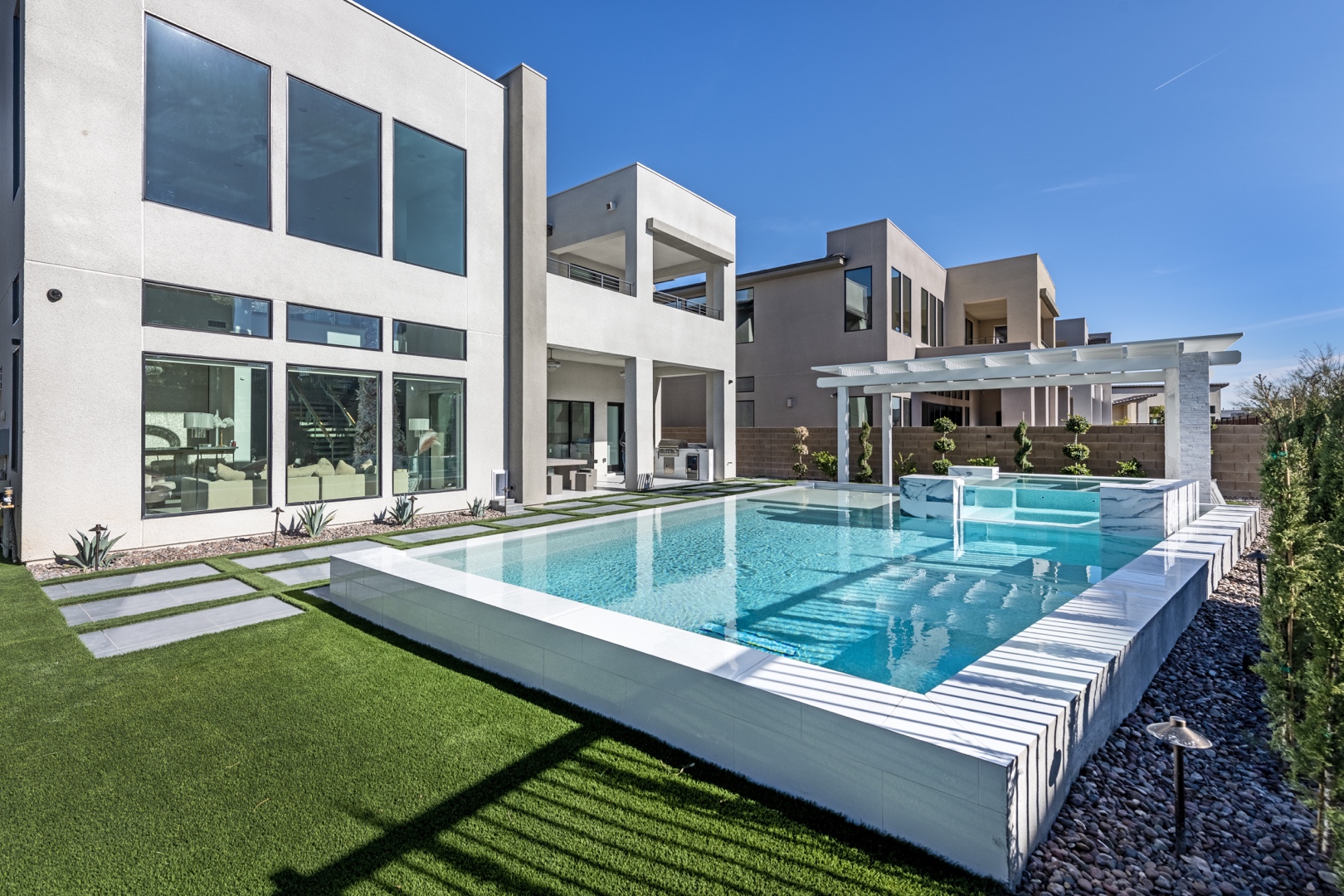
A Las Vegas outdoor kitchen countertop has to do more than look impressive at a dinner party. It must withstand intense UV exposure, sudden temperature swings, windblown dust, grease, spills, and the daily use that comes with a true outdoor living space. The best outdoor kitchen countertops balance heat resistance, low maintenance, structural performance, and a finish that belongs with the home, pool, patio, and landscape.
For a custom backyard, countertop selection should not be an isolated decorating decision. Its thickness, weight, edge profile, color, and support requirements influence the masonry base, appliance layout, lighting, drainage, and overall visual composition. A well-planned material will continue to look refined long after the first season of entertaining.
What the Best Outdoor Kitchen Countertops Need to Handle
Desert conditions quickly expose weak material choices and poor installation practices. A surface that performs beautifully in an indoor kitchen may fade, stain, crack, or become uncomfortably hot outdoors. Las Vegas homeowners should prioritize materials with strong UV stability, low water absorption, and proven resistance to heat and thermal movement.
The countertop must also work with how the kitchen will be used. A small grill station needs a durable landing surface and room for serving platters. A larger entertainment kitchen may include a pizza oven, bar seating, refrigeration, sink, storage, and multiple cooking zones. Each feature creates different heat, clearance, and support considerations.
Appearance matters just as much. Countertops often form the visual bridge between an exterior home’s architecture and the hardscape below. The right slab can repeat the tones of a pool coping, complement a fire feature, or provide a crisp contrast against textured stone veneer and cabinetry.
Porcelain: A Leading Choice for Desert Outdoor Kitchens
Large-format porcelain slabs are among the strongest choices for luxury outdoor kitchens in Southern Nevada. They are manufactured for consistent performance and are available in finishes that convincingly resemble limestone, marble, concrete, travertine, and natural wood. This gives homeowners considerable design freedom without taking on the maintenance demands of more porous materials.
Porcelain is highly resistant to UV fading, staining, moisture, and common food spills. It also tolerates high temperatures well, making it particularly practical near grills and cooking areas when installed with the proper clearances and substrate. Its nonporous surface typically requires only routine cleaning with mild soap and water.
The trade-off is fabrication. Porcelain requires experienced handling, precise cutting, specialized tools, and correctly engineered support. Thin slabs can be exceptionally strong once installed, but they are not forgiving of an uneven base or an unsupported overhang. A design-build team should coordinate slab dimensions, seams, edge treatments, and cabinet or masonry support before construction begins.
Granite and Quartzite: Natural Stone With Lasting Character
Granite remains a dependable outdoor countertop material because it is naturally durable, heat tolerant, and available in colors that suit both contemporary and traditional landscapes. Dark granites can create a dramatic, tailored look alongside stainless appliances, while lighter selections can soften a stone-clad kitchen and coordinate with pale pavers or pool decking.
Quartzite is another compelling natural-stone option for homeowners who want veining and movement with substantial hardness. It often delivers a more elevated, organic appearance than granite, especially in a large entertaining island. However, not every quartzite slab performs identically. Some stones are more porous than others and need periodic sealing to help protect against oils, wine, citrus, and cooking residue.
With either material, slab selection should happen in person whenever possible. Natural variation is part of the value, but it also means the color and veining seen in a small sample may not represent a full countertop. A thoughtful layout can position the most distinctive portions of the slab where they will be appreciated rather than interrupted by a sink cutout or grill opening.
Concrete: Customizable, but Detail-Dependent
Concrete countertops offer an architectural look that can be shaped around a particular kitchen design. They can be cast in custom dimensions, tinted to complement the surrounding masonry, and finished with a modern honed texture or a more handcrafted appearance. For a one-of-a-kind outdoor environment, concrete can create a substantial, integrated presence.
Its limitations are worth acknowledging before making a commitment. Concrete is heavy, so the supporting structure must be designed accordingly. It can also develop hairline cracks over time as the material cures and responds to environmental movement. Many homeowners appreciate this natural patina; others expect a perfectly uniform surface and may find it disappointing.
Quality control is especially important. Proper reinforcement, mix design, curing, sealing, and expansion planning determine whether a concrete countertop ages gracefully or becomes a maintenance concern. It should be specified as part of the overall construction plan, not treated as a last-minute finish material.
Materials to Approach Carefully Outdoors
Engineered quartz is a popular interior countertop, but it is generally not the preferred choice for exposed outdoor kitchens in the Las Vegas climate. Direct sunlight and extreme heat can contribute to discoloration, fading, or warranty limitations, depending on the manufacturer and installation conditions. A covered patio may reduce exposure, but it does not automatically make every indoor-rated material suitable.
Marble can be striking, particularly in a Mediterranean or resort-inspired setting, yet it is softer and more reactive than granite, quartzite, or porcelain. Etching from acidic foods, staining, and weathering are realistic considerations. It may be appropriate for a protected bar area where the owners welcome a lived-in patina, but it is rarely the most practical choice beside a heavily used grill.
Tile counters can be cost-effective and visually flexible, although grout lines add maintenance and can interrupt the clean, expansive look many high-end outdoor kitchens seek. Tile is often better reserved for decorative vertical faces, backsplashes, or selected accent areas than for the main food-preparation surface.
Choosing Color, Finish, and Edge Details
In full sun, color is a comfort issue as well as a design choice. Very dark surfaces absorb more heat and can become difficult to touch during summer afternoons. Lighter porcelain, pale granite, and soft gray or sand-toned quartzite tend to be more comfortable while reflecting the restrained palette common in refined desert landscapes.
Finish affects both appearance and maintenance. A polished natural stone surface provides depth and a formal sheen, while honed or leathered finishes can reduce glare and create a more relaxed architectural character. Textured finishes should be considered carefully around food-preparation areas because deeper texture can hold dust, grease, and residue.
Edge profiles should align with the architecture and the intended use of the space. A clean eased edge complements contemporary kitchens. A thicker mitered edge can make porcelain or stone appear more substantial. Bullnose edges offer a softer traditional look and can be more comfortable around seating areas. The details are small, but they shape the finished impression of quality.
Installation Is as Important as the Slab
Even the right material can fail when installed over a poorly built base. Outdoor kitchen frames and masonry structures must be level, stable, and designed to carry countertop weight, appliances, and seating overhangs. In desert construction, movement joints, moisture management, and appropriate exterior-rated setting materials also matter.
Planning should account for grill cutouts, insulated jackets where required, appliance ventilation, electrical outlets, gas lines, plumbing, and access panels before the countertop is fabricated. Last-minute field changes can compromise the slab, create awkward seams, or interfere with required clearances.
For projects that combine a pool, patio cover, fire feature, and kitchen, the countertop should be reviewed in the same design phase as the complete outdoor environment. Green Planet Landscaping & Pools uses detailed planning and construction coordination to ensure that finish selections support the function, engineering, and visual continuity of the entire backyard.
A Smart Investment Starts With How You Entertain
The best choice is rarely the most expensive slab in a showroom. It is the material that suits the exposure of the site, the architecture of the home, the level of maintenance the owner wants, and the way family and guests will gather around the kitchen. Porcelain is often the leading all-around option for low-maintenance desert performance, while granite, quartzite, and custom concrete each offer compelling advantages in the right setting.
Before approving a countertop, view a full sample outdoors, touch it in direct sun, and consider it beside the selected cabinetry, veneer, pavers, and pool materials. That extra level of planning helps turn an attractive counter into a lasting centerpiece for the outdoor living room you will use for years.