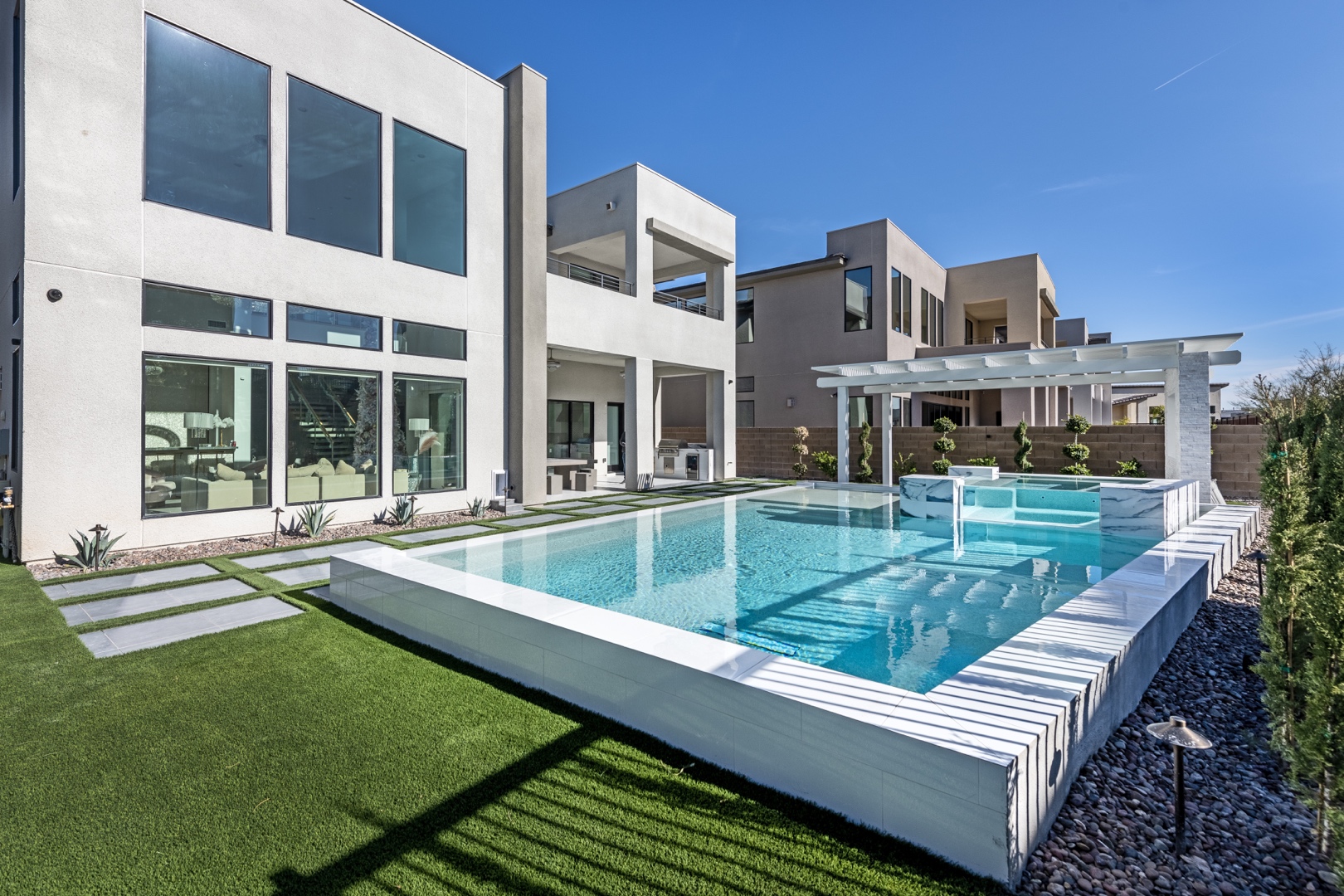
A mature tree can change how a Las Vegas property is used. It cools a pool deck in late afternoon, gives an outdoor dining area relief from direct sun, softens masonry and stucco, and adds the sense of permanence that turns a backyard into an outdoor living environment. The best drought tolerant shade trees do all of that without demanding the water use or constant intervention of a less suitable species.
The key is to look beyond the nursery tag. A tree that tolerates desert conditions is not automatically right beside a pool, near a wall, or above an outdoor kitchen. Canopy width, root behavior, litter, irrigation zoning, mature height, wind exposure, and winter cold all deserve consideration before planting. The strongest landscapes select trees as part of a complete plan, not as a last-minute attempt to fill an empty corner.
What Makes a Shade Tree Right for a Las Vegas Landscape
Drought tolerance does not mean a tree needs no water. Every new tree needs consistent, deep irrigation while it establishes a broad root system. In Southern Nevada, that establishment period commonly lasts two to three growing seasons, sometimes longer for larger specimen trees. Afterward, a properly selected tree can transition to a lower-frequency, deep-watering schedule appropriate to its species, soil, exposure, and season.
True shade also takes time. Fast-growing trees can be tempting, but they may develop weaker branch structure, require more corrective pruning, or create a shorter-lived result. Slower trees may cost more initially and take patience, yet they can deliver better form and greater long-term value. For premium outdoor environments, the appropriate choice is usually the tree that fits the site at maturity, not simply the one that looks fullest on installation day.
7 Best Drought Tolerant Shade Trees for Las Vegas
1. Desert Museum Palo Verde
The Desert Museum palo verde is one of the most recognizable choices for desert landscapes, and for good reason. Its green trunks, fine foliage, and vivid yellow spring flowers create a sculptural, distinctly Southwestern presence. It generally reaches 20 to 30 feet tall and wide, producing filtered shade that works beautifully around patios, decomposed granite, and desert planting compositions.
This tree performs best in full sun and well-drained soil. Its open canopy will not create the dense shade of a large mesquite or elm, but it provides meaningful cooling while allowing light to move through the landscape. Proper structural pruning is essential, especially while young, to develop strong limbs and preserve clearance over walks and seating areas.
2. Chilean Mesquite
For broad, practical shade, Chilean mesquite remains a leading option. A well-grown specimen can reach 30 to 40 feet or more in height and spread, with a wide canopy that is especially effective over lawn alternatives, play areas, and large outdoor gathering spaces. Its small leaves create a pleasant dappled shade rather than an overly dark canopy.
Mesquite needs room. It is not the right choice for a narrow side yard, directly over a water feature, or close to delicate hardscape. Fallen leaves and seed pods can require periodic cleanup, and mature trees benefit from professional pruning to manage weight and maintain sound structure. When located thoughtfully, however, a mature mesquite can become the defining shade feature of a desert property.
3. Chinese Pistache
Chinese pistache offers a more formal shade-tree character than many desert natives. It develops a rounded canopy, often matures at 30 to 40 feet, and is valued for its attractive fall color – a notable bonus in a region where seasonal foliage can be limited. Once established, it handles heat and dry conditions well, though it appreciates a reliable deep-watering program.
This is a strong choice for front-yard focal points, streetscape-style planting, and properties where the architecture calls for a refined, deciduous canopy. Select male cultivars where possible to avoid fruit litter. Like many broad-canopy trees, it should be set back appropriately from walls, pools, and utilities so its mature form has room to develop.
4. Chinese Elm
Chinese elm can provide substantial shade relatively quickly, with mature dimensions commonly in the 35- to 50-foot range depending on the cultivar and site. Its arching form, small leaves, and exfoliating bark give it visual interest throughout the year. It tolerates urban heat, reflected sun, and dry conditions better than many traditional shade trees.
The trade-off is management. Chinese elm can grow vigorously, and poorly maintained specimens may develop crowded branching or surface-root concerns when planted too close to paving. Choose a quality cultivar, allow generous setbacks, and plan for periodic arboricultural pruning. In the right location, it delivers the large-scale canopy that many expansive Las Vegas yards need.
5. Arizona Oak
Arizona oak is a compelling option for homeowners who want a more substantial, traditional tree with desert-region credentials. It grows more slowly than mesquite or elm, but its dense, handsome canopy and strong presence reward that patience. Mature size often falls in the 30- to 40-foot range, with variation based on irrigation, soil, and exposure.
This tree is best suited to projects where a long-term landscape framework matters more than instant fullness. It requires thoughtful establishment irrigation and benefits from well-drained soils. Its heavier shade can make it particularly valuable near a lounge area or west-facing terrace, although the planting design should account for reduced light beneath the canopy.
6. Texas Ebony
Texas ebony is a refined, evergreen-to-semi-evergreen choice for smaller areas that still need meaningful shade and architectural structure. Its dark green foliage, textured branching, and fragrant flowers give it a more formal appearance than many arid-climate trees. It usually matures around 20 to 30 feet tall and wide, making it manageable for courtyards and intimate outdoor rooms.
Growth is relatively slow, and some forms have thorns, so selection and placement matter. It should not crowd circulation paths or pool access. For a contemporary xeriscape, however, Texas ebony can create a dense visual backdrop and comfortable shade without the scale of a major canopy tree.
7. Desert Willow
Desert willow is not the largest shade producer on this list, but it earns its place in smaller yards and layered planting plans. Usually reaching 15 to 25 feet tall and wide, it has graceful branching and showy flowers in shades of pink, purple, or white. It is an excellent companion tree near a spa courtyard, seating nook, or secondary patio where filtered shade and seasonal color are more useful than a massive canopy.
It is highly adapted to heat and arid conditions, but its naturally open form benefits from regular structural pruning. Desert willow is often most successful when used in groups or paired with a larger canopy tree elsewhere on the property.
Plan the Tree With the Entire Outdoor Environment
A shade tree affects more than planting beds. It influences pool water temperature, the comfort of a fire feature, outdoor lighting performance, solar exposure, privacy, and the long-term condition of hardscape. A large deciduous canopy on the west side of a home can reduce punishing afternoon exposure in summer while allowing more winter sun after leaf drop. An evergreen or semi-evergreen tree may offer greater privacy, but it can also cast shade where winter warmth is desirable.
Before selecting a species, evaluate these practical conditions:
- The tree’s mature canopy spread and its distance from structures, pool coping, walls, and power lines.
- Whether the intended shade should be dense, filtered, seasonal, or year-round.
- The irrigation zone, soil drainage, and ability to provide deep establishment watering.
- Expected leaf, flower, or pod drop near pools, kitchens, and finished hardscape.
- Wind exposure and the need for formative pruning as the tree matures.
A common mistake is placing a large tree too close to a pool or patio because it appears modest at installation. The result may be roots competing with hardscape, heavy branch growth over the water, or a canopy that blocks views and lighting. Conversely, placing a tree too far from the area it is meant to cool can limit its benefit for years.
Establishment and Long-Term Care Matter
Even the most drought-tolerant selection can struggle when planted incorrectly. The root flare should sit at or slightly above finished grade, not buried beneath decorative rock. Irrigation should encourage roots to move outward and downward rather than remain concentrated at the trunk. Deep, infrequent watering is generally more effective than frequent shallow cycles once the tree is established.
Avoid excessive fertilizer and overwatering, both of which can push soft, weak growth and create avoidable health issues. Rock mulch also intensifies heat around planting areas, so species selection, soil preparation, and irrigation design must work together. Professional pruning during the early years is one of the soundest investments a homeowner can make in the safety, shape, and lifespan of a shade tree.
For a complete outdoor project, Green Planet Landscaping & Pools considers shade planning alongside pools, patios, outdoor kitchens, drainage, lighting, irrigation, and circulation from the earliest design stages. That coordinated approach helps ensure the canopy serves the finished environment rather than competing with it.
The right tree should feel inevitable once it matures: a living part of the architecture that makes the outdoor space cooler, more private, and more inviting every season.