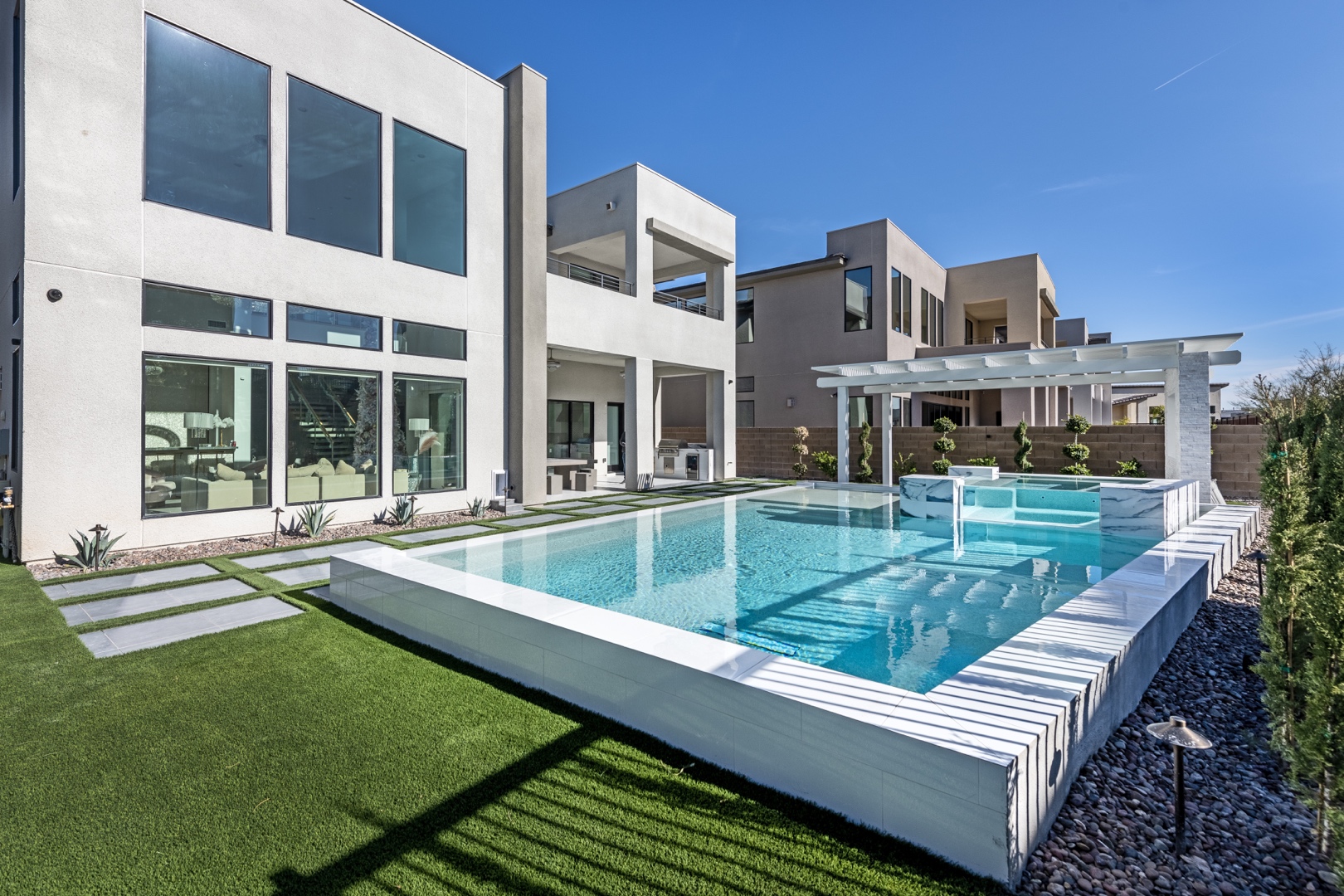
A vanishing edge can make a backyard feel as though it extends into the desert horizon, city lights, or a distant mountain view. But are infinity pools practical for a Las Vegas home, or are they primarily a visual statement? The honest answer is that they can be exceptionally practical when the property, architecture, engineering, and homeowner’s lifestyle support the design. When they are added without that level of planning, they can become an expensive feature that asks more of the site and the owner than expected.
For a custom outdoor environment, an infinity pool should never be considered in isolation. The edge, catch basin, equipment, deck elevations, drainage, sightlines, landscaping, and water-management strategy must work as one coordinated system. That is where the difference lies between a dramatic, enduring poolscape and a beautiful rendering that proves difficult to live with.
Are Infinity Pools Practical? It Depends on the Site
An infinity pool, also called a negative-edge or vanishing-edge pool, allows water to flow over one or more edges into a lower catch basin. Water is then collected, filtered, and returned to the pool. From the right viewing angle, the water surface appears to merge with the landscape beyond it.
The design is most naturally suited to properties with elevation changes or a meaningful visual focal point. A hillside lot, raised yard, golf course view, desert wash, or panoramic city outlook can give the disappearing edge a clear purpose. On these sites, the pool can frame the view while creating a strong architectural relationship between the home and the outdoors.
A flat lot can also accommodate an infinity edge, but it requires a more deliberate design rationale. The edge may face a fire feature, sculptural wall, mature planting composition, or a carefully designed water feature rather than an open horizon. In this setting, the practical question becomes whether the edge adds enough visual value to justify the additional construction, equipment, and maintenance requirements.
Property geometry matters as much as the view. The catch basin needs room below the vanishing edge, and the surrounding grade must allow for proper drainage, structural support, and equipment access. Setbacks, utilities, retaining walls, easements, and local code requirements may influence what is possible. An experienced design-build team studies these conditions before promising a particular pool shape or edge treatment.
The Construction Requirements Behind the Effect
The clean visual line of an infinity pool is supported by substantial work below the surface. Unlike a conventional pool, a negative-edge system needs a precisely engineered overflow edge, a collection trough or lower basin, additional plumbing, and controls that keep water levels stable. Structural engineering becomes especially important when the pool is elevated, integrated with retaining walls, or built near sloped terrain.
Precision is not optional. The vanishing edge must be installed at a consistent elevation so water sheets over it evenly. If the edge is out of level, the flow can appear heavier on one side and diminish the intended effect. Tile selection, coping details, and the finish of the catch basin also deserve careful attention because these elements remain visible and are exposed to constant water movement.
In Las Vegas, construction planning must also account for intense heat, expansive soils in certain areas, monsoon rain events, and rapid evaporation. Proper waterproofing, drainage, equipment sizing, and durable materials protect the investment long after the initial visual impact. A lower-priced approach that overlooks these technical details can create costly correction work later.
Permitting and code coordination should be part of the process from the beginning. Depending on the project, plans may involve structural documentation, electrical coordination, safety barriers, drainage requirements, and municipal approvals. For homeowners undertaking a significant backyard renovation, one accountable team that can coordinate design, engineering, permits, and construction supervision is a practical advantage in itself.
Water Use and Energy in a Desert Climate
Water use is a reasonable concern for any Las Vegas pool owner, and an infinity edge changes the conversation slightly. Water moving across an exposed edge has more surface area and can increase evaporation, particularly during hot, dry, windy conditions. Splash-out from the edge and the catch basin also needs to be managed.
That does not mean a negative-edge pool is inherently wasteful. A properly designed system recirculates the collected water, and automation can help maintain the right operating level. A pool cover, thoughtful wind protection, and efficient equipment can further reduce unnecessary water loss and energy consumption. The edge does not need to run at full visual flow every hour of every day. Many owners schedule it for entertaining, evening enjoyment, or the times when the backyard is most in use.
The most responsible approach is to consider water and energy performance during master planning, not after construction. Equipment can be sized for actual pool volume and hydraulic demands. Variable-speed pumps, automation, efficient lighting, and a water-smart surrounding landscape all contribute to a more considered outdoor environment.
Maintenance Is More Specialized, Not Impractical
An infinity pool has more components than a standard skimmer pool, so it requires more attentive maintenance. The catch basin needs regular cleaning, water chemistry must be monitored across the system, and the pumps, filters, valves, and level controls need periodic inspection. Debris that would otherwise collect along a conventional waterline may gather in the lower basin.
For homeowners who already expect professional pool service, these requirements are generally manageable. The key is to work with a qualified service provider who understands negative-edge hydraulics and does not treat the pool as a conventional installation. Consistent service is less expensive than letting mineral buildup, imbalanced chemistry, or equipment wear become a larger problem.
Material choices can also make upkeep easier. Finishes that suit the local climate, quality tile installation, accessible equipment placement, and adequate room around the basin allow technicians to service the system without disrupting the landscape or outdoor living areas. Practical design often comes down to these less glamorous details.
Lifestyle Value Is the Real Measure
The strongest case for an infinity pool is not simply that it photographs well. It is that it changes the experience of the entire property. A well-positioned edge can create a calm focal point from the kitchen, great room, primary suite, covered patio, or outdoor kitchen. At night, reflected firelight and carefully planned landscape lighting can give the water a depth that a conventional pool cannot replicate.
For homeowners who entertain often, the edge provides a natural visual center without competing with the gathering areas around it. For those who want a quieter retreat, it can make even a compact backyard feel more open and composed. The investment is easier to justify when the pool is designed around how the family actually spends time outdoors, rather than around one dramatic feature.
There are situations where a conventional pool is the wiser choice. A family focused on lap swimming, active play, or maximizing usable deck space may receive greater value from a simpler pool form, a generous spa, shade structures, and a functional outdoor kitchen. Likewise, a property without a view or enough room for a properly integrated catch basin may be better served by a perimeter-overflow detail, elevated spa spillway, or a refined water feature.
Planning an Infinity Pool That Lasts
A successful negative-edge pool starts with a complete look at the property. The design should evaluate views from inside and outside the home, sun exposure, prevailing wind, grade changes, drainage, circulation, privacy, and the relationship between pool elevations and adjacent patios. It should also establish where guests will gather, where equipment can be concealed yet serviced, and how planting will soften the hardscape without creating unnecessary debris.
Photorealistic design visualization can be valuable at this stage because it helps homeowners assess the edge from the actual rooms and seating areas that matter most. Construction documents then translate that vision into elevations, materials, engineering details, and permitting requirements that can be built with confidence.
At Green Planet Landscaping & Pools, the most successful projects are approached as complete outdoor living environments, with every pool decision considered alongside masonry, landscape, lighting, shade, water features, and entertaining spaces. That integrated process protects both the design intent and the long-term performance of the finished property.
An infinity pool is practical when it has a job to do: frame a view, solve an elevation change, strengthen the architecture, or create the setting your family will use for years. Begin with the property and your lifestyle, then let the edge earn its place in the plan.