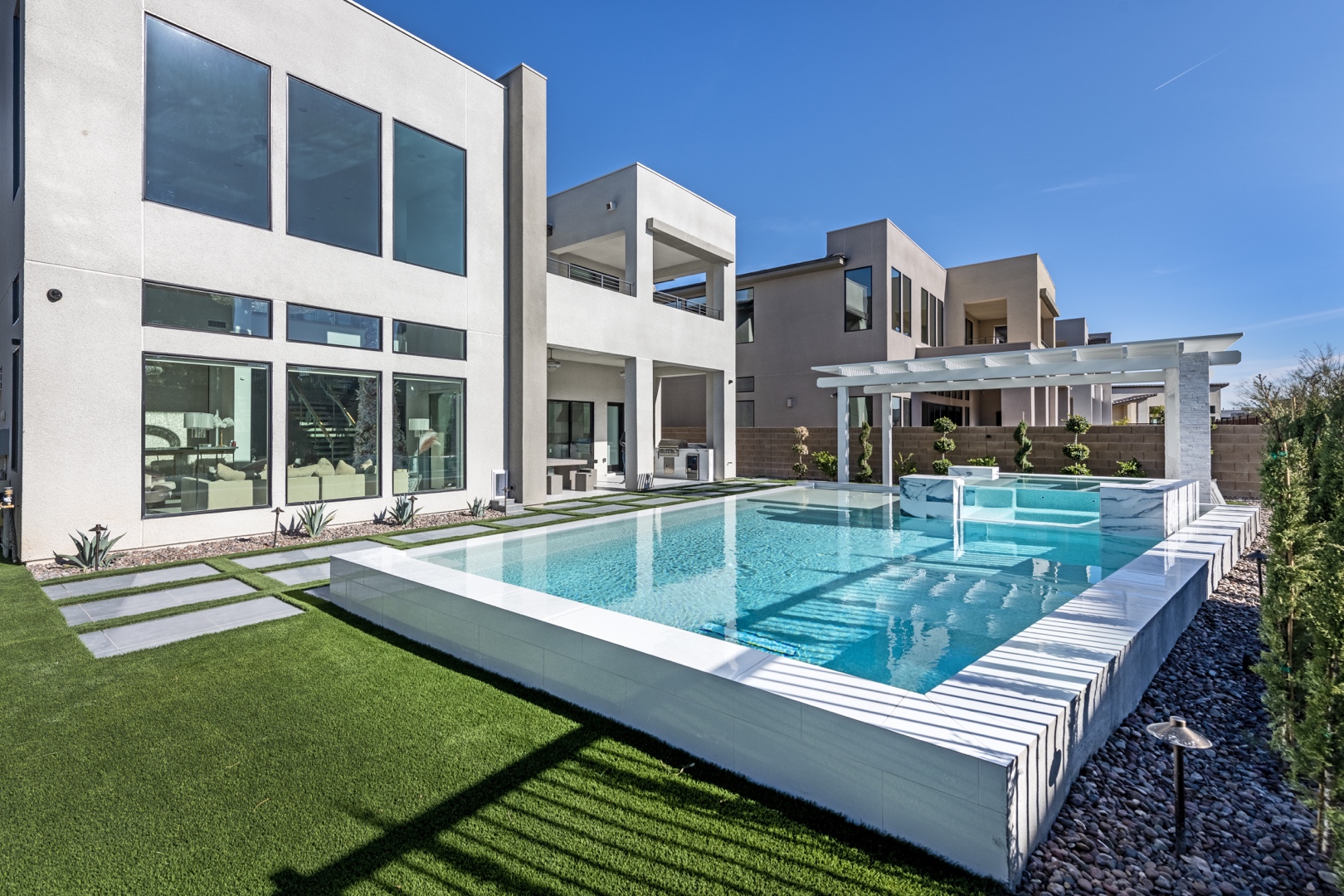
A pool finish is more than the color you see through the water. In Las Vegas, it is the surface that stands up to intense sun, hard water, temperature swings, chemical exposure, and years of active use. The best desert pool finishes balance that demanding performance with a finish color and texture that belongs in the larger outdoor environment.
For a custom pool, the right answer is rarely the most expensive material or the trendiest shade. It is the finish that supports the architecture of the home, the desired water color, the pool’s shape and depth, and the level of maintenance the owner expects. A thoughtful selection also accounts for the coping, decking, water features, landscape palette, and the way the space will be used after sunset.
What Desert Conditions Demand From a Pool Finish
Southern Nevada pools live in a harsher environment than pools in many other markets. Strong ultraviolet exposure can affect color perception over time. Windborne dust settles into the water. High mineral content in local water can leave visible scale at the waterline, particularly when pool chemistry and water balance are not consistently managed.
Heat also changes the homeowner experience. Dark finishes can create dramatic, reflective water and make a pool feel visually deep, but they may contribute to warmer water during the hottest part of the year. Very light finishes can keep the visual mood bright and may make it easier to see the pool floor, yet they can reveal staining, debris, or uneven aging more readily.
The finish should therefore be specified as part of the complete pool system, not selected from a small sample at the end of construction. At Green Planet Landscaping & Pools, the finish is evaluated alongside surface materials, waterline tile, pool circulation, shade structures, lighting, and the property’s exposure. That level of planning protects both the visual result and the investment behind it.
The Best Desert Pool Finishes by Material
Exposed pebble: the leading choice for longevity
Exposed pebble finishes are often among the best desert pool finishes for high-end Las Vegas properties because they combine durability with exceptional visual depth. Small natural stones are embedded in the finish, producing a textured surface that catches light differently throughout the day. The result can range from a quiet, resort-style blue to a deep lagoon effect, depending on the aggregate blend and water depth.
Pebble is valued for its resistance to everyday wear and its ability to perform well over a long service life when properly installed and maintained. It also offers a broad range of colors, from pale desert neutrals to charcoal blends and rich blue-gray combinations.
The trade-off is texture. While premium pebble finishes can be comfortable underfoot, they are generally more textured than polished plaster or some quartz finishes. The aggregate blend and installation quality matter greatly. A well-chosen, professionally applied pebble surface should feel intentional and refined, not abrasive.
Polished pebble: elevated color and a smoother feel
Polished pebble provides many of the same durability advantages as exposed pebble, but with a more refined surface character. The stones are polished to reveal richer color and a smoother feel, making this option particularly appealing for homeowners seeking a resort-level finish without moving to a fully tiled interior.
This material works especially well in geometric pools, modern courtyards, and outdoor living environments where stone, porcelain, and architectural masonry are central to the design. It can also bring nuanced color movement to freeform pools without making the space feel overly rustic.
Polished pebble is a premium selection, and its appearance deserves equally careful coordination. A cool gray blend might create luminous blue water under direct sunlight, while a darker blend can read more contemporary and reflective. Visual renderings and physical samples help establish the intended effect before construction begins.
Quartz: a bright, versatile middle ground
Quartz aggregate finishes blend plaster with quartz particles for added strength, subtle sparkle, and a smoother texture than many pebble surfaces. They are a strong choice for homeowners who want a clean, classic pool interior with more durability and visual interest than traditional plaster alone.
In a desert setting, quartz can be particularly effective in lighter blue, soft gray, and sandy neutral palettes. These tones pair naturally with travertine, porcelain pavers, limestone-look materials, and water-smart planting. Quartz also provides a crisp backdrop for sun shelves, entry steps, and shallow lounging areas.
Its primary consideration is that it does not have the same aggregate presence or long-term surface character as premium pebble. For some projects, that is exactly the point. A quartz finish can feel restrained, elegant, and appropriate for a home where the surrounding architecture should remain the focal point.
Glass bead blends: luminous, tailored detail
Glass bead accents can be incorporated into select aggregate finishes to increase reflectivity and bring a more dimensional quality to the water. In the right application, glass creates a jewel-like effect in sunlight and under pool lighting, giving the interior a distinct sense of movement.
This is not automatically the best choice for every pool. A heavily reflective blend can compete with elaborate tile, strong landscape lighting, or a busy material palette. It is most successful when used with restraint and coordinated with the waterline tile, fire features, and nighttime lighting plan. For a client who wants the pool itself to become a visual centerpiece, however, glass accents can deliver a memorable finish.
Tile: unmatched customization for select designs
Full-tile pool interiors are among the most luxurious finish options available. Glass, porcelain, and ceramic tile can create exact color control, intricate patterns, and a highly tailored architectural expression. Tile is also an excellent choice for spas, waterline bands, vanishing edges, and feature walls, even when the main pool interior uses pebble or quartz.
For a complete tiled pool, the budget and installation requirements are substantially higher. It demands precise substrate preparation, skilled setting, reliable waterproofing, and disciplined detailing at corners, steps, and fittings. Tile can be a beautiful long-term choice, but it should be selected because the design truly calls for it, not simply because it carries a luxury label.
Choosing the Right Water Color
A finish sample does not show the complete water color. Water depth, sun angle, adjacent walls, landscaping, interior shadows, and even the color of the coping all influence what homeowners see. A finish that appears medium gray in a sample may produce clear blue water in a shallow play pool and a more dramatic blue-green effect in the deep end.
For many Las Vegas homes, soft blue-gray, muted aqua, and mineral-inspired tones offer the most enduring result. They complement desert stone and contemporary architecture while staying fresh through changing furnishings and landscape updates. Deep charcoal interiors can create a sophisticated mirror effect, especially near fire features and dark porcelain, but they require careful consideration of heat, visibility, and the desired mood.
Bright tropical blue finishes remain popular for a reason: they feel clean, active, and familiar. They often work well for family pools and properties with lighter paving. The key is to avoid choosing a color in isolation. The water should feel connected to the entire outdoor living room, not like a separate design decision.
Finish Details That Affect Long-Term Results
Even the finest material needs proper construction and care. Surface preparation, application conditions, start-up procedures, water chemistry, circulation design, and ongoing service all influence how a finish ages. A finish can develop discoloration, scaling, etching, or mottling when any of these factors are overlooked.
Waterline tile deserves particular attention in the desert. It provides a cleanable boundary where oils, minerals, and environmental debris collect, while also creating a transition between the finish and coping. Larger-format porcelain can suit modern designs, while glass or ceramic tile can add color and detail. The selected tile should be compatible with the pool’s geometry and the intended maintenance routine.
It is also wise to consider how the finish supports safety and everyday use. Light-to-medium interiors generally improve step and bench visibility. Slip resistance should be evaluated at entries, tanning ledges, and spa transitions. If the pool includes dramatic depths, swim-up seating, or an infinity edge, the interior finish must reinforce the experience without obscuring important changes in elevation.
A Finish Should Serve the Whole Backyard
The strongest pool designs do not ask one material to do all the work. A pebble interior may bring depth to the water while understated tile clarifies the waterline. A refined quartz surface may provide the calm backdrop that allows a sculptural fire feature or mature desert planting to stand out. Tile may turn a spa or negative edge into an architectural focal point without requiring the entire pool to be tiled.
Before committing to a finish, review it in relation to the full plan: pool shape, shade, decking, masonry, lighting, landscape color, and the way the property is used for entertaining or quiet retreat. The right finish will still feel considered years from now, after the water is warm, the lights are on, and the backyard has become the place everyone gathers.