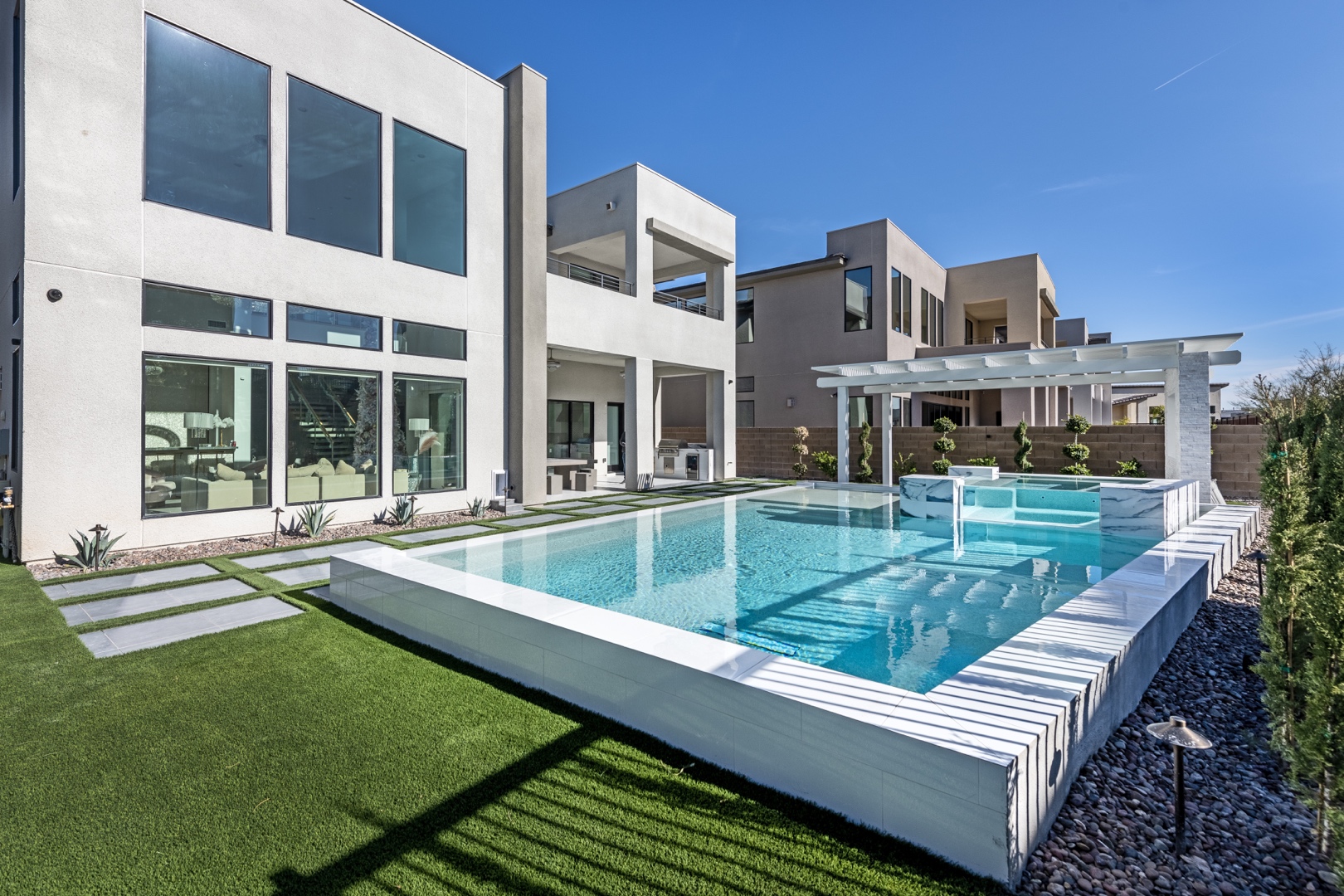
A Las Vegas afternoon can push surface temperatures far beyond the number on the thermostat. Stainless steel becomes hot to the touch, dark countertops absorb intense solar gain, and an unprotected grill island is asked to perform in conditions most indoor kitchens never face. So, can outdoor kitchens withstand heat? Yes, when they are designed as permanent exterior structures rather than assembled as a collection of appliances and finishes.
A beautiful outdoor kitchen should make entertaining feel effortless in every season. In Southern Nevada, that means planning for extreme sun, dry air, wind-driven dust, occasional monsoon moisture, and substantial temperature swings after sunset. The right kitchen can deliver years of dependable use. The wrong material selections or installation details can lead to fading, cracked finishes, warped doors, failing sealants, and appliances that work harder than they should.
Can Outdoor Kitchens Withstand Heat Over Time?
They can, but heat resistance is never determined by a single countertop or grill specification. It is the result of the entire assembly: the structural base, finish materials, appliance clearances, ventilation, shade strategy, utilities, and drainage all need to work together.
This is why a custom outdoor kitchen deserves the same disciplined planning as a pool, spa, or major masonry feature. A prefabricated cabinet run may look appealing on day one, yet its longevity depends on whether it was engineered for direct desert exposure, installed on a stable foundation, and protected from the heat it generates and receives.
For a high-use entertaining space, the most successful approach is to locate the kitchen thoughtfully within the larger backyard plan. Orientation matters. A west-facing grill wall without overhead cover will receive the day’s most punishing sun just as homeowners are preparing dinner. Placing the kitchen near a covered patio, pergola, or integrated shade structure can improve comfort while reducing solar stress on counters, cabinetry, and appliances.
Materials That Perform in Desert Conditions
Outdoor kitchens built for Las Vegas should begin with materials that tolerate UV exposure and repeated heating and cooling. Masonry block construction with a properly finished exterior remains a strong foundation for a custom island. It offers stability, accommodates utility routing, and can be finished in stone, porcelain tile, stucco, or other materials selected to coordinate with the home and surrounding hardscape.
Countertops Need More Than a Luxury Look
Natural stone can be striking, but not every stone belongs in a full-sun kitchen. Some materials are more porous, more prone to staining, or more susceptible to color change and surface wear without the right sealers and maintenance. Dense granite, certain quartzites, and outdoor-rated porcelain slabs are often strong contenders, depending on the desired appearance and the specific installation.
Porcelain is especially useful where homeowners want a refined look with excellent resistance to UV exposure, heat, and staining. It also offers visual options that complement contemporary architecture, natural stone, or wood-look patio elements. The trade-off is that fabrication and edge detailing require experienced installers. A premium surface is only as durable as its support, joints, and installation.
Engineered quartz, while popular indoors, requires careful product-specific review outdoors. Many quartz surfaces are not intended for constant direct sun and can discolor or suffer from thermal stress. An experienced design-build team will not select a material simply because it looks right in a showroom.
Cabinetry and Doors Must Be Exterior Rated
Marine-grade polymer, powder-coated metal, and high-quality stainless steel components can perform well outdoors when they are truly rated for the environment. Stainless steel grades matter, as do the quality of hinges, drawer slides, handles, and welds. Lower-grade components can corrode, bind, or discolor even in an arid climate, particularly around pool water, cleaning chemicals, or coastal-style saltwater systems.
Wood cabinetry is generally a higher-maintenance choice in the desert. It can be incorporated in protected locations, but it should not be treated as a carefree exterior finish. Heat and UV exposure can dry, fade, and move natural wood over time. For many luxury backyards, wood-look porcelain or thoughtfully placed architectural accents achieve the warmth homeowners want with less ongoing maintenance.
Heat From the Grill Requires Its Own Plan
Sunlight is only part of the equation. Built-in grills, pizza ovens, side burners, and power burners create concentrated heat that must be managed according to manufacturer requirements and local code.
Every appliance needs proper clearance from combustible materials, with insulated jackets or noncombustible construction where required. Vent panels are not decorative details. They allow heat and gas to dissipate from enclosed islands, helping protect the appliance, surrounding structure, and nearby utilities. Inadequate ventilation can shorten equipment life and create serious safety concerns.
Gas lines, electrical circuits, shutoff valves, and ignition systems also need to be planned before construction. Retrofitting utilities after an island is complete can compromise the finished appearance and add unnecessary cost. In a well-coordinated project, these elements are documented during design and installed by qualified trades under the appropriate permits and inspections.
Shade Improves Durability and Daily Use
Shade does not eliminate heat, but it dramatically changes how an outdoor kitchen performs. A roof extension, insulated patio cover, or properly designed pergola can reduce direct solar exposure during the hottest part of the day. It also makes the cooking area more pleasant for the host, protects guests seated nearby, and can preserve the color and finish of surrounding materials.
The best solution depends on the property. A fully covered kitchen may suit homeowners who entertain throughout the year and want ceiling fans, lighting, and a more room-like experience. A partially covered arrangement can preserve open sky views while shielding the most vulnerable zones, such as appliance faces, food-prep counters, and bar seating.
Shade structures should be planned with wind loads, drainage, lighting, and circulation in mind. A structure that looks elegant in a rendering must also direct water away from the kitchen, avoid trapping smoke, and maintain safe clearance around heat-producing appliances.
Design Details That Prevent Premature Wear
Heat-resilient outdoor kitchens benefit from a number of less visible decisions. Expansion joints in masonry and hardscape help materials move appropriately as temperatures change. Flexible, exterior-rated sealants protect transitions around countertops and appliances. Proper flashing and drainage reduce the chance that monsoon rain enters areas where it does not belong.
Color selection is another practical consideration. Dark finishes can be sophisticated, but they absorb more heat and may show dust, water spotting, and sun fading more readily than mid-tone or lighter selections. That does not mean dark materials should be avoided. It means they should be used intentionally, often in shaded areas or balanced with lighter counters, paving, and surrounding finishes.
Appliance placement affects both performance and comfort. Refrigeration units should not be forced into direct afternoon sun without adequate ventilation. Ice makers and beverage centers need an appropriate protected location and reliable drainage. A grill should be positioned so prevailing winds do not push smoke directly toward the home, a seating area, or the pool.
Why Master Planning Matters
An outdoor kitchen is most successful when it belongs to a complete outdoor living environment. The relationship between the kitchen, pool, spa, fire feature, dining area, and landscape determines how naturally the space functions when family and guests arrive.
At Green Planet Landscaping & Pools, Inc., that coordination begins before materials are ordered. Detailed design, engineering considerations, permit management, and construction supervision allow the kitchen to be planned around the property’s sun exposure, architecture, utilities, entertaining style, and long-term maintenance expectations. Photorealistic visualization can also help homeowners compare finish combinations and understand how shade, circulation, and views will feel before construction begins.
For homeowners considering an outdoor kitchen, the most valuable question is not simply whether a countertop can take the heat. It is whether the entire space has been designed to handle the realities of its location. A carefully planned kitchen gives you a cooler, safer, more polished place to gather now, while protecting the investment long after the first summer cookout.