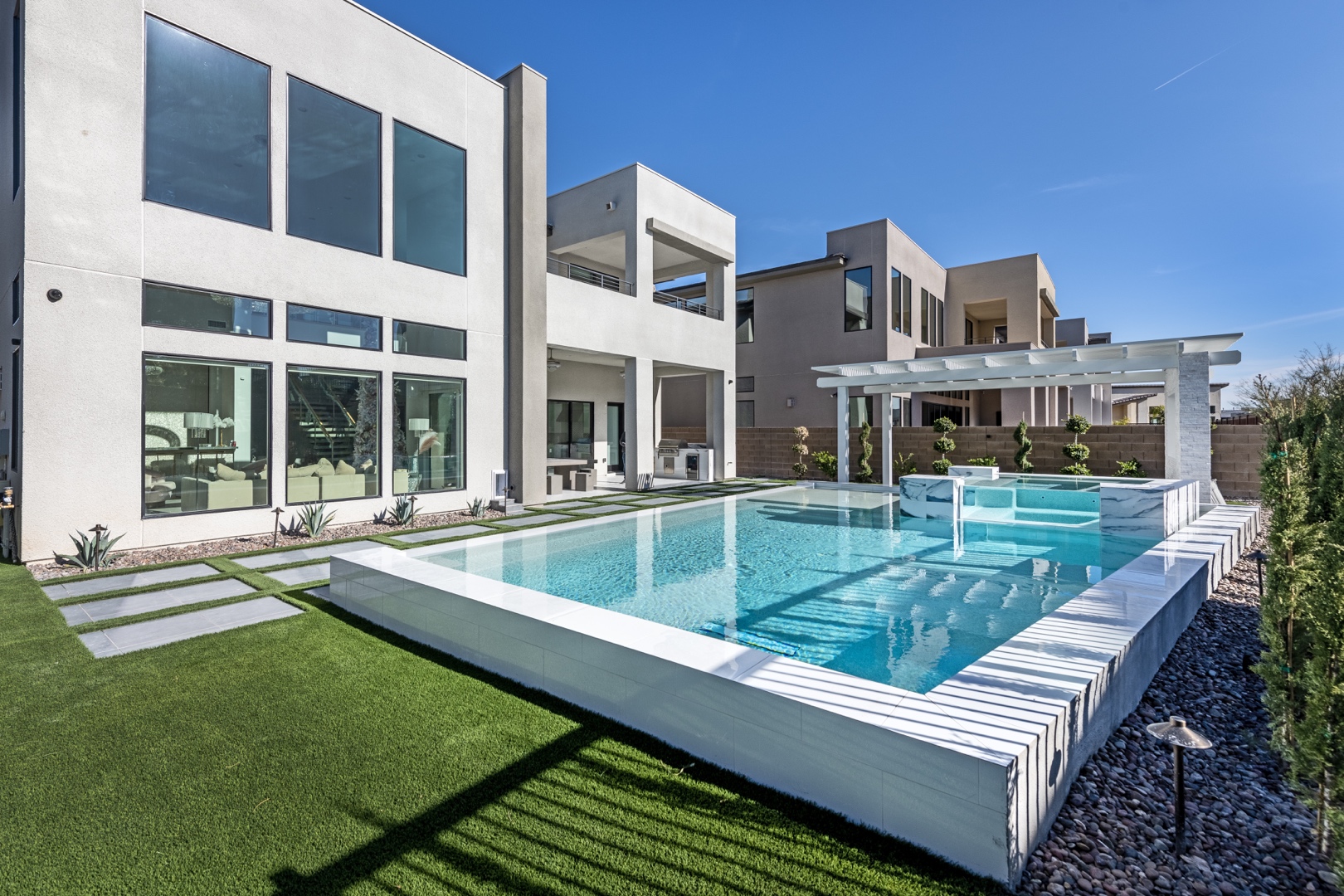
A pool deck can make a custom backyard feel finished – or make an otherwise exceptional pool, spa, kitchen, and landscape feel disconnected. For Las Vegas homeowners weighing travertine versus porcelain, the right decision is not simply about appearance. It affects underfoot comfort during July afternoons, the way water moves across the surface, maintenance expectations, construction detailing, and how convincingly each material supports the architecture of the home.
Both materials can perform beautifully in a premium outdoor environment. The better choice depends on how the space will be used, the character you want it to have, and the level of natural variation or visual consistency you prefer.
Travertine Versus Porcelain: The Essential Difference
Travertine is a natural limestone formed through mineral deposits. Its character comes from variation: subtle changes in tone, distinctive veining, and small voids that give each piece an individual appearance. It has long been a preferred material for resort-style pool decks because it feels established, substantial, and naturally suited to water.
Porcelain pavers are manufactured from dense clay and mineral materials fired at very high temperatures. They are engineered for consistency, low absorption, and a broad range of colors and surface designs. A quality porcelain paver can echo limestone, concrete, wood, or contemporary stone while providing a more controlled visual result.
Neither material is inherently more luxurious. Travertine expresses luxury through authenticity and organic movement. Porcelain expresses it through precision, clean lines, and highly predictable performance. A successful choice begins with the intended design language of the entire property, not a sample viewed in isolation.
Heat Comfort Matters in the Las Vegas Climate
In Southern Nevada, deck temperature is a practical design concern. Bare feet, children moving between the pool and patio, and year-round outdoor living all make surface comfort worth considering early in the planning process.
Travertine is widely valued for staying comparatively comfortable underfoot, especially in lighter colors. Its porous structure and natural composition can help it release heat differently than many dense paving surfaces. That does not mean any travertine deck will remain cool in direct desert sun. Color, finish, exposure, and surrounding reflective surfaces all influence the result. Still, light-toned travertine is often a strong candidate for pool areas where barefoot comfort is a leading priority.
Porcelain can also perform well in the Las Vegas sun, particularly when a lighter color and textured exterior finish are selected. However, porcelain is denser, and some darker or highly polished-looking selections can become noticeably warmer. The exact product matters more than the broad category. A professional design process should evaluate full-size material samples outdoors, at the project site, rather than relying on indoor showroom lighting.
Shade structures, mature canopy placement, patio orientation, and the amount of exposed decking are equally important. Material selection works best when it is part of a complete heat-management strategy, not the only answer.
Traction, Water, and Poolside Safety
A pool deck should be visually refined without becoming slick when wet. Travertine’s natural texture and open pores can provide reliable traction, especially in a tumbled finish. Filled and honed travertine may look more formal, but it requires careful evaluation around water features and pool entries because its finish can change the surface feel.
Porcelain offers a wide range of exterior-rated textures, including products manufactured specifically for wet-area traction. For a pool deck, a polished interior tile is not an appropriate substitute for a rated outdoor paver. The product should be selected for exterior use, wet conditions, and the intended application, whether it will be installed on a concrete slab, pedestal system, or compacted base.
Drainage is just as important as traction. The deck must be graded correctly to direct water away from the home, prevent standing water, and coordinate with pool coping, drains, planters, and adjacent hardscape. Even an excellent paver can underperform when the substrate, slope, or drainage plan is poorly executed.
Maintenance: Natural Patina or Consistent Finish?
Travertine requires a more hands-on ownership mindset. Because it is natural stone, it should be properly sealed to help resist staining and make routine cleaning easier. Sealer performance is not permanent, particularly in an outdoor setting exposed to sun, pool water, entertaining, and irrigation overspray. Periodic cleaning and resealing are reasonable parts of preserving its appearance.
That maintenance comes with a benefit many homeowners appreciate: travertine can develop a soft patina over time. Minor variation and gentle aging often contribute to its appeal rather than detract from it. For an Old World, Mediterranean, transitional, or resort-inspired landscape, that lived-in character can be exactly right.
Porcelain is highly resistant to moisture absorption, staining, and fading. It generally needs less ongoing care than travertine and does not require sealing in the same way. For homeowners who want a crisp, uniform finish with straightforward upkeep, porcelain is compelling.
The trade-off is repair perception. Natural stone varies by nature, so a replacement travertine piece can blend into a deck with less visual interruption. Porcelain is consistent within a production run, but discontinued lines, lot variation, or a damaged paver in a prominent location can require thoughtful planning. Ordering appropriate attic stock during construction is wise for either material.
Design Flexibility and Architectural Fit
Travertine brings depth that manufactured materials can imitate but not fully duplicate. Its warm cream, ivory, silver, and walnut tones work naturally with desert planting, masonry walls, fire features, and water in a way that feels relaxed yet elevated. It is especially effective when a backyard is intended to feel like a private resort with broad deck areas and a natural connection between pool water and landscape.
Porcelain provides more control. Large-format pavers, calibrated dimensions, and consistent coloration can create a tailored contemporary composition. It is an excellent choice for modern homes with rectilinear pool geometry, linear fire features, sleek outdoor kitchens, and strong indoor-outdoor visual alignment. It can also support a stone-look design where the homeowner wants the appearance of natural material with less variation.
Pool coping deserves its own consideration. Travertine can be fabricated into bullnose, eased-edge, or drop-face coping that closely relates to the surrounding deck. Porcelain coping systems can be equally refined when specified as part of a coordinated collection, but edge details, thickness, and transitions must be resolved in the design phase. The goal is to avoid a deck that looks coordinated from a distance but reveals awkward coping joints or mismatched edges up close.
Installation Quality Determines Long-Term Performance
The material decision should never be separated from the construction plan. Travertine and porcelain have different cutting, setting, jointing, and substrate requirements. A premium result depends on accurate layout, proper base preparation, carefully placed expansion joints, drainage coordination, and experienced craftsmanship around curved pool walls, steps, drains, and waterline transitions.
Porcelain pavers require correct products and installation methods for the application. Their density and low absorption demand appropriate setting materials and detailed attention to bond, leveling, and movement. Travertine requires a stable base, sound setting practices, and careful attention to filling, sealing, and selecting stone pieces that complement one another across the field.
At Green Planet Landscaping & Pools, material selections are considered within the master plan, alongside pool engineering, hardscape elevations, landscape zones, lighting, and outdoor living features. This coordinated approach protects the investment by resolving practical details before construction begins, when changes are easier to make and outcomes are easier to control.
Which Material Is Right for Your Backyard?
Choose travertine when natural variation, a resort-style atmosphere, and barefoot comfort are priorities, and you are comfortable with periodic sealing and the character of natural stone. It is often a particularly strong fit for expansive pool decks and designs that blend warm masonry, water, and desert landscaping.
Choose porcelain when you prefer a clean, highly consistent surface, lower routine maintenance, and a contemporary or tightly controlled design palette. It can be an outstanding option for modern architecture, outdoor kitchens with crisp geometry, and homeowners who want minimal variation from paver to paver.
The most useful next step is to view substantial samples in direct sun beside the pool finish, wall materials, and proposed landscape palette. A deck is not a standalone purchase. It is the surface that connects nearly every experience in the backyard, from an early swim to a dinner beside the fire feature. Selecting it with that full setting in mind leads to a space that feels composed, comfortable, and built to serve the property for years.