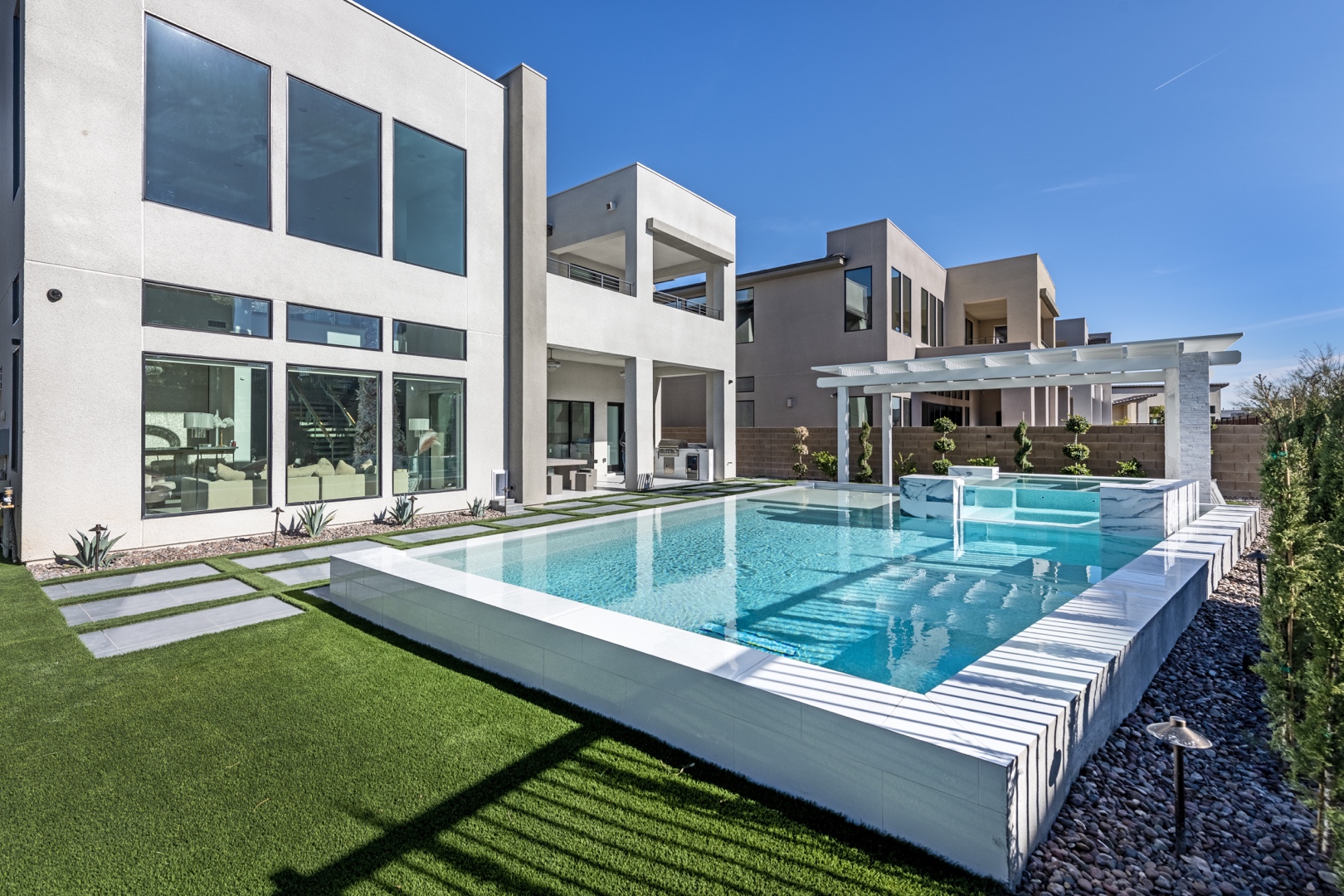
A newly completed paver terrace can look exceptionally polished under the Las Vegas sun. A few seasons later, that same surface may show faded color, barbecue grease, mineral deposits, or loosened joint sand. So, do pavers need sealing? Not always – but for many premium outdoor environments, the right sealer is a worthwhile layer of protection when it is selected and applied for the specific material, exposure, and way the space is used.
Sealing should never be treated as a substitute for proper base preparation, drainage, edge restraint, or professional installation. Those construction details determine whether a hardscape remains stable and performs as intended. A sealer is a finishing and maintenance decision that can help preserve the appearance of a well-built investment.
Do Pavers Need Sealing in Las Vegas?
Las Vegas creates demanding conditions for exterior hardscapes. Intense ultraviolet exposure can gradually dull some concrete paver colors. Wind carries fine dust into textured surfaces and joints. Outdoor kitchens, pool decks, fire features, and entertaining areas also introduce practical sources of staining, from cooking oils and beverage spills to sunscreen and poolside traffic.
In these conditions, sealing is often recommended for concrete pavers, especially in highly visible or heavily used spaces. A quality breathable sealer can make routine cleaning easier, reduce absorption of certain stains, limit surface weathering, and enrich color where a wet-look finish is desired. It may also help stabilize joint sand when a compatible joint-stabilizing product is specified.
That said, not every paver surface requires a sealer. Some homeowners prefer the naturally softened patina that develops over time. Certain dense porcelain pavers generally have very low absorption and may not benefit from conventional sealing. Natural stone requires a more tailored approach, as the wrong product can alter its color, sheen, traction, or ability to release moisture.
The better question is not simply whether pavers need sealing. It is whether sealing supports the intended appearance, maintenance expectations, and long-term performance of your specific outdoor living environment.
What Sealing Can and Cannot Do
A professionally selected sealer can provide meaningful benefits, but expectations should be realistic. Penetrating sealers are designed to protect below the surface with little visible change. Film-forming or color-enhancing products can deepen the appearance of pavers and create a more finished visual effect. The right choice depends on the material and the design intent.
For a courtyard with pale concrete pavers, a penetrating sealer may be preferred to retain a natural matte finish while improving stain resistance. Around a dramatic pool, outdoor kitchen, or fire feature, a color enhancer can create a richer contrast that supports the overall palette. Neither option makes the surface maintenance-free.
Sealing will not correct pavers that move because of an inadequate base, failed edge restraint, settlement, poor drainage, or structural concerns. It will not eliminate all staining, prevent every instance of efflorescence, or stop dust from accumulating in an exposed desert landscape. It also does not replace regular sweeping, prompt spill cleanup, and periodic joint inspection.
A credible recommendation starts with an honest evaluation of the hardscape, not a blanket promise that one coating solves every concern.
The Most Important Decision: Match the Sealer to the Material
Concrete pavers are common in Las Vegas outdoor living projects because they offer design versatility, durability, and a broad range of colors and patterns. They are also porous enough that sealing can be beneficial, particularly around grills, dining areas, driveways, and pool-adjacent patios. Before sealing, the surface should be thoroughly cleaned, dry, and free of haze or residue.
Natural stone deserves greater care. Travertine, flagstone, limestone, and other stone products vary considerably in density and finish. A premium stone can be damaged visually by a sealer that leaves an unintended sheen or darkens it beyond the approved sample. In wet areas, traction is equally important. The desired finish should be reviewed on a discreet test area before the full surface is treated.
Porcelain pavers are typically denser and less absorbent than concrete or natural stone. In many cases, their primary maintenance need is cleaning rather than sealing. However, grout lines, joints, or surrounding materials may still require attention. A material-by-material plan is more reliable than applying the same treatment across the entire yard.
This is particularly relevant in a master-planned backyard, where pavers may meet coping, decorative masonry, stucco, artificial turf, decomposed granite, or natural stone accents. Each material responds differently to cleaners and sealers. Protecting the visual harmony of the whole space requires careful product selection and site protection.
When Should New Pavers Be Sealed?
Newly installed pavers should not be sealed immediately after installation unless the manufacturer and installer have confirmed that the material, jointing system, and site conditions allow it. Concrete pavers and masonry products need time to cure and release moisture. Sealing too soon can trap moisture, contribute to a cloudy appearance, or interfere with the intended performance of the product.
The correct timing depends on the paver type, weather, cleaning method, and sealer specification. In Southern Nevada, dry conditions can be helpful, but a hot climate does not eliminate the need to confirm moisture content and curing requirements. A surface that appears dry at midday may not be ready for a coating that needs stable conditions to bond correctly.
For existing pavers, sealing should follow a thorough assessment. If joints need replenishment, stains need specialized treatment, or drainage needs correction, those issues should be addressed first. Applying sealer over embedded dirt, oily residue, or failing joint sand can lock in problems rather than resolve them.
Avoid the Most Common Sealing Problems
Most disappointing results come from poor preparation or an unsuitable product, not from the idea of sealing itself. Overapplication is one frequent issue. Too much product can create a patchy, overly glossy, or slippery surface, particularly if a film-forming sealer is used in a pool area.
Moisture is another concern. When water vapor cannot escape as intended, a surface may develop whitening, haze, or premature coating failure. This is why breathable products, appropriate application rates, and drainage planning matter. Water should move away from the residence and not remain trapped beneath or within a hardscape assembly.
Color change should also be intentional. Some owners love the deepened tones created by an enhancing sealer; others expect the original, dry appearance to remain unchanged. A sample panel or discreet test area allows the finish to be approved before treatment extends across a large patio, driveway, or pool deck.
Finally, do not confuse a low-maintenance finish with a no-maintenance finish. A sealed outdoor kitchen patio still needs prompt attention after a spill. A pool deck still needs regular rinsing and cleaning to manage dust, sunscreen, and water chemistry residue. Thoughtful care protects both the material and the elevated experience of the space.
How Often Should Pavers Be Resealed?
There is no responsible one-size-fits-all schedule. Some penetrating sealers may provide protection for several years, while color-enhancing or topical finishes may need more frequent renewal based on sun exposure, traffic, cleaning practices, and the specific product used. A driveway and a shaded courtyard do not age at the same rate.
Rather than resealing on a fixed calendar alone, watch for practical indicators. Water that immediately darkens and absorbs into concrete pavers, fading color, reduced stain resistance, or a visibly worn finish can signal that an evaluation is due. If the surface still performs well and maintains its intended appearance, unnecessary recoating can create avoidable buildup.
For clients investing in a complete pool, landscape, and hardscape environment, it is wise to include paver care in the broader maintenance plan. Irrigation should be adjusted so overspray does not repeatedly saturate masonry. Fertilizers and harsh cleaners should be kept off adjacent surfaces. Drainage paths, joints, and edge restraints should be reviewed as part of regular property care.
A Better Standard for Paver Protection
At Green Planet Landscaping & Pools, Inc., hardscape decisions are considered in relation to the entire outdoor environment: pool water, shade patterns, drainage, outdoor cooking, planting, lighting, and the way a family intends to entertain. That level of planning matters because the best paver finish is not simply the shiniest or the most heavily coated. It is the one that complements the design, performs safely, and preserves the materials selected for the property.
If your pavers are structurally sound, properly drained, and suited to a compatible product, sealing can be a valuable finishing step in Las Vegas. If the surface has installation or moisture concerns, solve those first. The most enduring outdoor spaces are built and maintained with the same care that shaped the original design.