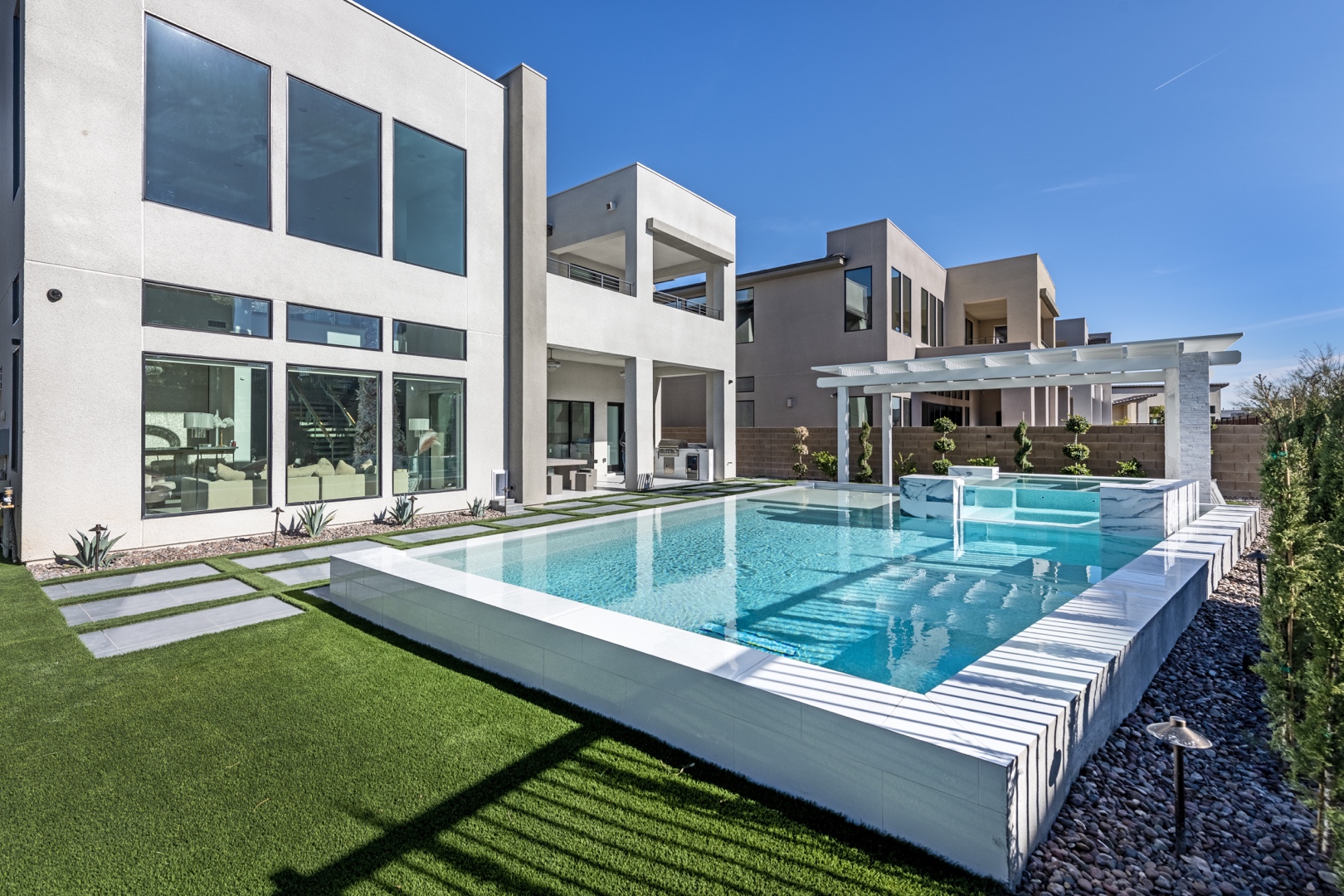
A Las Vegas backyard is no longer judged by a single feature. A beautiful pool without shade, a fire feature without comfortable seating, or lush planting without a water-conscious plan can leave an expensive property improvement feeling incomplete. The landscape trends gaining traction among discerning homeowners are centered on one idea: a fully integrated outdoor environment designed for how the property is actually used.
For luxury homes, this shift matters. Outdoor spaces are expected to support quiet mornings, family time, evening entertaining, and year-round visual appeal while standing up to intense sun, heat, wind, and occasional cool desert nights. The strongest results come from master planning, not from adding elements one at a time.
Landscape Trends That Create a Complete Outdoor Room
The most enduring projects are moving beyond the idea of a backyard as open space around a pool. Instead, homeowners are investing in defined outdoor rooms that create purpose, comfort, and visual continuity from the home to the far edge of the property.
A covered patio or custom shade structure often becomes the anchor. It can frame an outdoor kitchen, dining area, or lounge while providing the protection needed to use the space during bright Las Vegas afternoons. Ceiling fans, integrated lighting, heaters, and carefully located electrical service make these areas feel considered rather than temporary. The goal is not simply to add cover. It is to create a destination with the same level of comfort expected indoors.
This trend also favors deliberate transitions. Changes in paving, low seat walls, planters, and lighting can distinguish a dining terrace from a poolside lounge without making the yard feel divided. A well-designed hardscape establishes circulation, directs views, and makes each area feel connected to the next.
Resort-Style Pools With a Purpose
Custom pools remain central to high-end outdoor living, but their role is becoming more specific. Rather than choosing a shape from a catalog, homeowners are asking how the water will support their lifestyle. A long, clean-lined pool may suit lap swimming and contemporary architecture. A shallow tanning ledge offers a place to relax with children or enjoy the water without fully swimming. Integrated spas extend use into cooler months and create a focal point after dark.
Water features are also becoming more architectural. Sheer descents, scuppers, raised water walls, and subtle spillways add movement and sound without overwhelming the setting. The right feature depends on the property. On a compact lot, a dramatic water wall can establish scale; on a larger estate, quieter features may complement broad views and preserve a sense of calm.
Every pool decision should be coordinated with drainage, access, equipment location, utilities, safety requirements, and surrounding materials. This is where design and construction discipline protect the investment. A pool should not appear inserted into a finished landscape. It should belong to the larger composition.
Water-Smart Landscape Trends for Desert Properties
Water-smart design has matured well beyond sparse gravel and a few scattered cacti. Today’s xeriscapes can be textural, layered, colorful, and distinctly refined. They use plants selected for desert conditions, efficient irrigation, thoughtful soil preparation, and a planting plan that looks composed in every season.
The best drought-tolerant landscapes balance structure with softness. Specimen trees can provide filtered shade and vertical presence. Ornamental grasses introduce motion. Desert-adapted flowering plants bring selective color, while agaves, succulents, and sculptural shrubs offer form that remains compelling through summer heat. Planting should be arranged around mature size, sun exposure, maintenance expectations, and views from inside the home, not just how it appears on installation day.
A water-conscious approach does not mean eliminating lawn in every project. It means being intentional. Small, purposeful areas of turf may serve children, pets, or a visual preference, while larger portions of the property use durable ground covers, decomposed granite, decorative rock, or permeable materials. The appropriate balance depends on how the homeowner plans to live outdoors and how much maintenance they want to assume.
Irrigation deserves equal attention. Hydrozones, properly selected drip systems, smart controllers, and accessible valves help deliver water where it is needed without wasting it. A premium landscape should look exceptional, but it should also be practical to operate long after construction is complete.
Material Palettes Built for Heat and Time
Another defining direction is a more restrained approach to materials. Instead of combining several unrelated colors and finishes, successful outdoor environments use a focused palette that complements the home’s architecture. Large-format porcelain pavers, natural stone, architectural concrete, masonry veneers, and metal accents can create visual richness when specified with discipline.
Durability is especially important in Southern Nevada. Materials need to tolerate thermal movement, UV exposure, pool chemicals, and the demands of regular use. The finish around a pool, for example, must be evaluated for comfort underfoot, slip resistance, color retention, and maintenance requirements. A striking material that becomes uncomfortably hot or difficult to maintain is not a luxury choice in practice.
This is also why craftsmanship below the surface matters. Proper base preparation, drainage planning, expansion considerations, masonry reinforcement, and construction supervision determine whether hardscape elements remain attractive over time. Trends may inspire a design, but sound construction is what allows it to endure.
Fire, Light, and Evening Atmosphere
Las Vegas outdoor living does not end when the sun goes down. In fact, many of the most memorable hours begin then. Fire features continue to be requested because they provide warmth, visual focus, and a natural gathering point. Fire bowls near the pool, linear fire tables at a conversation area, and custom fireplaces beneath a patio structure can each work beautifully when they are proportioned to the space.
Lighting is what makes these features usable and safe. Layered lighting typically performs better than overly bright fixtures. Path lights guide movement, subtle uplighting reveals trees and architecture, and recessed or integrated lighting supports patios, steps, kitchens, and seating walls. Pool and water-feature lighting can bring depth to the landscape, but restraint is essential. The objective is atmosphere, not glare.
A coordinated electrical plan should be established early, especially when a project includes a pool, kitchen appliances, audio, fans, heaters, landscape lighting, and future expansion needs. Planning infrastructure before construction is far more efficient than disrupting finished hardscape later.
Outdoor Kitchens Designed for Real Entertaining
The outdoor kitchen is evolving from a basic grill island into a true entertaining station. For some homeowners, that means a generous grill, refrigerator, sink, storage, and bar seating close to the pool. For others, it may include a pizza oven, smoker, beverage center, or a more private prep zone separated from the main lounge.
The right layout follows behavior. Consider where guests will gather, how food will move from the indoor kitchen, where smoke will travel, and whether the cook can participate in the conversation. Countertop selection, ventilation, utility connections, clearances, and weather protection all deserve attention. An outdoor kitchen may be a lifestyle feature, but it is also a construction project requiring coordination among trades and compliance with applicable codes.
For a property intended for frequent entertaining, the kitchen should be planned alongside dining, shade, lighting, and circulation. When these pieces are designed independently, the finished area can feel cramped or inconvenient. When they are designed together, hosting becomes effortless.
Why Master Planning Matters More Than Any Single Trend
Trends can offer useful direction, but they should never override the character of the home, the constraints of the site, or the way an owner prefers to live. A minimalist courtyard may be ideal for a modern residence with limited space. A larger family property may need generous play areas, layered shade, and multiple zones for different ages. A view property may call for lower planting and carefully positioned structures that preserve sightlines.
A complete design-build process brings these decisions into one plan before construction begins. Photorealistic visualizations help homeowners understand scale, material relationships, and nighttime character. Engineering drafts, permitting, code review, horticultural expertise, and skilled construction management transform that vision into a durable reality.
At Green Planet Landscaping & Pools, Inc., the objective is not to chase a passing look. It is to create a custom outdoor living environment that feels personal, performs in the Las Vegas climate, and adds lasting value to the property.
The most valuable trend is simple: choose a backyard plan that will still feel right after the novelty fades. Start with how you want to gather, relax, move through the space, and care for it over time. The details will follow with much greater purpose.