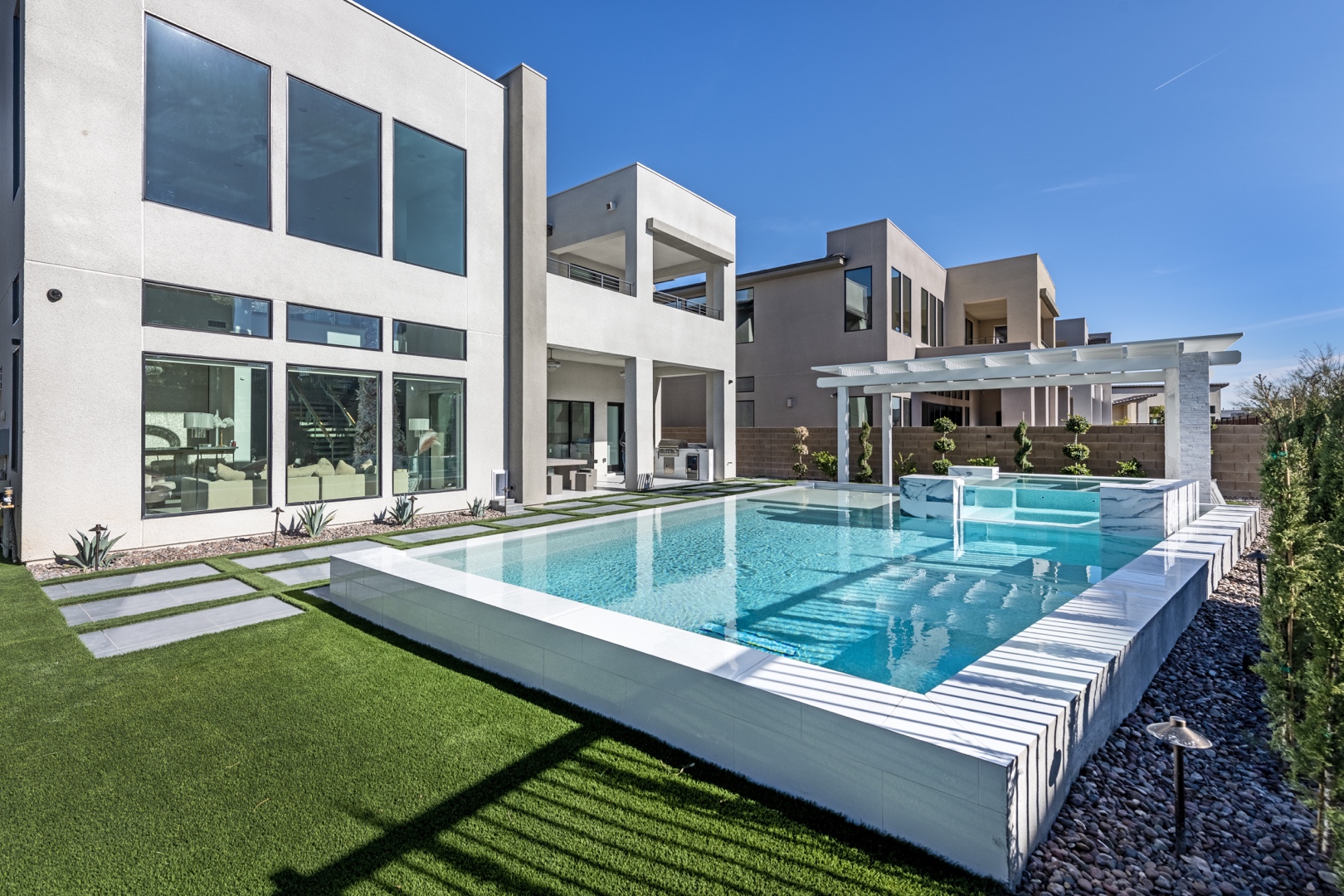
A custom pool is rarely just a pool. On a Las Vegas property, it may be the visual center of the backyard, the backdrop for evenings with friends, a cooling retreat through long summers, and the element that ties together a spa, outdoor kitchen, fire feature, shade structure, and water-smart landscape.
That is why choosing pool contractors should be treated as a major design and construction decision, not a simple price comparison. The right partner brings creative vision and disciplined execution to the same table. The wrong fit can leave an owner managing disconnected trades, unanticipated changes, compromised materials, or a finished space that feels smaller and less useful than it appeared on paper.
A Pool Project Starts With the Entire Property
Many homeowners begin with a pool shape or a favorite inspiration image. Those are useful starting points, but a successful project begins with the property itself. Lot dimensions, elevation changes, sun exposure, access for construction equipment, drainage, utility locations, existing structures, neighborhood requirements, and municipal codes all influence what can be built and how it should be built.
In Southern Nevada, heat and water use add another layer of planning. A pool deck that looks striking in a rendering must also perform under intense sun. Plant materials need to complement the design while respecting the realities of desert conditions. Equipment placement should support efficient service access without becoming a visual distraction or an unwanted source of noise near an entertaining area.
The strongest outdoor environments consider these decisions together. Rather than adding a pool first and trying to fit other amenities around it later, a master plan establishes circulation, gathering areas, views, shade, lighting, planting, and architecture as one connected experience. This approach can prevent common compromises, such as a kitchen placed too far from seating, a spa with limited privacy, or a pool deck with no comfortable area for lounging.
What Experienced Pool Contractors Manage
A premium pool installation requires far more than excavation and gunite. It involves a sequence of technical decisions that must be coordinated from the earliest concept through final inspection. A contractor should be able to explain that process clearly, including where design intent meets engineering, permitting, construction supervision, and finish selections.
At the planning stage, detailed design documents and photorealistic visualizations help owners evaluate proportion, materials, water features, and sightlines before construction begins. This is particularly valuable for extensive backyard transformations, where a small adjustment to the pool location can change the available space for a patio, fire lounge, or landscape border.
Engineering and permit documentation are equally essential. Depending on the scope, a project may require plans that address structural requirements, electrical work, plumbing, drainage, barriers, and related site conditions. A professional contractor does not treat these requirements as paperwork to be handled after the design is complete. They incorporate them into the project strategy early, reducing the risk of costly redesigns or preventable delays.
During construction, proper sequencing matters. Underground utilities, steel, plumbing, electrical, shell construction, coping, tile, decking, equipment, finishes, and landscape work all have dependencies. Coordinated oversight protects both the schedule and the quality of the finished environment. It also gives the owner one accountable point of contact when decisions need to be made.
Credentials Matter, but So Does Coordination
Licensing, bonding, insurance, and relevant trade qualifications are fundamental protections for a significant property investment. Ask prospective contractors about the licenses they hold, their insurance coverage, and the work they perform directly versus the work managed through specialized subcontractors. A clear answer is a good sign. Vague assurances are not.
However, credentials alone do not guarantee a cohesive result. A pool contractor may be highly capable at building a pool shell yet not be equipped to coordinate masonry, landscape construction, outdoor kitchens, lighting, drainage, or water features at the same level. That distinction becomes important when the project is intended to feel like a complete outdoor living environment rather than a collection of separately installed features.
For a pool-only project, a focused contractor may be the right choice. For a complete renovation or new construction backyard, an integrated design-build team can offer meaningful advantages. It aligns the design, permitting, material selections, construction sequence, and finish details under one plan. The trade-off is that this level of planning is not a commodity service. It requires a larger initial investment, but it can reduce fragmentation and protect the long-term value of the project.
Questions to Ask Pool Contractors Before Signing
A productive consultation should feel specific to your property and goals. Contractors should ask how you intend to use the space, who will use it, which features matter most, and what level of maintenance, privacy, shade, and visual impact you expect. They should also be willing to discuss budget honestly, because custom pools can vary substantially based on access, size, structural requirements, finishes, equipment, and integrated amenities.
Ask to see examples of projects comparable in scale and design ambition to yours. A portfolio should show more than attractive close-up photographs. Look for complete spaces, thoughtful transitions between the house and backyard, durable deck details, well-considered equipment screening, and projects that appear designed for real use.
It is also reasonable to ask how changes are documented, who supervises the work, and how communication will be handled as construction progresses. Custom work sometimes requires adjustments once existing site conditions are exposed. The goal is not a promise that nothing will ever change. The goal is a disciplined process for explaining options, pricing changes appropriately, and maintaining design continuity.
Finally, discuss warranties and post-construction support. Pool equipment, finishes, and construction components can carry different warranty terms. A contractor should explain what is covered, who is responsible for service questions, and what owners should expect as the new pool and landscape settle into use.
Design for How You Will Actually Live Outside
Luxury is not measured only by the size of the pool or the cost of the tile. It is measured by how naturally the environment supports daily life. A family that gathers outdoors on weekends may prioritize a generous dining area, easy kitchen access, durable surfaces, and room for children to play. An owner focused on quiet relaxation may value a raised spa, privacy planting, low-glare lighting, and a water feature that softens nearby noise.
Consider the view from inside the home as carefully as the view from the pool. At night, layered lighting can make the landscape feel intentional without overwhelming the property with glare. During the day, shade structures, umbrellas, trees, and the orientation of seating areas determine whether the space remains comfortable during the hottest hours.
Materials deserve the same level of attention. Natural stone, porcelain, concrete finishes, and specialty surfaces each offer different visual and performance characteristics. The best choice depends on the home’s architecture, the desired maintenance level, slip resistance, sun exposure, and the relationship between the pool deck and other hardscape elements. A material that photographs beautifully may not be the best fit for every application.
Protect the Investment With a Clear Scope
The most useful proposals define more than a bottom-line figure. They identify the intended scope, allowances or selected materials, equipment assumptions, major construction components, and responsibilities associated with permits and approvals. If a proposal is dramatically lower than another, determine whether the scopes are truly comparable before treating it as a better value.
Low initial pricing can sometimes exclude the coordination, engineering, finishes, site preparation, or project management required to produce the result you expect. Conversely, a higher proposal should be supported by clear planning, established workmanship standards, and a level of service that justifies the investment. The right decision is not automatically the least expensive or the most elaborate. It is the contractor whose capabilities, process, and scope align with your property and priorities.
For homeowners seeking a comprehensive backyard transformation, Green Planet Landscaping & Pools brings pool construction, landscape design, masonry, water features, and outdoor living elements into a unified design-build process. That coordination helps ensure the finished environment looks considered from every angle, not assembled in phases without a common vision.
A well-planned pool should make the rest of the property feel more complete. Choose a construction partner who can see beyond the waterline, respect the technical demands behind the work, and create an outdoor setting you will be proud to use for years to come.