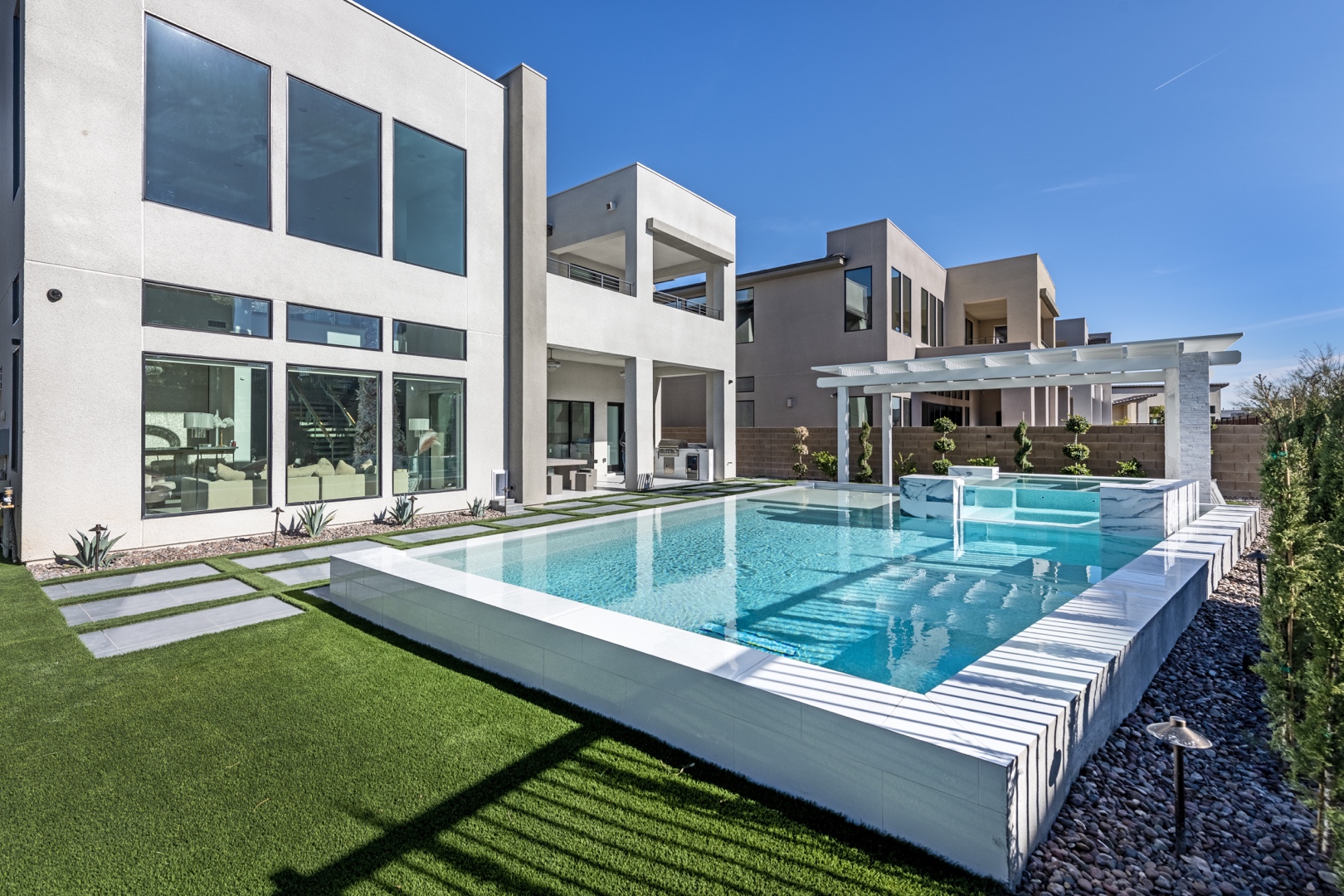
A patio is not simply the surface beneath a dining table or chaise lounge. In a Las Vegas outdoor environment, it frames the pool, affects how heat moves through the yard, directs stormwater, and sets the visual standard for everything around it. The decision between concrete versus paver patios deserves more consideration than a quick comparison of initial price. The right material should support the way you entertain, the architecture of your home, and the long-term performance of the complete landscape.
For some properties, a carefully designed concrete patio creates the clean, expansive foundation a contemporary backyard needs. For others, pavers bring texture, flexibility, and a more tailored transition between a home, pool, fire feature, outdoor kitchen, and garden. Neither choice is universally superior. The better choice is the one specified, engineered, and installed for your particular site.
Concrete Versus Paver Patios in Las Vegas
Las Vegas places unusual demands on hardscape materials. Intense sun, summer heat, dry soil conditions, occasional monsoon storms, and the realities of expansive outdoor living all influence how a patio performs. A material that looks exceptional on installation day can become a disappointment if its base preparation, drainage plan, finish, or surrounding elements were treated as an afterthought.
Concrete is a poured, continuous slab. It can be broom-finished for traction, smooth-troweled for a more refined look, colored integrally, stained, scored, stamped, or finished with decorative aggregate. This breadth makes it suitable for large modern patios, pool decks, walkways, and areas where a restrained architectural surface is the goal.
Pavers are individual manufactured units, often made of concrete or natural stone, installed over a carefully prepared compacted base and bedding layer. They can be arranged in a variety of patterns and colors, with borders and inlays that make a patio feel purpose-built rather than simply poured. The joints between units are part of both their appearance and performance.
The visible difference matters, but the construction below the surface matters just as much. A premium patio begins with grading, soil evaluation, base preparation, drainage strategy, edge restraint, expansion considerations, and thoughtful transitions to the home and other hardscape features.
When Concrete Is the Stronger Design Choice
Concrete often works best when a property calls for broad, uninterrupted planes. A minimalist home with clean rooflines, a geometric pool, and a streamlined outdoor kitchen may benefit from large-format concrete areas that allow the architecture to remain the focal point. Concrete can also be shaped to accommodate curved patios, custom stair forms, integrated bench seating, and precisely placed drainage channels.
From a budget perspective, standard concrete is commonly more economical per square foot than a detailed paver installation. That advantage can be meaningful on large patios, especially when the project includes substantial square footage around a pool or an outdoor entertaining area. Decorative finishes, custom colors, complex forming, demolition, and site-access challenges can narrow that gap, so pricing should always be evaluated at the project level rather than by a generic material average.
Concrete also offers a continuous surface that can simplify furniture placement. Dining chairs and loungers sit firmly, while wheeled furniture moves without catching on joints. For outdoor rooms designed around large tables, sectionals, and a polished entertaining experience, this can be a practical advantage.
Its principal trade-off is cracking. Concrete naturally shrinks and moves as it cures and responds to temperature changes. Proper control joints help manage where cracking occurs, but they cannot promise that a slab will remain perfectly free of cracks for its entire life. In Southern Nevada, a well-designed slab, proper reinforcement, sound base work, and adequate drainage are essential. Even with excellent construction, clients should understand that fine cracks are a characteristic of concrete, not automatically evidence of poor workmanship.
Heat is another consideration. Color, finish, shade structures, and the presence of water all affect underfoot comfort. Light colors generally reflect more heat than dark colors, while certain textured finishes may feel more comfortable and provide better traction near a pool. Material selection should be coordinated with pergolas, patio covers, umbrellas, trees, and the overall shade plan rather than made in isolation.
When Paver Patios Add More Value
Pavers are often selected for their architectural richness and long-term serviceability. They introduce dimension through pattern, color variation, borders, and scale. On a luxury property, those details can connect a patio to stone veneer, a raised spa, a fire feature, retaining walls, or the facade of the home. The result is an outdoor environment that appears composed as one complete design.
Their modular nature is a significant practical benefit. If settlement, utility work, or localized damage affects part of the patio, individual pavers can usually be lifted, the base corrected, and the surface reinstalled. That is often less disruptive than removing and replacing a portion of a cracked concrete slab. Pavers also make future changes easier when a homeowner decides to add a gas fire feature, extend an outdoor kitchen, modify low-voltage lighting, or adjust drainage.
Jointed construction can provide more flexibility as the ground moves, but it is not maintenance-free. Pavers depend on disciplined installation: a properly excavated and compacted base, correct slopes, stable edge restraints, appropriate bedding sand, and joint material suited to the application. Without those fundamentals, pavers can shift, settle, or separate over time. The material itself cannot compensate for poor site preparation.
Paver patios generally carry a higher upfront investment, particularly when the design includes multiple colors, intricate patterns, natural stone accents, curved borders, steps, or elevated structures. For clients investing in a full backyard transformation, that cost can be justified by the greater design control and repairability. For a simple, secondary side-yard patio, it may not be necessary.
Pavers can also require periodic attention to joints and surface cleaning. In xeriscape environments, windblown dust and debris can collect in textured surfaces and joints. A professional maintenance plan and the right cleaning approach help preserve the patio’s intended finish without damaging surrounding landscape, pool equipment, or decorative elements.
Pool Decks, Drainage, and Safety Change the Decision
The patio material surrounding a pool must do more than look refined. It must provide traction, manage water, coordinate with coping, accommodate deck drains, and remain comfortable enough for bare feet. The relationship among the pool shell, coping, deck, drainage system, and patio material should be established during design, not solved after construction begins.
Concrete pool decks can create a clean visual continuation from the pool to adjacent living spaces. Decorative saw cuts, color systems, and finish changes can define activity zones without interrupting the surface. Pavers, meanwhile, can create a more layered, resort-inspired look and offer useful flexibility around future repairs or renovations.
Neither surface should be selected solely from a showroom sample. A small sample does not show how a color will appear beneath desert sun, alongside pool water, against your home’s exterior, or across a large expanse. Photorealistic design renderings and material boards allow these decisions to be evaluated in context before materials are ordered.
Drainage is equally central. Even in a dry climate, short, intense rain events can expose flaws in a patio’s slope or collection system. Water should move away from the home, avoid pooling near structures, and be directed according to the property’s approved drainage plan. This may involve carefully graded surfaces, channel drains, area drains, swales, or other engineered solutions. A beautiful patio that holds water is not a finished outdoor living space.
Look Beyond Initial Cost
The more useful question is not, “Which patio costs less?” It is, “Which patio supports the value and use of this property over time?” Initial cost is only one part of the decision. Consider the desired lifespan, likelihood of future additions, maintenance expectations, visual importance of the patio, pool integration, drainage needs, and the consequences of repair.
A well-executed concrete patio can be an excellent investment when its finish, joints, color, and proportions are designed with the home. A high-quality paver patio can offer exceptional visual distinction and localized repair options when installed over a properly engineered base. In either case, a low bid that omits drainage, preparation, supervision, or permit coordination can become expensive after the fact.
For a comprehensive backyard, the patio should be selected alongside the pool, landscape, lighting, masonry, irrigation, and outdoor amenities. This is where a master-planned design-build approach protects the investment. Green Planet Landscaping & Pools considers hardscape as part of the complete environment, coordinating materials and construction details so each element serves the larger plan.
Choose the Surface That Serves Your Life Outside
If your vision centers on a crisp contemporary setting with expansive, uninterrupted space, concrete may be the natural foundation. If you want layered texture, custom patterning, and the ability to address future localized repairs, pavers may better suit the property. Homes with complex elevations, multiple entertainment zones, raised planters, or integrated fire and water elements often benefit from studying both options in a full site plan.
The most rewarding patio is not the one chosen from a single sample or square-foot price. It is the one that feels intentional beneath your feet, performs through desert weather, and gives every gathering outside a setting worthy of the home it belongs to.