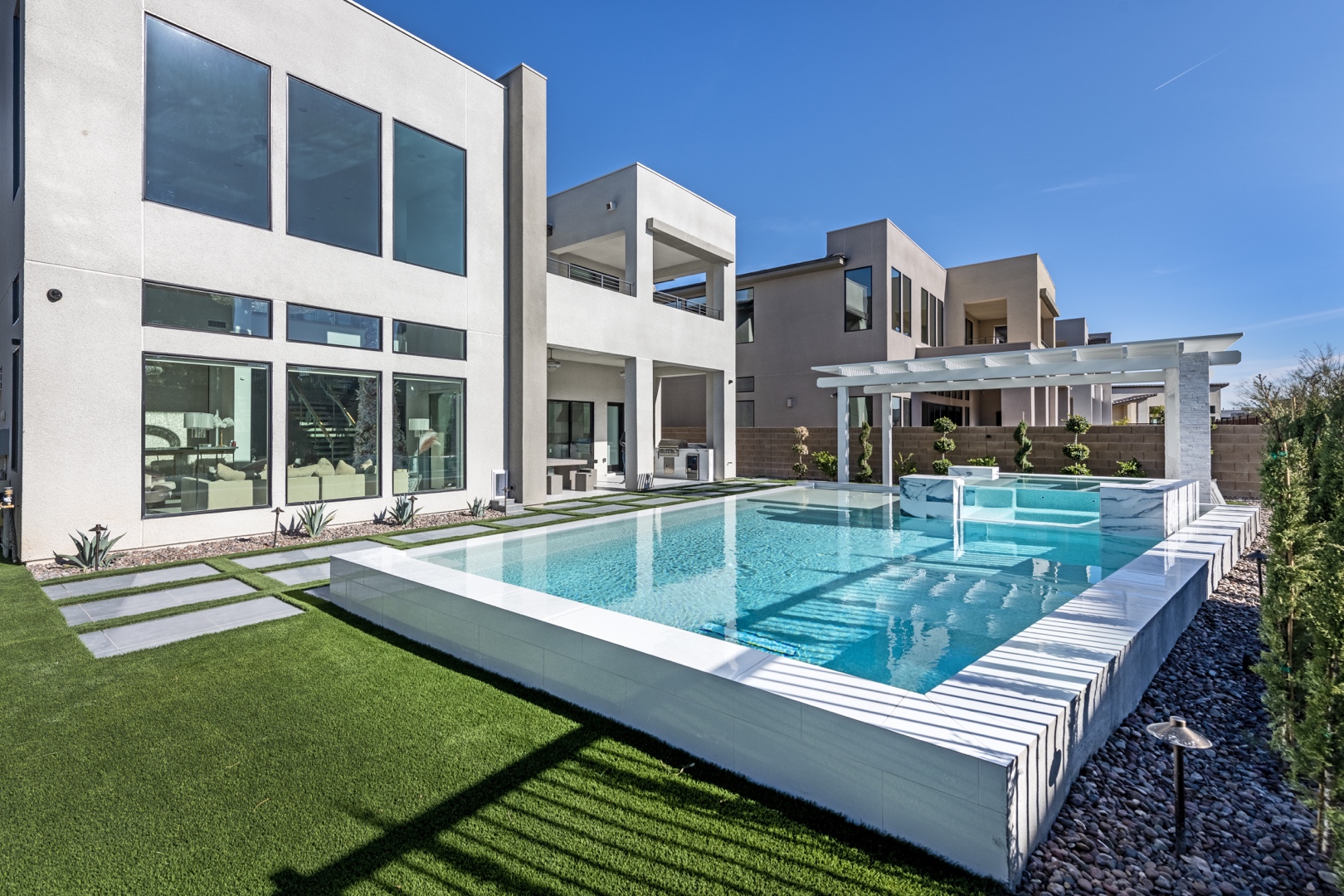
A travertine patio installation Las Vegas homeowners can rely on begins well before the first stone is set. In a climate where summer surfaces can become intensely hot, monsoon rain can expose drainage flaws, and outdoor spaces are used nearly year-round, travertine must be planned as part of the entire property. The right installation feels cool underfoot, looks proportionate to the home, drains correctly, and connects naturally to pools, kitchens, fire features, and landscape areas.
Travertine has long been favored for luxury outdoor environments because it brings natural variation, texture, and a refined sense of permanence to a backyard. Yet no stone can compensate for poor grading, weak base preparation, or a layout that ignores how the homeowner actually entertains and relaxes. For a major outdoor investment, the installation details matter as much as the material selection.
Why Travertine Works So Well in Las Vegas
Travertine is a natural limestone formed by mineral deposits, which gives every piece its own subtle color movement and character. Its warm neutrals complement the desert palette particularly well, from contemporary architecture with crisp lines to Mediterranean and transitional homes. Ivory, beige, silver, and walnut tones can be selected to coordinate with masonry, stucco, pool finishes, and exterior furnishings.
Its performance characteristics also make sense for Southern Nevada. Tumbled travertine and appropriately finished pavers tend to offer a more comfortable walking surface than many dense, dark hardscape materials in direct sunlight. The natural pores and texture provide useful traction around a pool, especially when the stone is selected and installed for wet-area use.
That does not mean every travertine product is interchangeable. Dense, properly graded pavers are generally a better choice for patios and pool decks than thin interior tile. Finish, thickness, stone grade, edge details, and the intended application all influence longevity and appearance. A professional design-build team evaluates these decisions alongside the property’s exposure, elevation changes, and planned use of the space.
Begin With a Patio Plan, Not a Stone Sample
A single travertine sample can be beautiful in a showroom and still be the wrong choice once it spans a large patio in full desert sun. The design should start with the patio’s role in the larger outdoor living environment.
For some homeowners, the patio is primarily a pool deck with room for chaise lounges, umbrellas, and clear walking paths. For others, it is an outdoor dining room with a kitchen, bar seating, and a fire feature for evening gatherings. These uses require different dimensions, furniture clearances, lighting plans, and utility coordination.
A well-planned layout also creates visual order. Travertine can define a conversation area near a fireplace, form a generous dining terrace outside the home, or continue as pool coping to create an elegant, unified edge. Changes in pattern, border treatments, step details, and retaining walls can establish zones without making the yard feel fragmented.
At Green Planet Landscaping & Pools, Inc., outdoor surfaces are considered within a complete master plan rather than treated as a disconnected upgrade. Photorealistic design visualization helps clients see how stone color, patio scale, pool geometry, planting, and architectural features will work together before construction begins. That level of planning is especially valuable when a patio must coordinate with a new pool, spa, outdoor kitchen, or renovation of an existing backyard.
The Foundation of a Lasting Installation
The visible stone is only the top layer of a successful travertine patio. Below it, excavation, compaction, base materials, edge restraint, and drainage establish whether the surface will remain stable and attractive over time.
Grade and Drainage Come First
Las Vegas receives relatively little rainfall, but intense storms can deliver significant water in a short period. A patio must be graded to move water away from the home and direct it to an appropriate drainage path. Water should not collect at door thresholds, run toward a foundation, or sit beneath pavers where it can compromise the base.
This is where site-specific judgment matters. Existing yard elevations, block walls, pool decking, roof drainage, and adjacent properties may all affect the solution. In certain projects, the patio grade may require drains, swales, drainage rock, or carefully designed transitions at steps and gates. Drainage should be resolved on the plans, not improvised after stone installation has begun.
Base Preparation Prevents Movement
Travertine pavers need a stable, properly compacted foundation. The required excavation depth and base build-up depend on soil conditions, stone thickness, traffic expectations, and the installation method. A patio that will support heavy outdoor furniture, masonry features, or frequent gatherings deserves construction standards appropriate to that use.
Inadequate compaction can lead to settling, uneven joints, rocking pavers, and water collection. It is tempting to focus budget on a more expensive stone while overlooking what is beneath it. For a high-value property, that trade-off rarely pays off. Proper site preparation protects both the patio and the investment surrounding it.
Select the Right Installation Method
Travertine can be installed in several ways, including a dry-set paver system over a prepared aggregate base or a mortared installation over concrete. Neither approach is automatically superior. The best method depends on the site, the desired finish, adjacent structures, drainage requirements, and whether the patio is part of a pool deck or a more formal architectural terrace.
Dry-set systems can offer practical drainage benefits and allow individual pavers to be addressed if repairs are needed later. Mortared installations can deliver a more monolithic, formal appearance when constructed correctly over a suitable substrate. The decision should account for movement, expansion details, and how the new patio will tie into existing hardscape.
Designing for Heat, Water, and Everyday Use
In Las Vegas, comfort is a design requirement. Even a naturally cooler stone benefits from thoughtful shade planning. Pergolas, patio covers, strategically placed trees, and shade structures can make a large difference in how often the space is used from late spring through early fall. The patio layout should reserve room for these elements rather than treating them as an afterthought.
Water also changes the material conversation. Around a pool or spa, the surface should provide dependable footing, manage splash-out, and transition cleanly to coping, drains, and equipment access areas. Tumbled finishes are often preferred for their relaxed appearance and texture, while honed materials may be better suited to covered, lower-exposure areas. The right choice depends on the specific stone and the intended use.
Furniture planning is equally practical. A dining table requires more than enough room for chairs when they are pushed in. It needs clearance for guests to pull chairs back and circulate comfortably. Lounge areas need space between seating and the pool edge. Outdoor kitchens need durable landing zones near grills, refrigeration, and serving areas. Planning dimensions around real use keeps a patio from looking generous in a rendering but feeling crowded after installation.
Patterns and Details That Elevate the Patio
Travertine offers considerable design flexibility without requiring an overly ornate result. A French pattern can bring a classic, layered feel to a broad entertaining terrace. Running bond and stacked patterns provide cleaner geometry for contemporary homes. Larger-format pavers can make an expansive backyard feel calmer and more architectural, while smaller formats may work well in curved areas or compact spaces.
The details at the perimeter are just as important. Cleanly finished steps, coordinated coping, proper transitions at sliding doors, and intentional borders distinguish a tailored installation from a basic surface replacement. If the project includes seat walls, fire features, planter walls, or an outdoor kitchen, the stone should complement the masonry finishes instead of competing with them.
Natural variation is part of travertine’s appeal, but it should be managed thoughtfully. Reviewing samples and ranges helps establish the desired direction for color and movement. A skilled installation team can distribute tones across the patio to avoid abrupt concentrations of light or dark material. This produces a more balanced, natural-looking field of stone.
Maintenance Expectations for Natural Stone
Travertine is durable, but it is not maintenance-free. Regular sweeping and rinsing help limit abrasive grit and debris. Spills from food, beverages, oils, and poolside products should be addressed promptly, particularly on lighter stone. A stone-appropriate cleaner is preferable to harsh acidic products that can damage natural limestone.
Sealing may be appropriate depending on the finish, location, and desired level of stain resistance, but it is not a substitute for proper care or correct installation. The patio should also be inspected periodically for joint wear, drainage changes, or movement near edges and transitions. Addressing a small issue early is far simpler than allowing it to affect a larger area.
Homeowners should expect some natural weathering. Travertine develops character over time, especially in an outdoor setting. The goal is not to keep natural stone looking artificially new, but to maintain a clean, stable, well-crafted surface that continues to suit the home.
Choose a Partner Who Can Coordinate the Whole Environment
A travertine patio often touches more than one trade. It may require demolition, grading, drainage, masonry, pool coordination, electrical planning for lighting, irrigation adjustments, and permit review. Managing these elements through a single licensed, bonded, and insured design-build contractor helps protect schedule, quality control, and accountability.
Before selecting an installer, ask how the company documents grades, handles drainage, prepares the base, coordinates permits and HOA requirements, and supervises the work. Review projects with conditions similar to yours, particularly if the patio connects to a pool, elevated yard, outdoor kitchen, or complex hardscape. A clear scope and thoughtful construction plan are more valuable than a low initial price that leaves critical details undefined.
The best travertine patio is not simply a beautiful surface. It is the ground beneath memorable dinners, quiet mornings, poolside weekends, and evenings spent outside long after the desert heat has faded. Plan it with the same care you would bring to the rest of your home, and it can become one of the most enduring parts of your outdoor living environment.