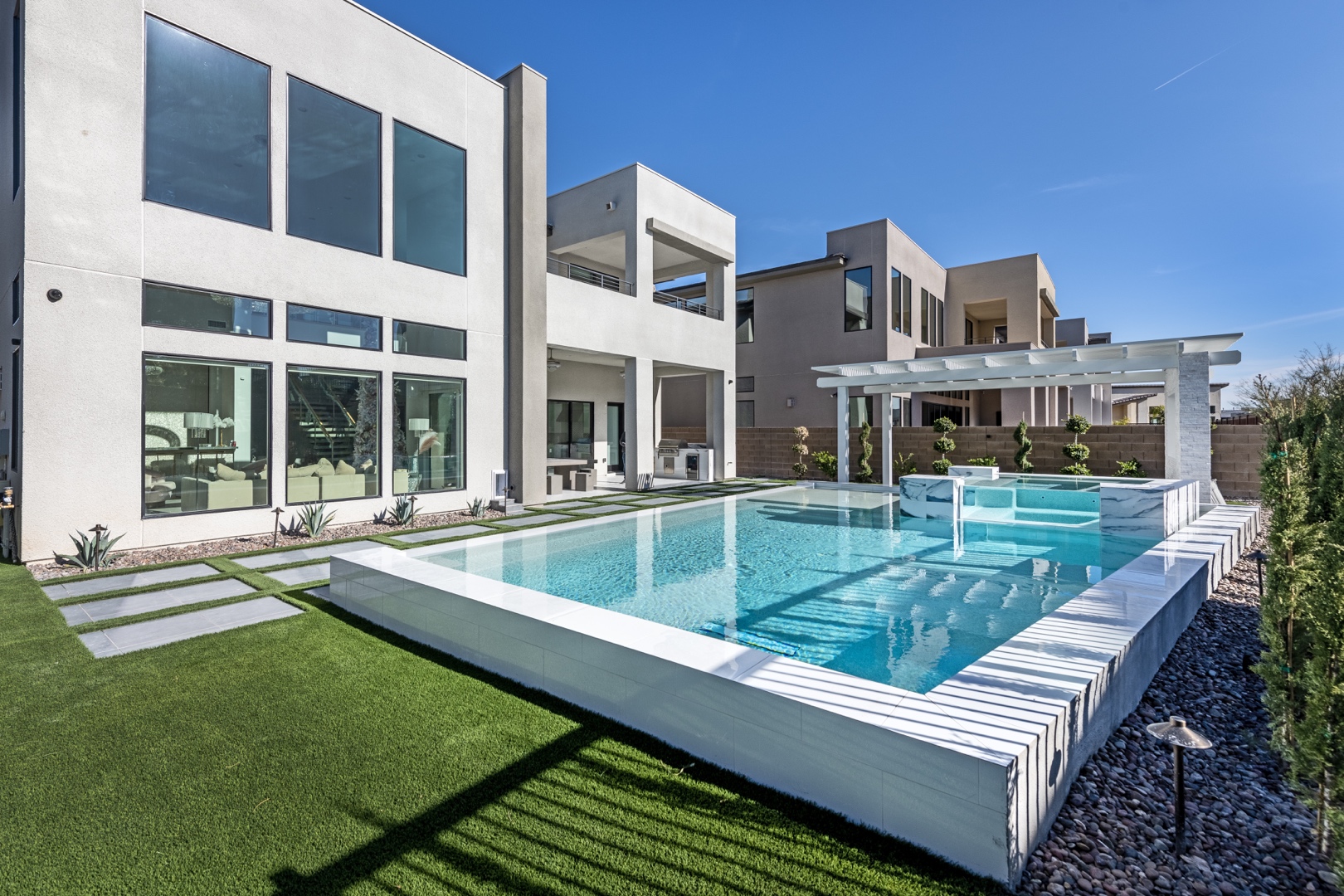
A pool’s sanitizing system is rarely the first feature homeowners notice in a photorealistic backyard rendering. They see the waterline tile, the fire feature reflected across the surface, the raised spa, and the space where family and guests will gather. Yet the decision between saltwater versus chlorine pools has a lasting effect on daily comfort, equipment planning, maintenance expectations, and the way a custom pool performs in Las Vegas heat.
The first point deserves clarity: a saltwater pool is still a chlorine pool. The difference is how chlorine is supplied. A traditional pool receives chlorine manually through liquid, tablets, or other products. A saltwater pool uses a salt chlorine generator to convert dissolved salt into chlorine as water moves through the system. Neither approach eliminates the need for water testing, professional service, or thoughtful equipment selection. The right choice depends on how the pool will be used, how it is designed, and how involved the owner wishes to be in ongoing care.
Saltwater Versus Chlorine Pools in Las Vegas
Las Vegas pools operate in conditions that demand disciplined planning. Intense sun, long swim seasons, windblown debris, hard source water, and significant evaporation all affect water chemistry. A sanitizing system should be selected as part of the complete pool design, not as an afterthought once the shell is finished.
A saltwater system maintains a relatively steady chlorine level by generating sanitizer throughout the day. For homeowners who use their pool frequently or prefer a consistent, lighter-touch approach to chlorine delivery, that can be appealing. The water often feels softer to swimmers, not because it is chlorine-free, but because the salinity level is low and chlorine spikes are less common when the system is correctly sized and managed.
A conventional chlorine system offers a different kind of flexibility. It has a lower initial equipment cost and can be straightforward to operate with a qualified pool service provider. It can also suit pools with occasional use, properties where an owner prefers direct control over chemical additions, or projects where the equipment budget is allocated to other high-impact features such as automation, water features, premium finishes, or an integrated outdoor kitchen.
Neither option is automatically superior. The best fit comes from matching the system to the property, the pool’s hydraulic design, the finish materials, and the owner’s expectations.
How Each System Changes the Ownership Experience
Water feel and swimmer comfort
Many homeowners select saltwater because they enjoy the water’s gentler feel. Properly maintained saltwater pools may be more comfortable for swimmers with dry skin or sensitive eyes, especially when compared with a traditionally chlorinated pool that has been overtreated or allowed to develop an imbalance.
That said, discomfort is usually a chemistry issue rather than a verdict on the sanitizing method. A well-balanced traditional chlorine pool can feel excellent. Conversely, a neglected saltwater pool can irritate skin and eyes just as readily. pH, total alkalinity, calcium hardness, stabilizer levels, and proper circulation matter in both systems.
Day-to-day maintenance
Saltwater generation can reduce the frequency of manually adding chlorine, but it does not make the pool maintenance-free. Salt cells require inspection and periodic cleaning. They eventually need replacement. The system must be adjusted as water temperature, swimmer load, sun exposure, and seasonal use change.
Traditional chlorine pools require more regular attention to sanitizer supply, particularly during Las Vegas summers, when ultraviolet exposure consumes chlorine quickly. Tablets can be convenient, but they may add stabilizer over time. Liquid chlorine avoids that accumulation but needs more frequent dosing. A knowledgeable service routine accounts for these differences rather than treating every pool with the same schedule.
In either case, automation can make ownership far easier. A properly planned control system can manage pump schedules, lighting, heating, spa functions, water features, and salt-cell output or chlorination schedules from one coordinated platform.
Upfront and long-term cost
A saltwater system generally costs more at installation because it requires a chlorine generator and cell. Over time, it can reduce spending on packaged chlorine products, although those savings should be considered alongside cell replacement, periodic cleaning, electrical use, and water balancing products.
A conventional chlorine setup usually costs less initially. Its long-term expense varies with chemical choices, service frequency, pool size, usage, and summer conditions. For a premium custom pool, the more meaningful question is not simply which system costs less in a single season. It is which system supports dependable water quality and a satisfying ownership experience over many years.
Materials, Details, and Construction Matter
Saltwater requires special consideration for every material that may encounter splash-out, mist, or repeated wetting. This does not mean saltwater is unsuitable for luxury pools. It means the project should be designed with appropriate materials, installation methods, and maintenance practices from the outset.
Natural stone, certain masonry details, metal fixtures, handrails, coping, and water-feature components should be selected and detailed with the environment in mind. Saltwater can accelerate corrosion or contribute to efflorescence and surface wear when incompatible materials are used, joints are poorly constructed, or water chemistry is neglected. The risk is manageable, but it is real.
This is where integrated design-build planning protects the investment. A pool cannot be evaluated in isolation when it is connected to a raised spa, spillways, travertine decking, retaining walls, a fire bowl, landscape lighting, and an outdoor kitchen. Drainage, splash zones, equipment placement, material transitions, and access for future service should be resolved before construction begins.
For traditional chlorine pools, material compatibility still matters. High chlorine levels and poor pH control can also damage finishes, metals, and seals. Good construction and conscientious care are the foundation of durability regardless of the sanitizer chosen.
The Spa Question Deserves Its Own Discussion
If a pool includes a heated spa, saltwater selection warrants additional thought. Warm water increases chlorine demand and can accelerate scale formation on a salt cell, particularly in an area with hard water. A well-designed system can accommodate a saltwater spa, but it needs correct hydraulic sizing, automation, water-balance management, and realistic maintenance expectations.
Some homeowners prefer conventional chlorination for a spa-heavy lifestyle because it offers immediate manual control. Others value saltwater automation and are comfortable with attentive service. There is no universal answer. The design team should consider whether the spa will be used nightly, heated year-round, operated separately from the pool, or connected through a spillway that affects the overall water balance.
Questions Worth Asking Before You Decide
Before selecting a sanitizer system, consider how the backyard will actually function. Will the pool be used daily by a family, primarily for weekend entertaining, or occasionally by seasonal residents? Is a raised spa central to the design? Will the project include natural stone, decorative metalwork, fountains, or extensive water features? Is low-touch automation a priority, or does the owner already have a trusted service professional who manages chemistry closely?
Also consider the pool’s circulation design. A salt cell must be correctly sized for the water volume and installed within a properly engineered equipment layout. Pump selection, filtration, plumbing runs, valves, heaters, and feature pumps all influence water movement and sanitizer distribution. An undersized or poorly integrated system will not deliver the effortless experience homeowners expect from a high-end pool.
Green Planet Landscaping & Pools approaches these decisions within the context of the entire outdoor environment. Design visualizations, construction documentation, permit coordination, and skilled trade execution help ensure that the pool system supports the finished space rather than creating future compromises.
A beautiful pool should feel as refined in year five as it does on the day it is filled. Choose the sanitizing system that fits your habits and materials, then give it the same level of professional planning and care as every other element of your outdoor living environment.