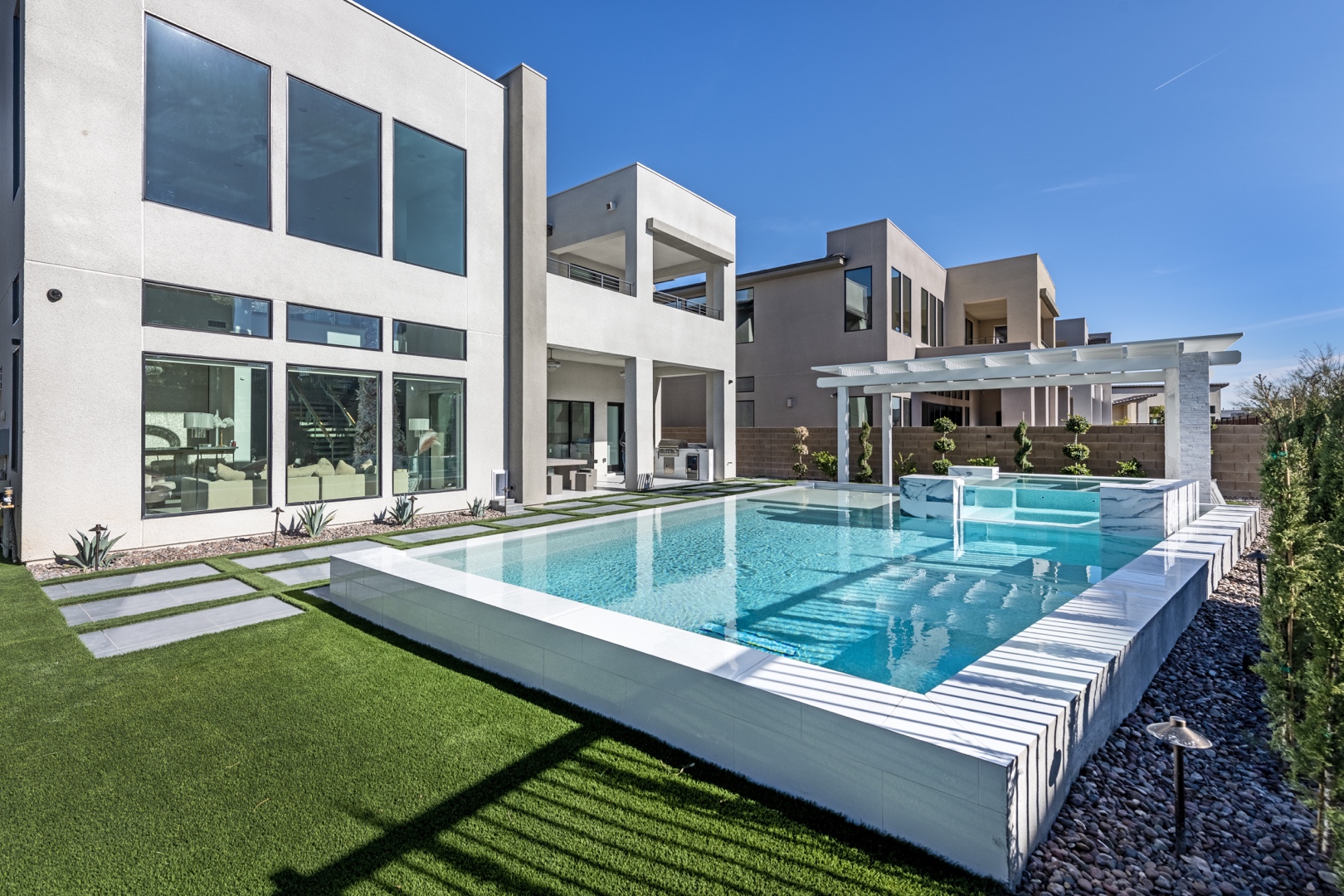
A saltwater chlorine comparison begins with one clarification: a saltwater pool is still a chlorine pool. The difference is how the chlorine is supplied. Rather than routinely adding chlorine tablets, liquid, or granular products, a salt chlorine generator converts dissolved salt into chlorine as the pool circulates. For Las Vegas homeowners planning a refined backyard environment, that distinction affects water comfort, daily upkeep, equipment selections, and long-term construction details.
A salt system can be an excellent fit for a custom pool, but it is not automatically the best answer for every property. The right choice depends on how the pool will be used, the finish materials around it, the owner’s maintenance preferences, and the care given to water chemistry in Southern Nevada’s demanding climate.
Saltwater Chlorine Comparison: How Each System Works
A traditional chlorine pool receives sanitizer directly. A pool professional or homeowner adds liquid chlorine, tablets, granular chlorine, or a combination of products to maintain a safe free-chlorine level. The equipment is relatively straightforward, and the sanitizer can be adjusted quickly when bather load, weather, or a water-quality issue calls for a change.
A saltwater pool begins with a modest concentration of salt in the water, generally far below the salt level of ocean water. As water passes through the salt cell, the generator produces chlorine. That chlorine sanitizes the water, then returns to salt in a continuing cycle. Salt must still be tested and occasionally replenished, while the cell needs periodic inspection and cleaning.
Neither system eliminates the need for professional water balance. Both require attention to pH, alkalinity, calcium hardness, stabilizer, filtration, circulation, and routine testing. A salt system automates chlorine production. It does not make the pool maintenance-free.
Water Feel and the Guest Experience
Many homeowners choose saltwater because the water often feels softer and less drying on the skin. With a properly sized generator producing a consistent sanitizer level, swimmers may also notice less of the sharp chlorine odor commonly associated with poorly balanced pools.
That experience is real, but it should be understood correctly. The familiar smell is usually caused by chloramines, which develop when chlorine combines with contaminants. A well-managed traditional chlorine pool can feel clean and comfortable, while a neglected saltwater pool can still become irritating or develop an unpleasant odor.
For an outdoor living space built around entertaining, the practical advantage of saltwater is consistency. A generator can maintain chlorine production while a family is away, during a busy season of entertaining, or through stretches of intense summer heat. It is especially appealing when the pool and spa are focal points beside an outdoor kitchen, lounge area, fire feature, or guest casita.
Upfront Cost Versus Ongoing Expense
Traditional chlorine equipment usually has the lower initial cost. There is no salt cell or control system to purchase, and the pool can be sanitized with readily available products. This can make conventional chlorination attractive for homeowners who prefer a simpler equipment package or have a limited pool operating season.
Saltwater systems cost more at installation because they require the generator, cell, controls, and initial salt addition. The cell is also a consumable component. Depending on water conditions, usage, operating hours, and maintenance, it will eventually need replacement.
Over time, saltwater owners may spend less on routine sanitizer purchases, but the savings are not guaranteed. Electricity to operate the generator, periodic cell replacement, water balancing chemicals, and professional service remain part of the ownership cost. In a Las Vegas pool that runs through much of the year, the convenience and comfort of automated production may justify the higher initial investment. For a lightly used pool or a property where equipment simplicity is the priority, traditional chlorination may be more economical.
The better question is not which system is universally cheaper. It is which operating profile fits the way the property will be enjoyed over the next decade.
Las Vegas Water Changes the Decision
Southern Nevada conditions deserve more attention than most generic pool comparisons provide. Heat, intense sun, evaporation, hard water, and extended swim seasons can place meaningful demands on any sanitizing system.
High temperatures and strong ultraviolet exposure increase chlorine consumption. A salt generator must be sized correctly for the actual pool volume and expected use, not merely selected at the minimum manufacturer rating. In many cases, choosing a generator with capacity above the pool’s nominal gallonage provides better production headroom during peak summer conditions. A pool that hosts frequent gatherings, includes a spa, or sees heavy family use should not be designed around best-case assumptions.
Hard water is equally relevant. Calcium scale can develop on tile, finishes, heaters, and salt cells when water balance is not actively managed. Scale on a salt cell reduces its efficiency and can shorten its service life. Regular inspection and careful chemistry management are not optional details in the Las Vegas market. They are part of protecting the equipment investment.
Saltwater systems also tend to operate at a higher pH, which may require periodic acid additions to keep water balanced. This is manageable with professional service, but homeowners should understand that the generator does not replace chemistry oversight.
Materials, Finishes, and Integrated Pool Design
The salt concentration in a residential saltwater pool is mild, but salt exposure still matters when specifying materials. A premium pool should be planned as part of the entire outdoor environment, not as an isolated vessel with equipment added later.
Natural stone, porous decking, coping, metal accents, water features, and adjacent masonry all require appropriate product selection, installation methods, and maintenance planning. Some materials are more forgiving than others. Sealers, drainage, expansion considerations, and the details where water meets hardscape deserve the same level of care as the pool finish or tile line.
This does not mean saltwater pools are unsuitable for elegant stonework or sophisticated water features. It means the design team should account for the system from the beginning. Properly detailed materials, a correctly located equipment pad, accessible service clearances, and thoughtful drainage help preserve the appearance and performance of the full outdoor living environment.
A raised spa introduces another consideration. Spas can heat quickly, carry a higher bather load per gallon, and require more active water management than the pool itself. The automation, plumbing configuration, heater capacity, and salt system must work together so the transition from pool mode to spa mode is dependable rather than inconvenient.
Maintenance: Convenience Is Not Neglect
Saltwater systems reduce the routine task of manually adding sanitizer, which is their strongest day-to-day benefit. Yet they require their own maintenance discipline. The salt level should stay within the manufacturer’s range, the cell should be inspected for scale, and the control panel should be monitored for warnings or reduced output.
Traditional chlorine pools require more frequent sanitizer handling, but they may be easier to correct quickly after a storm, a pool party, algae onset, or equipment issue. A technician can raise chlorine levels immediately without waiting for a generator to catch up. Many saltwater owners also keep a supplemental chlorine product available for those occasional high-demand situations.
In either case, circulation is fundamental. Variable-speed pumps, correctly sized filtration, strategic returns, and automated controls can improve water quality while reducing unnecessary energy use. Sanitizer choice is only one component of a well-performing pool system.
Which System Fits Your Property?
Saltwater is often the stronger choice for homeowners who want consistent chlorination, a softer-feeling swim experience, and less hands-on chemical handling. It is particularly well suited to primary residences with frequent pool use and to custom outdoor environments where convenience supports a relaxed entertaining lifestyle.
Traditional chlorine may be the better fit when lower initial equipment cost, quick manual control, or a simpler equipment configuration matters most. It can also be appropriate for certain renovation scopes where the existing equipment layout or electrical capacity makes a salt conversion less practical.
For either option, precise planning matters more than a label on the control panel. Pool volume, finish selection, water features, spa integration, equipment access, shade patterns, owner habits, and local water conditions should guide the decision. Green Planet Landscaping & Pools approaches these choices within the larger design and construction plan, coordinating the details that allow a luxury backyard to perform as beautifully as it looks.
A pool should feel effortless when guests arrive and dependable when the desert heat reaches its peak. Start with the sanitizing system that suits your lifestyle, then give the equipment, materials, and water management plan the same careful attention as every visible element surrounding it.