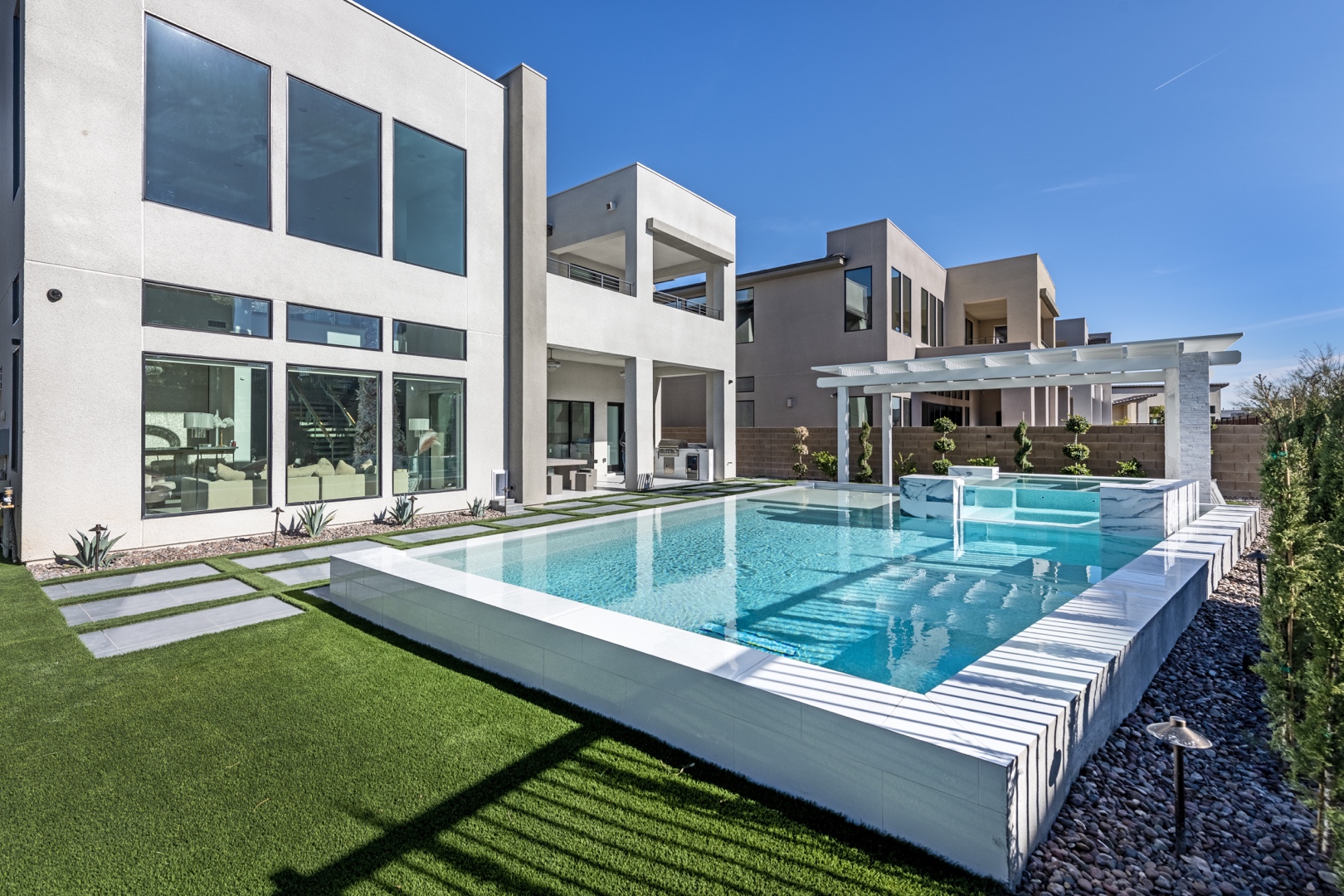
A pool finish is not a minor cosmetic selection made at the end of construction. It determines how the water reflects light, how the surface feels underfoot, how the pool complements surrounding stone and landscape, and how well the investment holds up over time. When weighing pool plaster versus pebble, Las Vegas homeowners are usually balancing a clean, classic look against greater texture, durability, and visual depth.
The better choice depends on the architecture of the home, the way the pool will be used, the selected waterline tile and hardscape, and the level of long-term maintenance a homeowner expects. Both finishes can be beautiful when specified and installed correctly. They simply produce very different experiences.
Pool Plaster Versus Pebble at a Glance
Traditional plaster is a smooth cement-based interior finish, typically made with white cement, marble aggregate, pigments, and carefully controlled additives. It has been a pool-industry standard for generations because it creates a refined, uniform surface and offers substantial flexibility in color. White plaster produces a bright, familiar blue water appearance, while tinted finishes can move the water toward soft gray, blue, green, or deeper jewel tones.
Pebble finishes use exposed natural or polished aggregate within a cement matrix. Once the surface is cured and treated, the small stones remain visible, producing a dimensional finish with variation from one area to another. The effect can feel organic and elevated, especially alongside natural stone coping, modern porcelain decking, desert planting, or a resort-style water feature.
In broad terms, plaster prioritizes smoothness and a more controlled appearance. Pebble prioritizes resilience, depth, and character. Neither should be chosen from a sample chip alone. Outdoor light, pool depth, water movement, shade patterns, and adjacent materials all influence the final result.
The Look of the Water Is Part of the Decision
A pool interior does not simply color the shell. It changes the perceived color of the water. This is particularly relevant in Southern Nevada, where strong sunshine, clear skies, and light-colored hardscapes can make the water appear brighter than it would in a shaded or humid climate.
Plaster creates a quieter, more even canvas. It can be the right fit for a restrained contemporary pool, a formal geometric design, or a backyard where the architecture should remain the focal point. A light plaster finish also gives smaller pools a clean, open feel. However, its uniformity can make staining, mottling, and mineral variations more visible over time.
Pebble adds visual movement even when the water is still. Darker aggregate blends can create dramatic blue-green water, while lighter blends can maintain a fresh, luminous appearance without looking stark. For freeform pools, vanishing edges, beach entries, and pools integrated with boulders or cascading water features, the natural variation of pebble often feels especially appropriate.
The key is coordination. A finish selected without considering coping, tile, patio pavers, exterior paint, and nighttime lighting can look disconnected once the project is complete. A master-planned design process allows those selections to reinforce one another before construction begins.
Comfort and Daily Use
Plaster is generally smoother than standard exposed pebble. For homeowners who spend long afternoons in the pool, have young children, or prefer a surface that feels gentle on bare feet, that difference matters. A properly finished plaster interior has a classic, comfortable feel that many swimmers prefer.
Pebble has more texture by design. Quality pebble interiors are not necessarily uncomfortable, but they can feel firmer and more textured underfoot than plaster, especially on steps, shallow shelves, and swim-out benches where people stand or sit frequently. Smaller aggregate and polished pebble options can reduce that sensation while retaining many of pebble’s visual and durability benefits.
This is an area where pool use should guide the selection. A pool designed primarily for visual impact and adult entertaining may favor a richer pebble blend. A family pool with an expansive tanning ledge, play area, and frequent barefoot use may call for plaster or a more refined aggregate product. There is no single luxury choice. There is a finish that better serves the way the space will actually be lived in.
Durability in the Las Vegas Climate
Las Vegas pools face demanding conditions: intense ultraviolet exposure, windblown dust, high evaporation, hard water, and frequent chemical adjustments. These conditions do not make plaster unsuitable, but they make correct water balance and professional construction more consequential.
Traditional plaster commonly has a shorter service life than a quality pebble finish. Actual longevity varies based on water chemistry, cleaning practices, bather load, startup procedures, and workmanship, but plaster may need renovation sooner. Over time, it can show etching, discoloration, calcium scale, rough areas, or surface mottling. Some of these conditions are manageable; others signal that refinishing is approaching.
Pebble is generally more resistant to visible wear and can deliver a longer-lasting interior when installed by experienced crews and cared for correctly. Its aggregate surface also tends to conceal minor variations better than a uniform plaster finish. That does not mean pebble is maintenance-free. Calcium scale can still collect on exposed stones, and unbalanced water can damage the cement matrix that holds the aggregate in place.
Water chemistry remains the most practical protection for either finish. In a desert environment, evaporation concentrates minerals quickly. Consistent testing, proper calcium management, and timely attention to scale are far less expensive than trying to correct avoidable surface damage later.
Installation Quality Is Not Optional
A finish is only as dependable as the pool shell preparation, material application, curing process, and startup plan behind it. The surface must be applied under suitable site conditions, at the correct thickness, and with disciplined timing. The initial fill and first weeks of water treatment are equally important.
For a custom pool, this is one reason to value a coordinated design-build team. The pool finish should not be treated as an isolated selection handed off without accountability. It should be coordinated with the pool engineering, hydraulic design, water features, drainage, equipment, and construction schedule.
Cost and Long-Term Value
Plaster usually has a lower upfront cost than pebble, making it attractive when a homeowner wants a polished result while directing more of the budget toward decking, shade structures, an outdoor kitchen, landscape lighting, or other features. In the right project, that can be a thoughtful allocation of resources.
Pebble typically requires a larger initial investment. The material and application process are more specialized, and premium blends can add further cost. Yet its longer potential service life and upscale visual appeal can improve its value over the life of the pool. For many luxury properties, the added dimension also better supports the overall caliber of the outdoor environment.
The decision should not be reduced to the initial price difference. Consider how long you plan to own the property, whether the pool is a central architectural feature, how heavily it will be used, and what a future renovation would involve. Replastering is not merely a surface expense. It can require coordination with tile repairs, equipment access, draining, water replacement, and the disruption of a finished backyard.
When Plaster Is the Better Choice
Plaster is a strong option when a homeowner values a smooth swim surface, a classic pool appearance, and a more conservative initial budget. It can also be ideal for tailored architectural looks where a single, consistent color supports a crisp geometric form.
It is particularly compelling when the greater project budget is intentionally focused on other high-impact elements, such as custom masonry, a fire feature, a covered patio, or a water-smart landscape plan. A carefully selected plaster color, paired with quality tile and craftsmanship, can look sophisticated for many years.
When Pebble Is the Better Choice
Pebble is often the preferred finish for homeowners seeking maximum visual depth, stronger resistance to day-to-day wear, and a premium finish that complements natural materials. It works exceptionally well in resort-inspired pools, negative-edge designs, freeform layouts, and projects where the water itself is meant to be a defining design element.
It may also be the practical choice for owners who expect long-term ownership and want to prioritize durability from the outset. The textured feel is the principal trade-off, so samples should be evaluated with bare feet rather than judged only by appearance.
Make the Selection in Context
At Green Planet Landscaping & Pools, finish selections are considered within the complete outdoor environment, not in isolation. A photorealistic design presentation can help homeowners see how an interior finish will relate to the pool tile, coping, patio materials, landscape palette, and evening illumination before final materials are ordered.
Ask to see larger samples in direct sunlight, review completed pools with similar colors, and discuss the expected maintenance requirements for your specific water conditions. A small sample can suggest a color, but it cannot fully show how a finish will read across hundreds of square feet of moving water.
The most satisfying pool interiors are selected early enough to inform the entire design and carefully enough to remain beautiful after the first season becomes the tenth. Choose the finish that supports how you want the water to feel, how you want the backyard to look, and how you want your investment to perform year after year.