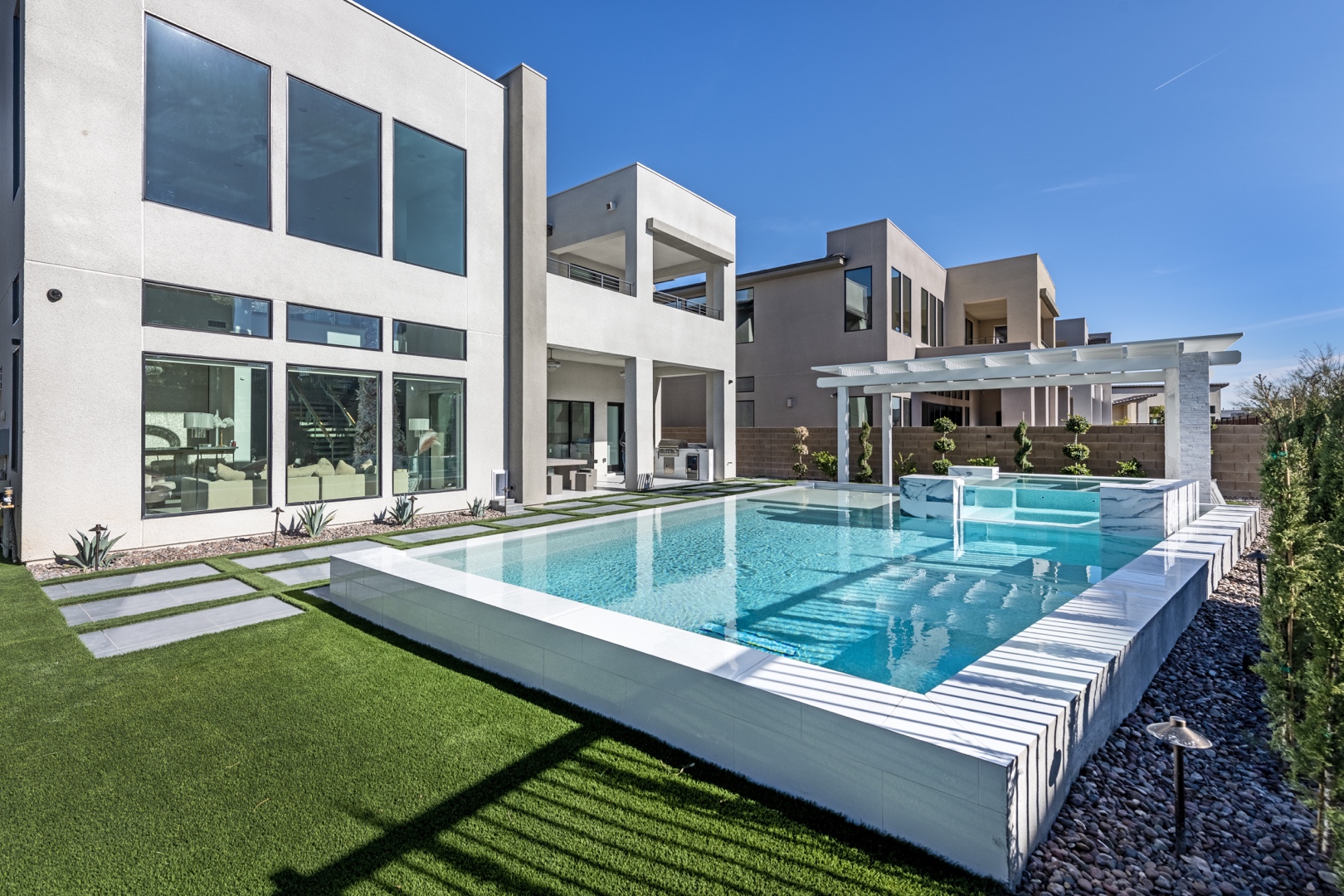
A fireplace should do more than fill an empty patio wall. In a Las Vegas backyard, it can establish the focal point for evening entertaining, create a destination beyond the pool, and make the outdoor living area feel intentional in every season. A successful outdoor fireplace installation Las Vegas homeowners will enjoy for years begins with a plan for the complete environment, not a standalone masonry feature.
The desert rewards thoughtful design. Daytime heat, intense ultraviolet exposure, wind, hard water, changing temperatures, and the realities of local building requirements all influence how a fire feature should be designed and constructed. The right fireplace is proportional to the property, positioned for comfort and views, built from materials that hold their finish, and connected naturally to patios, kitchens, pools, lighting, and landscape architecture.
Start With How the Backyard Will Be Used
An outdoor fireplace is often selected for its visual appeal, but its most valuable role is shaping how people gather. A family that hosts dinner parties may benefit from a fireplace that anchors a conversation terrace near an outdoor kitchen. For a quieter retreat, the same feature may define a private lounge outside the primary suite, framed by low-water planting and soft landscape lighting.
Placement affects every part of that experience. The fireplace should feel present without blocking views from the home, crowding circulation around the pool, or sending smoke toward seating areas. Although gas fireplaces are a popular choice for their clean operation and easy control, wood-burning designs may suit owners who value a more traditional fireside experience. Each option has design, ventilation, fuel, maintenance, and approval considerations that deserve attention early in the process.
Scale matters just as much. An oversized fireplace can overpower a compact courtyard, while a feature that is too small can disappear beside a large pool or expansive covered patio. A custom design considers the width and height of adjacent structures, ceiling lines under patio covers, furniture groupings, and the visual weight of surrounding stone, stucco, or tile.
Outdoor Fireplace Installation in Las Vegas Requires Local Insight
Las Vegas is a place where exterior materials work hard. Surfaces exposed to prolonged sun and heat need to retain their appearance while standing up to thermal movement and regular use. Quality masonry construction, properly detailed substrates, durable finish materials, and appropriate expansion planning protect both the appearance and long-term performance of the fireplace.
Natural stone can provide a timeless, architectural character, while porcelain tile offers precise color control and low-maintenance appeal. Smooth stucco finishes may complement contemporary architecture, and ledgestone or split-face materials can introduce depth to a more rustic outdoor setting. There is no universally best finish. The right selection depends on the home’s architecture, the desired level of texture, and how the material relates to nearby pool coping, decking, retaining walls, and kitchen finishes.
Fireplace design also involves more than the visible facade. Gas lines, electrical connections for ignition or accent lighting, drainage around the patio, structural footings, chimney requirements where applicable, and clearances from nearby structures must be planned correctly. A feature that looks beautiful in a rendering still needs disciplined engineering, code management, and construction supervision behind it.
Design the Fireplace as Part of a Complete Outdoor Room
The most refined backyards do not feel like a collection of purchases made over time. They feel composed. A fireplace can connect the major outdoor zones by repeating materials and lines found elsewhere in the property. Its hearth may align with a raised spa wall. Its stone may be echoed on an outdoor kitchen island. Its firebox may face a seating area with lighting designed for late-night conversation.
This is particularly important when a project includes a new pool, spa, pergola, kitchen, or significant landscape renovation. Installing the fireplace first without accounting for future construction can lead to awkward utility routes, mismatched materials, or costly revisions. Master planning allows every component to be coordinated before construction begins, even if the work is completed in phases.
A photorealistic design process gives homeowners the opportunity to evaluate the fireplace in context. It becomes easier to consider questions that are difficult to answer from a small material sample or a rough sketch: Will the fire feature compete with the pool? Is there enough room for deep lounge furniture? Does the fireplace look balanced from inside the home? How will the space feel after dark?
Consider Heat, Wind, and Seating Comfort
A Las Vegas evening can turn comfortable quickly once the sun drops, especially in cooler months. A fireplace adds warmth, but it should not be expected to heat an entire large patio. The seating area should be designed at a realistic distance from the firebox, with furniture arranged to encourage conversation while maintaining comfortable circulation.
Wind patterns deserve consideration as well. In an exposed yard, the orientation of the opening and chimney can affect comfort and performance. Nearby walls, landscaping, patio covers, and elevation changes may either buffer wind or create channels that make a seating zone less pleasant. An experienced designer studies these site conditions before finalizing the feature’s location.
Select Details That Feel Personal, Not Trend-Driven
Custom does not have to mean ornate. Some of the strongest fireplace designs rely on restrained proportions, high-quality materials, and a carefully selected mantel, hearth, or integrated wood storage niche. Others become architectural statements with a dramatic chimney, a broad raised hearth, or a framed television location designed for outdoor use.
The best choice depends on the home and the owner. A contemporary residence may call for a clean-lined fireplace faced in large-format porcelain or smooth plaster. A desert estate may benefit from natural stone, warm metal accents, and planting that softens the masonry. Rather than choosing a design from a catalog, begin with the property’s architecture and the lifestyle the space must support.
Permits, Safety, and Construction Standards Are Not Extras
Premium outdoor construction requires careful attention to the elements homeowners may never see after completion. Depending on the fireplace design and site conditions, the project may involve permit review, utility coordination, engineered documentation, inspections, and compliance with local codes. These requirements can affect location, fuel type, chimney configuration, setbacks, and construction methods.
A qualified design-build contractor helps manage that process while coordinating the skilled trades involved. This matters especially when the fireplace is part of a larger scope involving masonry, pools, water features, electrical work, or structural patio improvements. One accountable team can protect the design intent from the first visualization through final construction.
Green Planet Landscaping & Pools approaches fire features as part of a complete outdoor living environment, combining detailed planning with licensed construction expertise. For homeowners making a significant investment in their property, that integrated approach helps prevent the common disconnect between an attractive concept and a buildable, code-conscious finished space.
Plan for Lasting Beauty With Sensible Maintenance
Even the highest-quality fireplace benefits from regular care. Gas components should be professionally inspected according to manufacturer guidance, burners kept clear, and ignition systems tested before heavy seasonal use. Masonry and finish materials should be cleaned with products appropriate to their specific composition. Aggressive cleaners can damage stone, grout, metal, and protective sealers.
The surrounding landscape also affects long-term appearance. Water-smart planting should be located so irrigation does not repeatedly spray the fireplace facade or hearth. Mature trees and shrubs should be maintained to preserve required clearances and keep falling debris out of the firebox. Well-placed lighting makes the feature usable after dark without creating glare or washing out the flame.
When the plan is right, an outdoor fireplace becomes more than a source of warmth. It gives the backyard a center of gravity – a place for quiet mornings, lingering dinners, and the kind of evenings that make a well-designed Las Vegas home feel complete. Begin with the way you want to live outdoors, then build the feature and the surrounding environment to support it beautifully.