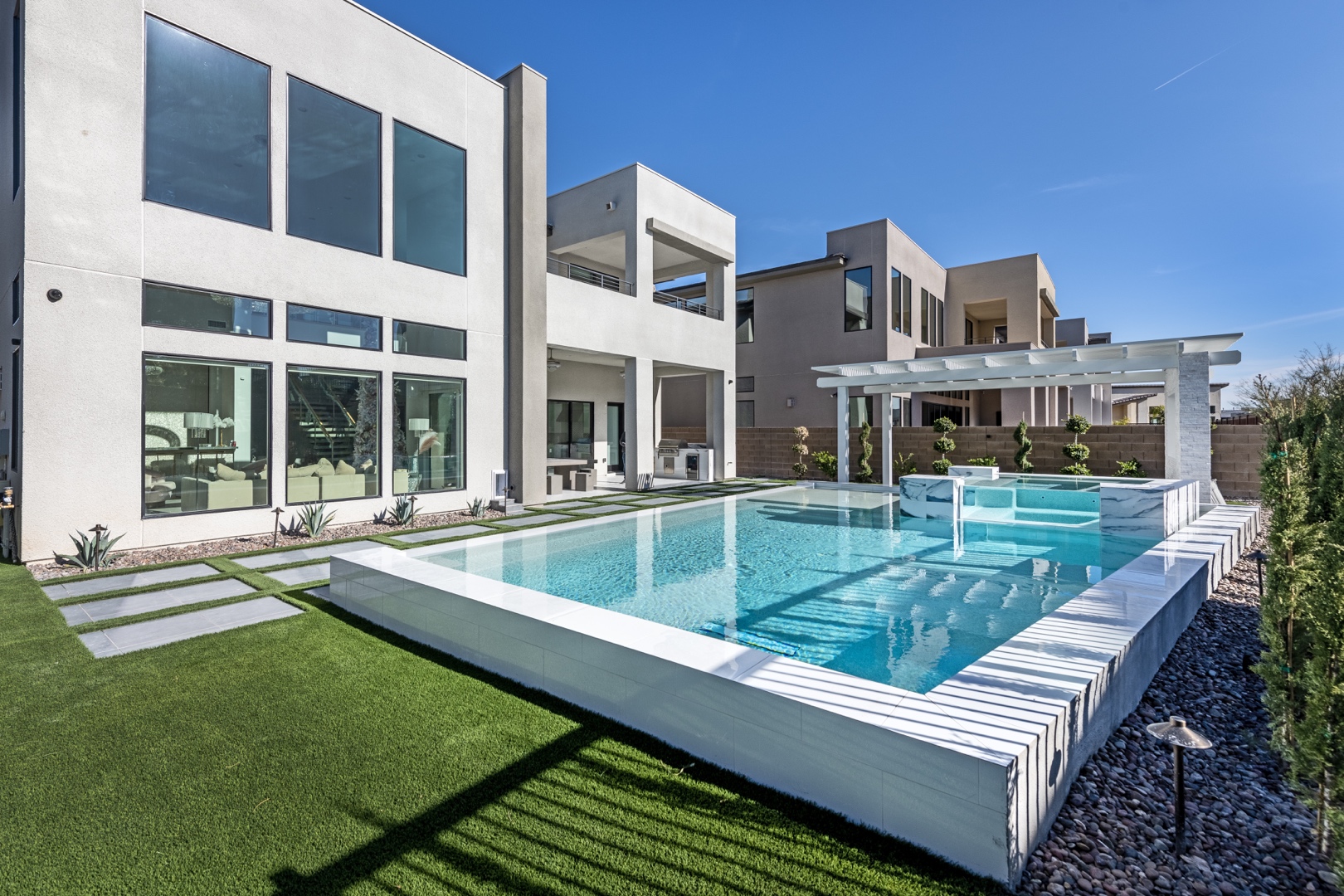
A luxury backyard in Las Vegas is no longer measured by the pool alone. The most compelling luxury backyard trends 2026 are built around a complete experience: where guests gather after sunset, where the family cools off on a July afternoon, and how every material holds its character through years of intense sun, wind, and use. The goal is not to add more features. It is to create a property-specific outdoor environment in which the pool, shade, kitchen, planting, lighting, and hardscape work as one.
For homeowners making a substantial investment, that distinction matters. A beautiful rendering can be persuasive, but the finished environment must also address drainage, access, code requirements, equipment placement, irrigation, heat exposure, and long-term maintenance. The leading designs of 2026 pair resort-level comfort with the planning discipline needed to protect the investment.
Luxury Backyard Trends 2026: The Complete Outdoor Room
The strongest trend is not a single material or amenity. It is the move toward fully composed outdoor rooms. Rather than placing a grill on one patio and a fire pit on another, homeowners are creating purposeful zones that feel visually connected and function independently.
A typical master plan may begin with a pool and spa as the visual anchor, then extend to a covered lounge, an outdoor kitchen, a dining terrace, a fire feature, and a quieter garden or conversation area. Circulation is carefully considered so guests can move comfortably from the house to the water, food, seating, and shade without crossing tight or awkward paths. This is especially valuable on custom Las Vegas properties, where lot shape, views, grade changes, and neighboring homes can heavily influence the final layout.
The luxury is in the coordination. Repeated stone tones, complementary cabinetry finishes, consistent lighting temperatures, and intentional sightlines make separate features feel like one environment. A project can include premium individual products and still feel disconnected if it lacks a unifying plan.
Pools Designed for Visual Calm and Daily Use
In 2026, clean-lined pools remain central to contemporary desert backyards, but the best designs soften minimalism with tactile materials and places to linger. Baja shelves, integrated spa spillways, floating steps, perimeter-overflow details, and negative-edge effects are used selectively to create a composed architectural statement rather than visual noise.
A shallow tanning ledge can be ideal for families with young children or owners who want a chaise lounge in the water. An elevated spa may create a dramatic focal point and offer a welcome contrast during cooler desert evenings. Neither feature is automatically right for every home. A spa raised too high can interrupt views, while a large shelf can reduce swim space in a compact pool. The design should start with how the owners plan to use the water, not a checklist of popular features.
Equipment selection is receiving more attention as well. Quiet, efficient systems, concealed equipment yards, automation, and thoughtful service access help maintain the calm of a high-end setting. The pool should look effortless from the patio, but it should be engineered for practical operation long after construction is complete.
Shade Becomes a Defining Luxury Feature
The Las Vegas climate makes shade one of the most meaningful upgrades an owner can make. In 2026, permanent and adjustable shade structures are becoming as important as the pool deck itself. Architectural patio covers, insulated roof structures, custom pergolas, louvered systems, and cabanas allow the backyard to perform during more hours of the day and more months of the year.
The right solution depends on orientation and intended use. A solid roof cover offers dependable relief and can support lighting, fans, heaters, speakers, and a finished ceiling. A louvered structure provides flexibility, particularly where owners want open-sky light in winter and controlled coverage in summer. Pergolas provide visual texture and can frame a lounge or dining area, but they may need supplemental fabric, vegetation, or strategically placed shade panels to provide meaningful midday protection.
Shade should be evaluated with the sun path, not simply the footprint of an existing patio. A structure that looks balanced on a plan may fail to cover the dining table at the hottest part of the afternoon. Early design work should also account for roof drainage, structural connections, utility runs, and local permitting requirements.
Water-Smart Landscapes With More Texture
Xeriscape is continuing to mature beyond a sparse arrangement of gravel and a few shrubs. Luxury desert planting in 2026 uses layers of sculptural form, seasonal color, and contrasting foliage to give the garden a sense of depth without demanding excessive water.
Specimen palms, desert trees, ornamental grasses, agaves, flowering perennials, and carefully selected ground covers can create a landscape that feels established and intentional. The most successful compositions balance bold plant forms with open space. Overplanting may look lush immediately after installation, but it can lead to crowding, blocked views, and costly maintenance as materials mature.
Material choice matters just as much as plant selection. Decomposed granite, decorative rock, natural stone, boulders, and carefully detailed steel or masonry edging provide texture while helping define planting zones. Drip irrigation, hydrozoning, smart controllers, and properly prepared soil support water-conscious performance without sacrificing the sense of abundance clients expect from a premium property.
This is also where horticultural expertise matters. A plant that looks excellent in a nursery or online image may struggle with reflected heat, full western exposure, pool splash, or the specific soil conditions of a property. The landscape should be designed for the site it will inhabit, not for a generic desert palette.
Entertaining Areas Are Becoming More Specialized
Outdoor kitchens are becoming more tailored to the homeowner’s actual hosting style. For some, that means a refined grilling station with ample counter space, refrigeration, storage, and a nearby dining table. For others, it means a larger culinary setting with a pizza oven, beverage center, bar seating, and serving space that keeps the host connected to guests.
The trend is toward fewer compromises in the layout. Heat-producing appliances need safe clearances and appropriate ventilation. Refrigeration and electrical components require protection from direct weather and service access. Countertops must withstand UV exposure, temperature swings, spills, and frequent cleaning. A beautiful kitchen can become frustrating if its workflow forces the cook to repeatedly move across a busy patio.
Fire features are also shifting from decorative add-ons to anchors for evening use. Linear fire tables, sunken conversation areas, masonry fireplaces, and fire bowls can extend the season and create an inviting destination after dark. Gas fire features offer convenience and cleaner daily operation, while wood-burning elements bring a different atmosphere but require more attention to smoke, ash, setbacks, and local restrictions.
Lighting Is Designed, Not Added Later
Luxury outdoor lighting is increasingly treated as part of the architecture. The objective is not to flood the yard with brightness. It is to create layers of light that make pathways safer, draw attention to materials and specimen plants, and give the backyard a warm, composed appearance from indoors.
Low-level path lighting, recessed step lights, soft tree uplighting, under-cap illumination, and carefully placed pool lighting can define the property without harsh glare. Warm color temperatures typically feel more residential and inviting than overly cool white light. Dimming and zoning allow homeowners to shift from a relaxed evening setting to brighter illumination for entertaining or maintenance.
Lighting plans should be developed before hardscape is installed. That allows conduits, junctions, transformers, and fixture locations to be integrated cleanly rather than retrofitted around finished surfaces. The result is more durable and far more refined.
Durable Materials Carry More Weight Than Novelty
The best luxury backyards will still feel current years from now because they prioritize proportion, craftsmanship, and materials suited to the desert. Porcelain pavers, natural stone, premium concrete finishes, masonry, metal accents, and performance-grade outdoor fabrics all have a place, but each must be selected for the specific application.
Light-colored surfaces can reduce heat underfoot, although extremely pale finishes may create glare. Darker materials can provide drama and visual contrast, but may become uncomfortable in direct sun. Natural stone offers richness and individuality, while some porcelain products provide greater consistency and lower absorption. There is no universal winner. The right selection balances aesthetics, traction, maintenance expectations, budget, and exposure.
A quality design-build process also considers what is below the finish: proper base preparation, drainage slopes, expansion details, structural reinforcement, and the coordination of utilities. These are rarely the details that attract attention in a photograph, yet they often determine whether an outdoor investment performs beautifully over time.
For complex projects, Green Planet Landscaping & Pools begins with the whole environment rather than treating each feature as an isolated purchase. Photorealistic design visualization, engineering documentation, permit coordination, licensed construction trades, and on-site supervision give homeowners a clearer path from initial concept to a finished property.
A well-planned backyard should make daily life feel easier, not simply look impressive when guests arrive. Start with the moments you want to have there – a quiet morning under cover, children in the pool, dinner with friends, a warm spa on a cool night – and let those moments guide every line, material, and feature that follows.