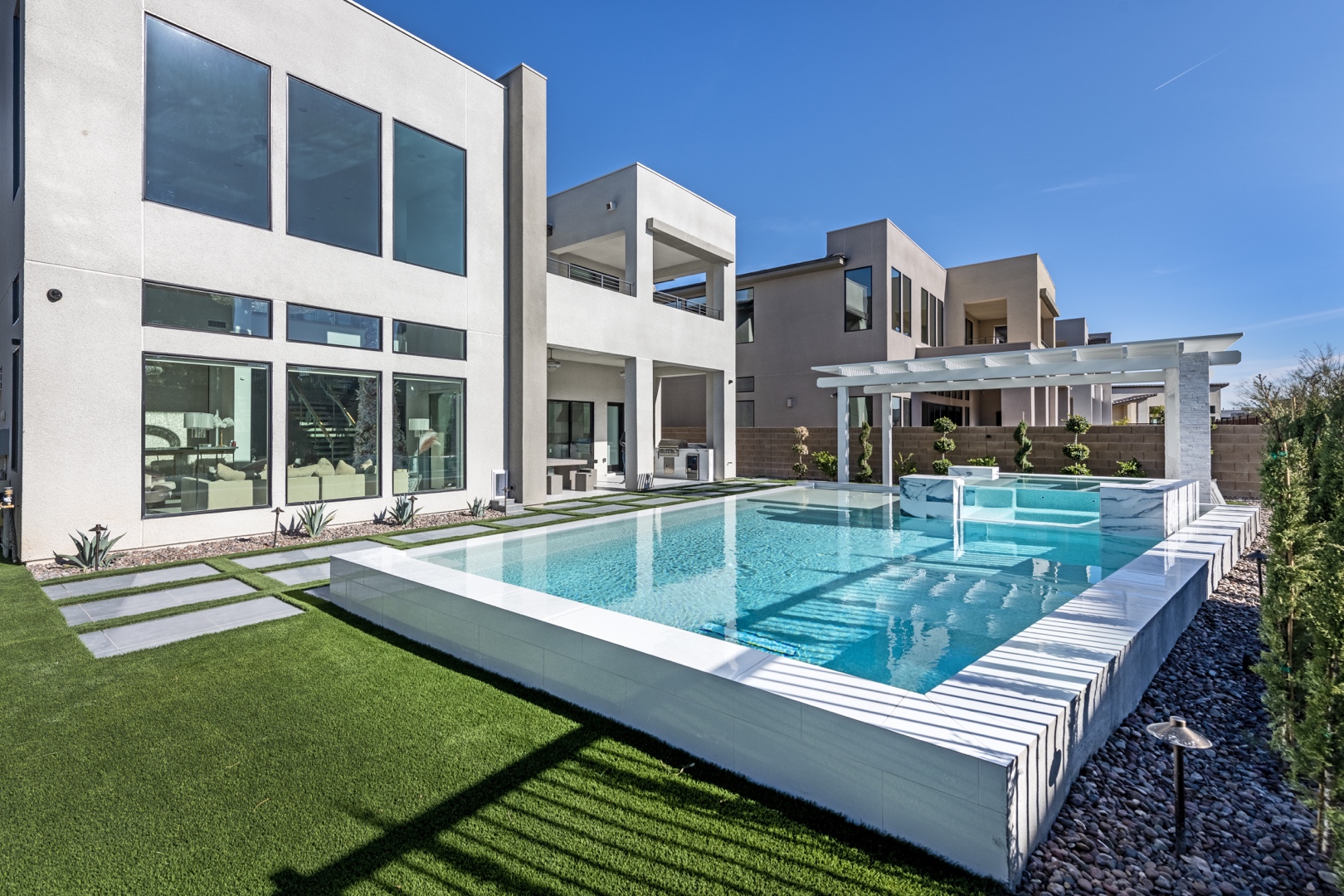
A refined Las Vegas landscape can look effortless from the patio, but its performance depends on what is engineered below grade. Desert irrigation design is not simply a matter of placing drip lines around plants. It is a coordinated water-management system that protects substantial investments in specimen trees, architectural planting, turf accents, pool surrounds, masonry, and outdoor living spaces.
For a high-end property, irrigation should support the complete experience: healthy plant material, clean hardscape edges, efficient water use, and dependable operation through extreme summer conditions. That requires careful planning before the first valve, sleeve, or planting bed is installed.
Desert Irrigation Design Begins With the Whole Property
The strongest irrigation plans are developed alongside the landscape plan, not added after construction decisions have already been made. Plant selection, grade changes, drainage, pool equipment, outdoor kitchens, lighting, walls, and paving all affect how water can be delivered and where irrigation components can be concealed and serviced.
A mature palo verde, a citrus tree, flowering shrubs, ornamental grasses, and a narrow lawn panel do not share the same watering needs. Grouping them on one valve may appear convenient during installation, but it creates an ongoing compromise. One area will typically receive too much water while another receives too little.
This is why professional desert irrigation design relies on hydrozones. Each zone groups plants with comparable water requirements, exposure, root depth, and irrigation method. A shaded entry courtyard may need a materially different schedule than a south-facing pool deck planting bed that reflects heat from concrete and masonry.
The property itself also matters. Soil conditions, slope, sun exposure, wind, drainage patterns, and utility locations should be evaluated before finalizing the design. Las Vegas soils can be challenging, and water that runs off a compacted slope does little for plant roots. In those areas, irrigation may need shorter cycle times, carefully positioned emitters, and planting details that hold water where it is needed.
Design Zones Around Plant Needs, Not Convenience
Drip irrigation is often the right foundation for desert planting, but it is not a universal answer. It must be designed for the plant palette and installed with enough capacity to mature with the landscape. A newly planted tree and an established canopy tree have different root zones, even if they occupy the same bed.
For trees, irrigation should encourage broad, healthy root development rather than concentrating water tightly at the trunk. Emitters should be placed and expanded thoughtfully as the tree matures. Shrubs, succulents, and groundcovers require their own approach based on spacing, soil, and exposure.
Turf, if included, should be treated as a deliberate design feature rather than a default surface. A smaller, purposeful lawn area can complement a pool, soften a contemporary hardscape composition, or create a comfortable play space. It should be isolated on its own zone and matched with the correct delivery method, pressure regulation, and scheduling. Mixing turf spray irrigation with drip-irrigated desert planting is a common source of waste and uneven landscape performance.
In premium outdoor environments, water features also deserve early coordination. Their fill lines, drainage, equipment access, and surrounding planting should be resolved with the irrigation and pool systems in mind. This avoids visible pipes, crowded equipment areas, and disruptive future repairs.
Pressure, Flow, and Coverage Are Construction Details
An irrigation controller cannot correct a poorly engineered distribution system. Before installation, the available water pressure and flow capacity should be understood so the number of emitters, heads, and zones can be designed appropriately. Overloading a zone can lead to weak coverage at the far end of the line, while excessive pressure can damage components or create inconsistent output.
Quality construction also considers the components homeowners rarely see: properly sized mainlines and lateral lines, filtration where appropriate, pressure regulation, accessible valves, protected wiring, and sleeves beneath hardscape. These details are particularly important when a property includes extensive masonry, pool decking, driveways, or future expansion areas.
Installing sleeves before concrete and pavers are completed is a small planning decision with major long-term value. It allows irrigation, lighting, and future utility needs to be addressed without cutting finished surfaces later. For a custom backyard, preserving the integrity of premium materials is part of protecting the investment.
Smart Controls Need a Smart Schedule
A modern controller gives an owner convenient control, but automation should be based on a real irrigation strategy. Seasonal adjustments are essential in the Mojave Desert. A schedule that performs well during July heat can be excessive in winter, while a newly planted landscape may need more attentive establishment scheduling than a mature xeriscape.
Weather-responsive controls can help reduce unnecessary watering, especially when paired with properly designed zones. However, technology is only as useful as the landscape information programmed into it. Plant type, sun exposure, slope, soil, and irrigation delivery rates must all be considered.
Run times should also account for infiltration. On sloped or compacted areas, a cycle-and-soak approach may be more effective than one long watering period. The controller runs a shorter cycle, allows time for water to penetrate, then completes another cycle. This can reduce runoff, puddling, and staining along hardscape edges while delivering moisture more effectively to the root zone.
Homeowners should expect a commissioning process after installation. Valves need to be tested, emitters checked, schedules reviewed, and plant material observed through its first seasons. Irrigation is not fully finished when the controller is mounted. It becomes successful when the landscape establishes evenly and the system performs as intended under real conditions.
Coordinate Irrigation With Xeriscape, Pools, and Hardscape
Water-smart landscaping does not mean limiting a property to gravel and a few sparse plants. A well-composed xeriscape can be layered, colorful, textural, and visually substantial. The key is selecting plants that belong in the climate, locating them according to their needs, and irrigating them with discipline.
Hardscape design changes the microclimate of a yard. Large areas of stone, concrete, and artificial turf can reflect heat and increase stress on nearby planting. Pool decks, retaining walls, fire features, and outdoor kitchens also create access constraints that should be anticipated before irrigation is installed. A planting bed that looks beautiful in a rendering still needs a serviceable valve location and a practical path for future maintenance.
At Green Planet Landscaping & Pools, Inc., integrated design-build planning brings these systems into one coordinated construction scope. Landscape, masonry, water features, pools, planting, lighting, drainage, and irrigation are considered as parts of one outdoor environment rather than separate installations competing for space.
Plan for Maintenance Without Compromising the View
The best systems are discreet but not inaccessible. Valve boxes should be positioned thoughtfully, controllers should be convenient to operate, and equipment should remain serviceable without disturbing finished planting or hardscape. Concealment is valuable, but burying essential components beneath difficult-to-reach areas can turn a simple adjustment into an unnecessary repair project.
A clear irrigation plan also benefits future property owners, landscape crews, and service professionals. Documentation of zones, valve locations, controller settings, and plant groups makes seasonal adjustments more informed and reduces guesswork when changes are needed.
When to Upgrade an Existing Irrigation System
An existing landscape may benefit from more than a controller replacement. Dry spots, repeated plant loss, runoff onto paving, overspray, unusually high water use, leaking valves, and inconsistent growth are signals that the system may no longer match the property.
Sometimes the right solution is a targeted repair. In other cases, a substantial renovation, new pool construction, or hardscape replacement creates the appropriate opportunity to redesign zones, reroute lines, add sleeves, and modernize controls. The decision depends on the age of the system, the quality of its original installation, planned improvements, and the value of the landscape it is expected to support.
A desert landscape should feel composed, generous, and built to endure, even during the hottest part of the year. With irrigation planned as an essential part of the architecture, your outdoor environment can remain beautiful, efficient, and ready for the way you live.