A Las Vegas backyard can look exceptional in August without asking for a thirsty lawn that struggles through every heat wave. The right xeriscape turf comparison is not simply a choice between decorative gravel and synthetic grass. It is a design decision that affects how your pool deck feels, where guests gather, how the property photographs, and how much maintenance your landscape requires over time.
For a high-end outdoor environment, the strongest answer is often a planned combination of turf, sculptural planting, shade, masonry, and open space. The goal is not to fill every area with a single material. It is to give each part of the property a purpose.
Xeriscape vs. Turf: Start With the Right Definition
Xeriscape is frequently mistaken for a yard made entirely of rock. Proper xeriscaping is a water-conscious landscape approach built around climate-appropriate plant material, efficient irrigation, durable hardscape, practical hydrozones, and thoughtful maintenance planning. It can be clean and contemporary, lush in selected areas, or highly architectural.
Turf, in this conversation, usually means synthetic turf. It offers the visual softness and usable surface of a lawn without the irrigation demand, mowing schedule, or seasonal stress of natural grass. It is not automatically the best choice for every square foot, however. Artificial turf absorbs heat, requires professional base preparation, and can look out of place when installed as a wall-to-wall green carpet around a luxury home.
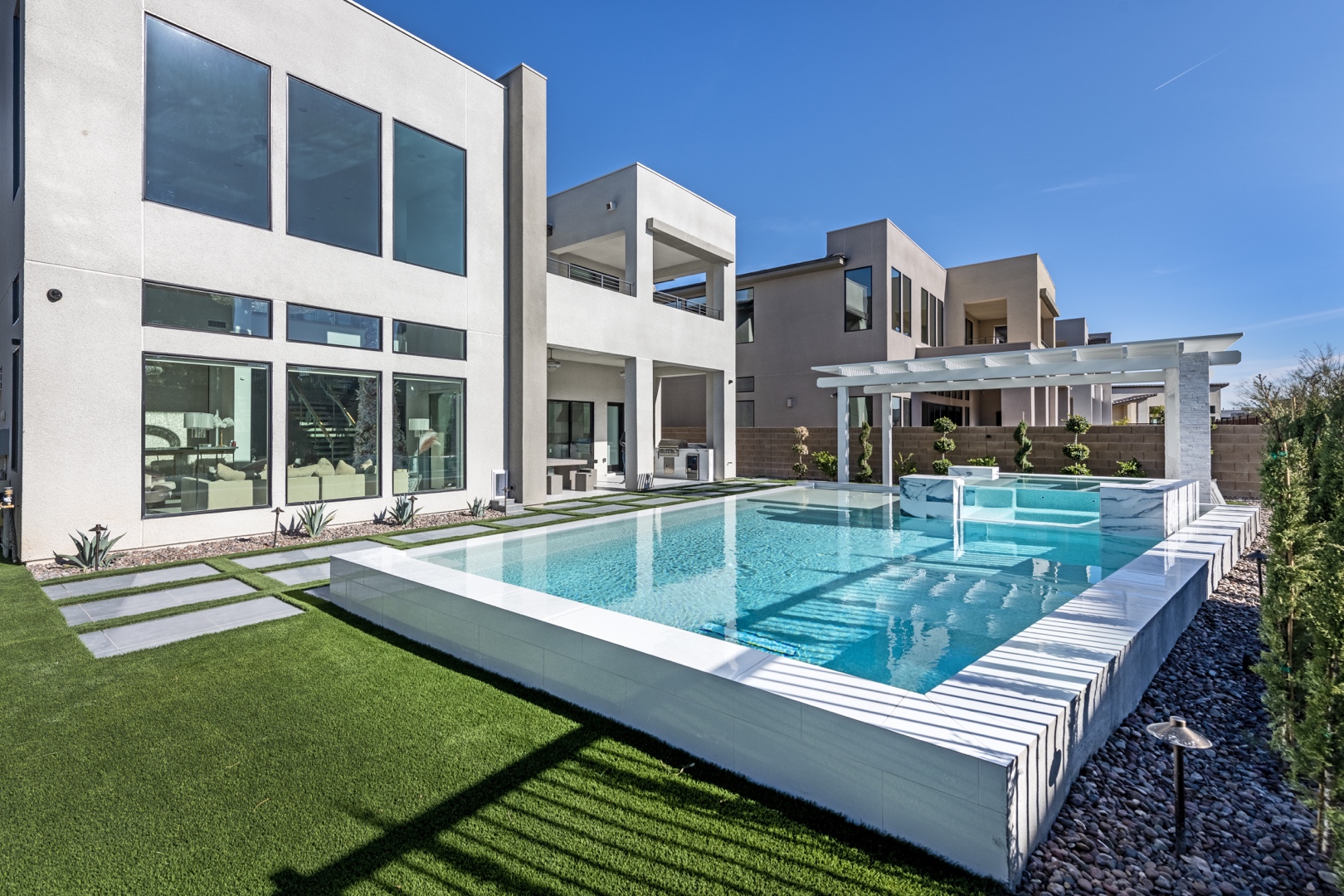
A successful landscape treats both materials as components of a larger outdoor living plan. Turf can create a barefoot-friendly destination near a pool or a play area. Xeriscape planting and decorative aggregates can frame the architecture, reduce water use, and bring depth to large expanses that would otherwise feel flat.
Xeriscape Turf Comparison: Performance Where It Matters
Water use and irrigation
A well-designed xeriscape generally has the lowest ongoing water demand, particularly when it uses established desert-adapted trees, shrubs, ornamental grasses, and cactus or succulent accents. Drip irrigation delivers water at the root zone and allows individual plant areas to be managed with precision.
Synthetic turf does not need irrigation for growth, but it is not always water-free. Homeowners may rinse dust, pet waste, or spilled food from its surface, especially around entertaining areas. In Las Vegas, that occasional cleaning is still dramatically different from irrigating natural turf several times each week.
The most water-conscious approach is often limited turf placed where it will genuinely be used, paired with planted xeriscape areas that receive properly zoned drip irrigation. This gives the property softness and color without dedicating substantial water resources to unused lawn.
Heat, comfort, and microclimate
This is where the comparison deserves more nuance. Decorative rock, decomposed granite, pavers, and artificial turf all become hot in direct Nevada sun. Turf can be more comfortable underfoot than exposed hardscape in moderate conditions, but it can also retain significant heat at peak afternoon temperatures. Light-colored paving may reflect glare, while dark aggregate can intensify surface heat.
Shade is the deciding factor more often than material alone. A turf lounge area beneath a substantial patio cover, cantilevered shade structure, or carefully placed desert tree can be inviting for much of the year. The same turf in an unshaded western exposure may see limited use in midsummer.
This is why master planning matters. Pool orientation, prevailing sun, wall locations, reflected heat from windows, and the placement of fire features all influence comfort. Materials should be selected after these conditions are studied, not from a sample board alone.
Appearance and architectural value
Turf supplies a strong color contrast against travertine, porcelain pavers, natural stone, and modern pool coping. It can make a compact courtyard feel more relaxed or provide a crisp visual break between a spa deck and a planting bed. Quality matters. Premium turf with realistic color variation, appropriate blade profile, clean seaming, and properly detailed edges creates a far more convincing result than low-grade material.
Xeriscape delivers a different kind of visual value. Layered plant heights, boulders, specimen agaves, flowering desert shrubs, and textured aggregates create shadow, movement, and seasonal interest. This approach can feel especially refined around contemporary architecture, where a limited plant palette and intentional negative space reinforce clean lines.
For many luxury properties, the most compelling composition uses turf as an accent rather than the dominant view. A defined green panel can highlight a pool, putting area, or seating zone, while xeriscape planting provides the structure that makes the entire yard feel established and site-specific.
Maintenance and long-term durability
Synthetic turf eliminates mowing, fertilizing, reseeding, and most weed pressure. It still needs periodic care. Leaves, windblown debris, and dust should be removed; fibers may need grooming in high-traffic areas; and pet owners should select an infill and drainage system suited to their household. The material has a finite service life, particularly in intense sun and heavily used zones.
Xeriscape is low-maintenance, not no-maintenance. Desert plants need pruning, seasonal inspection, irrigation adjustments, and replacement if a plant fails. Gravel may need occasional raking, and organic debris must be cleared from planting beds. Yet a mature xeriscape is highly durable when plant choices, soil conditions, irrigation, and drainage are handled correctly from the beginning.
Installation quality is critical for both options. Turf requires excavation, a stable compacted base, drainage consideration, precise edging, and secure seams. Xeriscape requires grading that moves water away from structures, well-planned irrigation zones, appropriate soil preparation, and plant spacing that allows the landscape to mature gracefully. Cutting corners below the finished surface is where expensive problems begin.
Where Turf Earns Its Place
Turf is most valuable when it solves a real lifestyle need. A contained lawn panel works well beside a family pool, around a shaded outdoor seating area, in a pet zone, or as a putting green with a purpose-built surface. It can also soften a hardscape-heavy backyard where the home and pool already feature extensive masonry.
It is less effective in broad, unshaded front-yard expanses, narrow strips that are difficult to clean, or areas where its bright green color competes with the home’s architectural style. Large installations can also create an overly uniform appearance if there is no planting, elevation change, or masonry detail to balance them.
A professionally designed turf area should have intentional boundaries. Steel edging, curbs, pavers, planter walls, and planting beds create clean transitions while protecting the material from shifting aggregate or runoff. Drainage should be coordinated with pool decking, roof drainage, and site grading before installation begins.
Where Xeriscape Has the Advantage
Xeriscape is especially effective in front yards, side yards, perimeter planting zones, and large areas intended to be viewed more than walked on. It helps establish a sense of arrival, provides privacy, and can frame architectural features with a palette that belongs in the Mojave Desert.
A refined xeriscape is not visually sparse. The best designs use contrast deliberately: the vertical form of a desert willow, the sculptural weight of a mature agave, the fine texture of ornamental grass, and the grounding effect of boulders or gravel. Carefully placed landscape lighting extends that composition into the evening and gives pathways, pool surroundings, and outdoor entertaining areas a finished presence.
For clients who travel frequently or maintain seasonal residences, xeriscape can offer substantial practical advantages. With smart irrigation controls and a plant palette matched to the site, it remains attractive without the continual intervention expected from a conventional lawn.
Design the Yard as One Environment
The best xeriscape turf comparison ends with a question: how will the space be used? A family that hosts poolside gatherings may benefit from shaded turf near the water and planted borders that create privacy. A homeowner focused on architectural impact may prefer broad porcelain patios, specimen planting, and textured aggregate with only a small green accent. A pet-friendly yard needs drainage, access, and cleaning requirements considered from the first design meeting.
Green Planet Landscaping & Pools approaches these decisions as part of a coordinated outdoor environment, not as isolated material selections. Photorealistic planning can show how turf color, pool finish, paving, planting, lighting, and structures will read together before construction begins. That level of coordination protects the investment and helps avoid a backyard assembled in disconnected phases.
Choose turf where people will enjoy its softness and function. Choose xeriscape where planting, texture, and water efficiency will do more for the property. When both are planned around sun, drainage, architecture, and the way you live outdoors, the result feels effortless long after the project is complete.