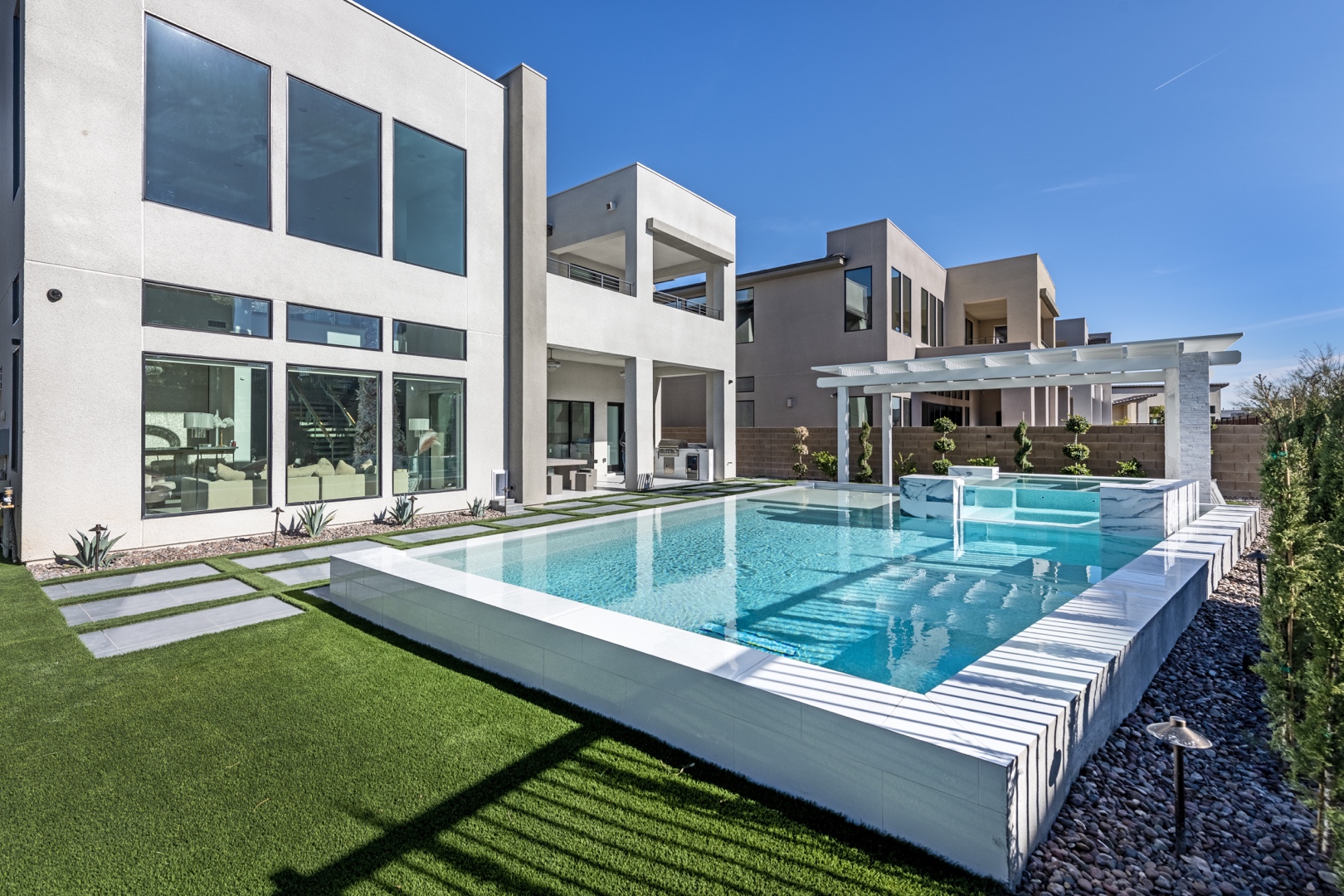
A Las Vegas xeriscape does not have to mean gravel, boulders, and a yard without color. Can xeriscapes include flowers? Absolutely – when flowers are selected for the desert, arranged with purpose, and supported by irrigation designed around their actual water needs. The result can feel lush, refined, and distinctly personal while using substantially less water than a conventional turf-heavy landscape.
For a luxury home, the goal is not simply to reduce irrigation. It is to create an outdoor environment that looks intentional from the patio, pool deck, street, and interior living spaces throughout the year. Flowering plants provide seasonal color, soften masonry and hardscape lines, frame focal features, and bring movement to an otherwise architectural landscape.
Can Xeriscapes Include Flowers Without Wasting Water?
Yes, but the term xeriscape is often misunderstood. Xeriscaping is not a specific visual style and it is not synonymous with a rock yard. It is a water-conscious approach to landscape design built around planning, soil conditions, hydrozoning, efficient irrigation, appropriate plant choices, mulching, and ongoing maintenance.
Flowers belong in that approach when they are suited to Southern Nevada’s heat, sun exposure, wind, and alkaline soils. A successful flowering xeriscape uses plants that can establish with regular attention, then perform well with deep, infrequent watering rather than frequent shallow irrigation. It also avoids placing every flowering plant on the same schedule. A desert-adapted shrub, a flowering accent plant, and a container near an outdoor kitchen may each require a different level of care.
That distinction matters. A landscape can be colorful and water-smart, but it cannot be water-smart if high-water flowers are scattered throughout the property and treated as though they have the same needs as desert plants. Good design protects both the planting investment and the property’s long-term operating costs.
Flowers That Perform in a Las Vegas Xeriscape
The right palette depends on the property’s microclimates. South- and west-facing exposures beside reflective walls or pool decking can be punishing in summer, while a protected courtyard or covered patio may support a broader selection. Plant maturity also matters. A small flowering shrub may look modest at installation but become a major massing element after several growing seasons.
Desert marigold, angelita daisy, penstemon, autumn sage, red yucca, desert willow, lantana, Texas sage, and brittlebush can all contribute flower color in appropriate applications. Some are true desert performers; others need more deliberate placement and irrigation management to look their best through peak heat. Flowering succulents and cacti can provide sculptural interest as well, particularly when their seasonal blooms are treated as a highlight rather than the entire color strategy.
For an upscale outdoor living space, repeated plant groupings usually look more composed than a collection of one-off specimens. A ribbon of red yucca along a clean masonry wall, sweeps of flowering perennials beside a pool, or carefully layered shrubs around a fire feature can create a stronger visual statement than isolated bursts of color. The landscape should complement the architecture and the way the homeowners use the space.
Use Flowers for Structure, Not Just Color
Flowers are most effective when they do more than bloom. A well-chosen plant may screen equipment, define the edge of a lounge area, soften a retaining wall, or direct the eye toward a water feature. This is especially valuable in xeriscapes, where gravel, decorative stone, pavers, artificial turf, and masonry often form a significant portion of the visual composition.
A flowering plant’s foliage, silhouette, texture, and winter appearance deserve as much attention as its bloom period. Texas sage, for example, can offer soft silver foliage and a substantial form even when it is not flowering. Red yucca maintains an architectural presence year-round, then sends up dramatic bloom spikes. Designing around these lasting qualities keeps the landscape attractive between bloom cycles.
Irrigation Is What Separates a Designed Xeriscape From a Rock Yard
A premium xeriscape should be organized by hydrozones – areas where plants with similar water needs share an irrigation schedule. This allows desert trees and low-water shrubs to receive deep, infrequent irrigation while more ornamental flowering areas receive the additional attention they need without overwatering the entire property.
Drip irrigation is often the right choice for planting beds because it delivers water near the root zone with less evaporation than spray irrigation. However, drip systems are not automatically efficient. Emitter placement, flow rates, filtration, pressure regulation, controller programming, and access for maintenance all affect performance. A poorly designed drip system can leave plants dry in one area, saturated in another, and concealed beneath decorative rock where problems go unnoticed.
Irrigation should also be considered early in the master plan. Pool plumbing, drainage, outdoor lighting, gas lines for fire features, kitchen utilities, and hardscape elevations all compete for space beneath the finished landscape. Coordinating those systems before construction helps avoid unnecessary disruption later and allows planting areas to be sized and detailed correctly from the start.
Designing Color Around Pools, Patios, and Outdoor Kitchens
In a complete backyard environment, flowering xeriscape planting should support how the space will be used. Near a pool, plants need to tolerate reflected heat and should be selected to minimize thorn hazards, excessive litter, and bee activity immediately around frequently used entries or seating. Around a spa or fire feature, fragrance and softer foliage can add intimacy, but plants still need clearance from heat sources and room to mature.
Patio borders are an opportunity for color, especially when viewed from indoor living areas. The most successful designs often use a restrained palette that relates to the home’s materials: cool violet blooms against contemporary gray stone, warm gold and coral tones near desert-toned stucco, or white flowering accents to brighten an evening entertaining area. Lighting extends that impact after sunset by revealing texture, silhouettes, and key planting masses without turning the garden into a glare-filled stage.
Containers can play a valuable role here. They allow for a more expressive seasonal floral moment at a front entry, beside a dining terrace, or near an outdoor kitchen without committing an entire planting bed to higher water use. The trade-off is maintenance. Container plants dry out quickly in Las Vegas heat and need attentive irrigation, seasonal refreshes, and quality soil preparation to remain polished.
The Trade-Offs of Flowering Xeriscapes
A flowering xeriscape requires less water than a traditional lawn-centered landscape, but it is not maintenance-free. Pruning, deadheading, monitoring irrigation, replacing occasional plants, and managing seasonal bloom cycles are part of maintaining a finished appearance. The degree of maintenance depends on plant selection and the homeowner’s expectations for neatness and color continuity.
There is also a difference between a garden that is drought tolerant and one that is drought proof. Nearly every plant needs supplemental water during establishment, and extreme heat, wind, pest pressure, or an unusually dry season can require adjustments. Mature landscapes often become more resilient over time, but they still benefit from professional monitoring and thoughtful seasonal care.
The best approach is to decide where flowers deliver the greatest return. A highly visible entry, a poolside view corridor, and a primary entertaining patio may deserve richer planting. Less visible side yards and broad perimeter zones can rely more heavily on durable native or desert-adapted shrubs, trees, decorative rock, and clean hardscape detailing. That balance keeps the landscape visually generous without treating every square foot as a high-input flower bed.
A Flowering Xeriscape Begins With a Complete Plan
The strongest results come from planning the plants alongside the entire outdoor environment, not adding them after the pool, patio, walls, and utilities are complete. Site grading, drainage, sun patterns, views, irrigation zones, construction access, and future plant size all influence what will thrive and how the finished property will feel.
At Green Planet Landscaping & Pools, that level of coordination is central to creating outdoor spaces that are both expressive and durable. Photorealistic design planning helps homeowners evaluate planting color, scale, hardscape materials, and focal features before construction begins, while disciplined installation protects the details that make a high-end landscape feel complete.
A flowering xeriscape should feel like a garden designed for the desert, not a compromise made because the desert is demanding. With the right plant palette and a properly engineered water strategy, color can be one of the most enduring elements of a water-smart Las Vegas property.