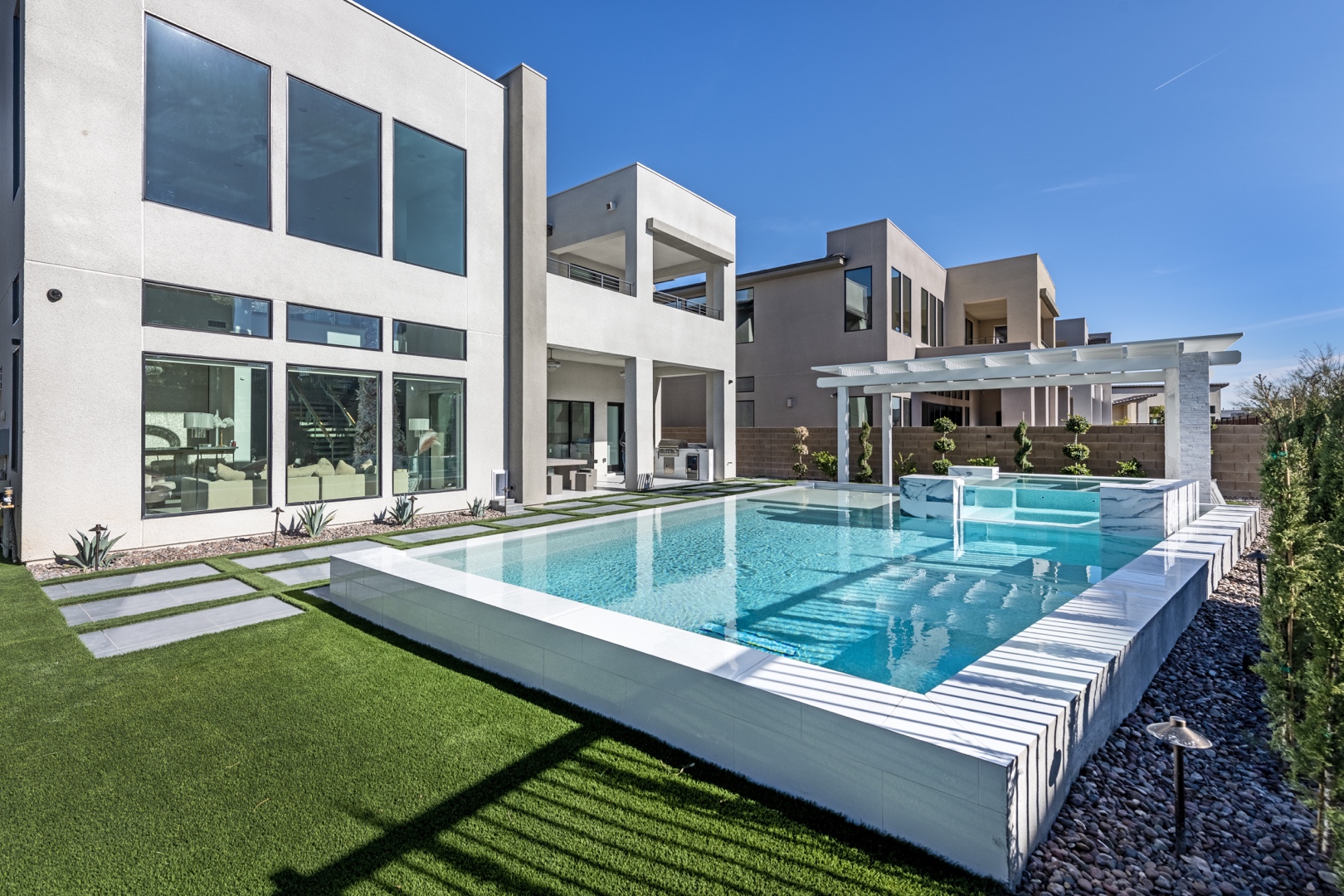
A fire feature can change the way a Las Vegas backyard is used after sunset. The decision between fire bowls versus fire pits is not simply about flame shape or square footage. It affects how your outdoor environment feels, how guests gather, how the feature integrates with a pool or patio, and how well it performs through years of desert heat, wind, and active entertaining.
For a custom property, the better choice is usually the one that supports the complete outdoor living plan. A fire bowl may create an architectural focal point around a pool, while a fire pit can establish an intimate destination within a seating area. Both can be beautifully engineered and built, but they serve different purposes.
Fire Bowls Versus Fire Pits: The Core Difference
Fire bowls are elevated vessels that hold a contained flame, often finished in cast concrete, stone, tile, metal, or a custom masonry surround. They are commonly installed in pairs or groups along a pool’s perimeter, on raised walls, near an entry, or beside a spa. Their flame is primarily visual and sculptural, although larger models can provide meaningful radiant warmth to nearby seating.
Fire pits sit lower and are designed around gathering. A built-in fire pit may be circular, square, rectangular, or fully custom in form, with a burner recessed below fire media such as lava rock, fire glass, or ceramic logs. Because people can sit around the feature, it becomes a natural center for conversation, casual meals, and quiet evenings outdoors.
The distinction matters: a fire bowl is often an accent within a larger composition; a fire pit is more often a destination. A well-designed backyard may include both, particularly when a property has separate pool, lounge, and entertaining zones.
When a Fire Bowl Is the Better Design Choice
A fire bowl excels when the goal is visual drama without occupying the center of a patio. In high-end pool environments, bowls can frame a vanishing edge, punctuate raised planter walls, create symmetry around a spa, or add a warm glow along the far boundary of the water. They are especially effective when viewed from inside the home, where the flame adds dimension to nighttime sightlines.
Fire bowls also work well in more compact outdoor spaces. Since they do not require chairs arranged around every side, they can deliver a strong design statement with a smaller footprint. This makes them a refined option for narrow side-yard lounges, formal courtyards, rooftop amenity areas, and pool decks where circulation must remain open.
For Las Vegas properties, bowl placement deserves careful attention. Wind patterns, prevailing views, pool splash zones, nearby plant material, and clearances from structures all influence the final design. A feature that looks exceptional in a rendering must also be engineered with appropriate gas supply, ignition access, drainage, heat-resistant materials, and a stable foundation.
Water-and-fire bowls add another layer of movement and sound. They can be striking along a pool wall or as part of a formal water feature, but they require particularly disciplined construction. Plumbing, waterproofing, gas lines, equipment access, and material compatibility must be coordinated from the beginning rather than added after the pool and hardscape are complete.
When a Fire Pit Creates More Value
A fire pit is the stronger choice when the homeowner wants people to gather around the flame. It gives an outdoor seating area a clear purpose, encouraging family and guests to remain outside longer during cool desert evenings. Positioned near an outdoor kitchen, covered patio, or pool lounge, it can turn a beautiful yard into a true outdoor living room.
Built-in fire pits offer considerable design flexibility. A low, broad masonry fire pit can match the stone or porcelain used elsewhere in the landscape. A linear fire table can complement contemporary architecture. A raised pit with a generous coping edge can provide a place to rest a drink, while an adjacent built-in bench can maximize seating without crowding the patio.
The trade-off is space. A fire pit needs comfortable circulation and seating clearance around it. Placing one too close to a pool edge, outdoor kitchen, door, or property line can make a patio feel constrained and may create avoidable safety or code concerns. On a premium project, the feature should feel intentional, not squeezed into an available corner.
Heat is another practical advantage. While no open-flame feature replaces a dedicated patio heater in every condition, a properly sized fire pit generally offers better warmth for a seated group than a decorative bowl. The pit’s lower elevation and gathering-oriented layout allow guests to benefit from the flame’s radiant heat more directly.
Fuel, Safety, and Construction Are Not Afterthoughts
For permanent luxury installations, natural gas or propane is usually preferable to wood. Gas fire features offer controlled ignition, cleaner operation, less ash, and a more polished experience for entertaining. They can also be integrated with pool automation or dedicated controls, depending on the equipment and project scope.
Wood-burning fire pits may appeal to homeowners who value the crackle and aroma of a traditional campfire. However, they introduce smoke, ember management, ash cleanup, and greater sensitivity to local restrictions and weather conditions. In the Las Vegas area, gas is often the more practical choice for an elegant, low-maintenance outdoor environment.
Safety begins with professional planning. A custom fire feature should account for required clearances, combustible materials, gas-line sizing, shutoff access, burner specifications, ventilation where applicable, and the finished elevation of adjacent decks and seating. Poolside installations require additional coordination so the flame feature, water, electrical systems, and walking surfaces work together safely.
Permitting and local code requirements can vary by jurisdiction, property conditions, and feature type. This is one reason a fire element should be included in the initial site plan. When it is designed alongside the pool, masonry, drainage, landscape, and lighting, the construction team can coordinate engineering documentation and approvals before work begins.
Materials That Hold Up in the Desert
The right material selection protects both the appearance and longevity of a fire feature. Las Vegas sun exposure can be unforgiving, and dramatic temperature shifts place stress on finishes, joints, and components. Premium masonry, properly specified coping, heat-rated fire media, durable metal components, and professional installation all matter.
Natural stone can create a timeless, substantial look, while large-format porcelain and smooth architectural concrete often suit contemporary homes. Tile can bring color and polish to a fire bowl, particularly near a pool, but it must be selected and installed for exterior heat and moisture exposure. The goal is not simply to choose a finish that photographs well on installation day. It is to select materials that retain their character through years of use.
Maintenance should be considered before the feature is built. Burners and ignition systems need service access. Fire glass may require periodic cleaning. Water-and-fire bowls need attention to both water chemistry and plumbing performance. A thoughtful design makes these needs manageable without compromising the finished aesthetic.
Choosing the Right Feature for Your Lifestyle
Start with how you plan to use the space. If your priority is an impressive poolscape, architectural symmetry, and nighttime ambiance visible from indoors, fire bowls may be the better investment. If you picture guests settling in with drinks after dinner or family gathering outdoors on cool evenings, a fire pit may deliver more everyday enjoyment.
Consider sightlines as well. Fire bowls are often most successful when viewed across water or from a distance. Fire pits are best experienced up close. A property with a large pool yard may benefit from bowls at the pool’s far edge and a separate fire pit near the main entertaining terrace. This layered approach creates distinct experiences without making the landscape feel overdesigned.
At Green Planet Landscaping & Pools, fire features are planned as part of a cohesive outdoor environment, not treated as isolated accessories. That means evaluating architecture, pool design, hardscape, furnishings, lighting, utilities, landscape materials, and the way the property will be used from day to night.
The most successful choice is the one that gives your backyard a reason to be enjoyed after dark. Whether that is a sculptural line of fire bowls reflecting across the pool or a fire pit drawing everyone closer, thoughtful design and disciplined construction are what make the flame feel at home.