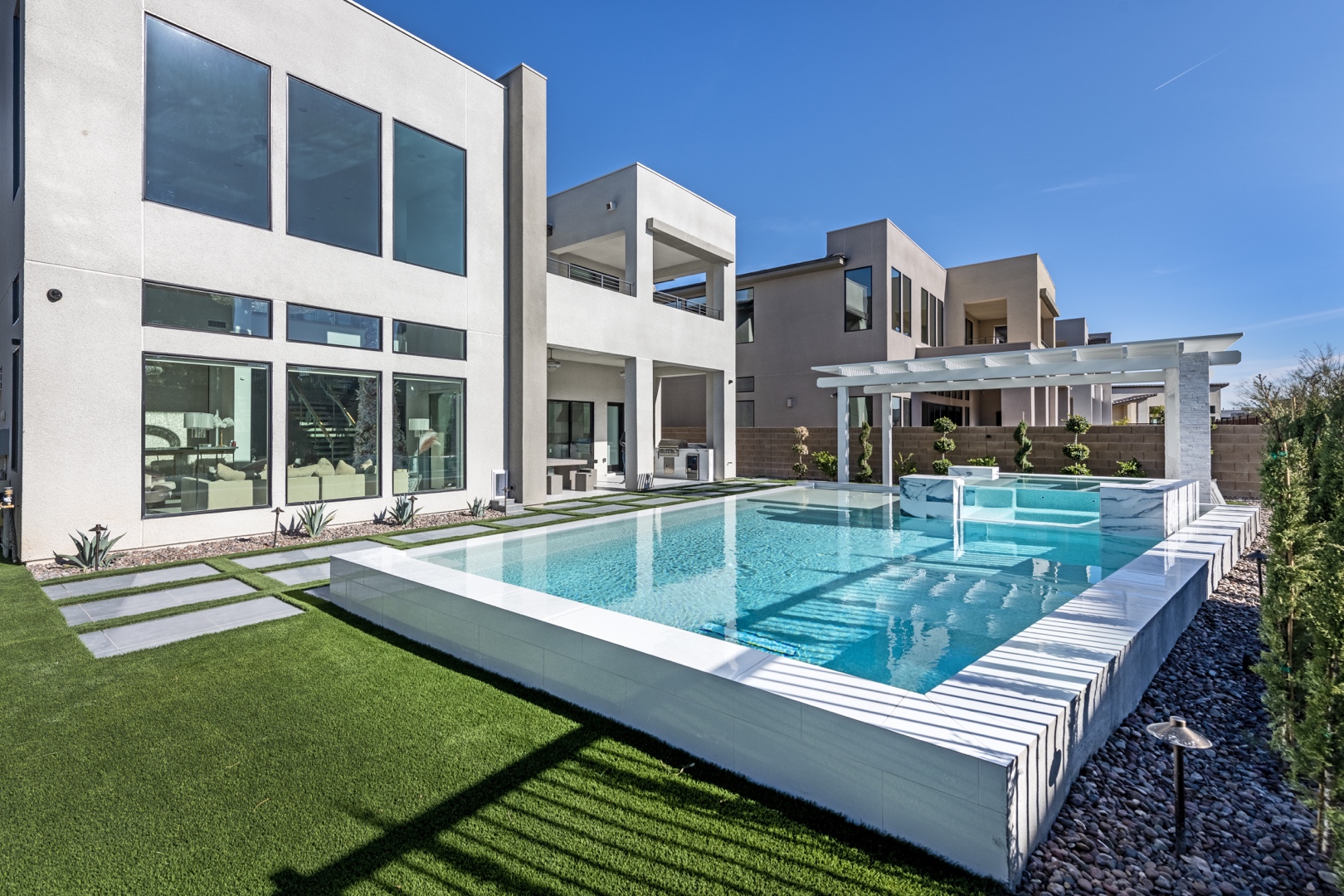
A Las Vegas backyard can look exceptional in daylight and disappear completely after sunset. Desert landscape lighting design changes that equation, extending the value of a pool, patio, outdoor kitchen, fire feature, and garden well into the evening. Done well, it does more than brighten a yard. It establishes atmosphere, improves circulation, adds security, and gives carefully selected materials and plantings a presence after dark.
For a custom outdoor environment, lighting should not be treated as a final accessory. It belongs in the master plan alongside hardscape elevations, pool engineering, drainage, planting zones, electrical requirements, and how the family intends to use each outdoor room. That level of coordination is what creates a composed result rather than a collection of bright fixtures.
Start With How the Property Lives at Night
The most successful lighting plans begin with behavior, not fixture counts. A home built for frequent entertaining needs a different approach than a quiet retreat centered on a spa, reading terrace, and garden views. A pool deck may need clear orientation around steps and changes in elevation, while an outdoor dining space benefits from flattering, low-glare illumination that allows guests to see one another without feeling as if they are seated under floodlights.
Consider the route from the house to the pool, kitchen, fire feature, side gate, and driveway. These paths should feel instinctive to navigate after dark. Then consider the views from inside the home. The landscape visible from a great room, kitchen, or primary suite often deserves as much attention as the areas people physically occupy outside.
This is where an integrated design-build process matters. Before construction begins, photorealistic visualizations can show how layers of light will frame a new pool, cast texture across masonry, or reveal the silhouette of a mature specimen tree. The client can make informed decisions while fixture locations, conduit runs, and electrical loads are still practical to coordinate.
Layer Desert Landscape Lighting Design for Depth
A polished desert landscape lighting design relies on layers. One uniform wash of illumination can make even an expensive property feel flat. The goal is to create contrast: areas of gentle brightness, quiet shadow, and carefully chosen focal points.
Ambient light creates an outdoor room
Ambient light establishes the overall comfort level of a patio, covered structure, or lounge area. It may come from architectural downlighting, discreetly placed wall fixtures, or integrated lighting within a patio cover. In a luxury backyard, the source should often be felt more than seen. Harsh glare from exposed lamps can undermine the relaxed setting created by fine furnishings, natural stone, and water.
Warm color temperatures generally complement desert materials, including travertine, limestone, textured plaster, wood-look finishes, and earth-toned masonry. The right warmth makes the area inviting without turning it amber. Color temperature should be selected in concert with the home’s exterior finishes, pool tile, and fire feature materials rather than chosen in isolation.
Task lighting supports safe use
Task lighting has a clear purpose: it helps people move, cook, dine, and use the property safely. Stair risers, transitions at raised planters, grilling surfaces, bar counters, and gate access points all deserve careful attention. The objective is enough light for confidence, not enough to eliminate every shadow.
Pool environments require special consideration. Underwater lighting, deck lighting, and illumination around water features must be planned around approved electrical methods, equipment access, and applicable code requirements. A qualified contractor coordinates these details early, particularly when a project includes new pool construction, a remodel, or extensive masonry work near water.
Accent light provides the visual signature
Accent lighting is where the landscape becomes memorable. A sculptural agave, multi-trunk palo verde, date palm, boulder grouping, water feature, or architectural wall can become a nighttime focal point with a restrained uplight or grazing effect. The strongest installations choose fewer focal points and light them with intention.
In the desert, plant form is especially valuable after dark. The branching character of a mesquite, the graphic shape of a yucca, and the layered texture of ornamental grasses can all create dimension that would be lost under broad, indiscriminate lighting. A horticulturally informed planting plan makes those moments possible.
Design for Las Vegas Heat, Wind, and Water
Desert conditions are demanding. Fixtures face intense summer heat, UV exposure, blowing dust, irrigation overspray, pool chemicals, and occasional monsoon weather. Decorative products that perform acceptably in a mild climate may fade, corrode, collect debris, or fail prematurely in Southern Nevada.
Material selection should reflect the setting. Quality metal fixtures with durable finishes, properly rated electrical components, weather-resistant connections, and securely installed mounting systems protect the investment. Plastic components may have a place in limited applications, but they rarely deliver the longevity or refined appearance expected in a premium outdoor environment.
Placement also affects performance. A fixture installed too close to a lawn or planting bed may be affected by irrigation. One set too low in a drainage path can collect debris or water. Fixtures near patios and walkways need to tolerate normal cleaning and foot traffic. These details sound minor on paper, yet they determine whether a lighting system remains attractive and reliable over time.
Water-smart landscaping adds another variable. Xeriscape areas often use decomposed granite, decorative rock, boulders, and low-water plants that can shift or settle differently than turf. Fixture bases and wiring routes should be designed to accommodate the finished grade, maintenance access, and the future growth of the landscape.
Keep Glare Out of the Experience
More light is not necessarily better light. Excessive brightness can erase the night sky, create uncomfortable reflections on pool water, and make a refined yard feel commercial. It can also affect neighbors, particularly on properties with elevated lots or close side-yard relationships.
Shielded fixtures, thoughtful aiming, and concealed light sources are essential. An uplight should illuminate the canopy or texture of a feature, not shine into a seating area or bedroom window. Downlights in a tree canopy can create a beautiful moonlight effect, but they require planning for tree growth, service access, and the long-term health of the specimen.
Reflective surfaces deserve special consideration. Pool water, polished stone, glass tile, and stainless steel can amplify a poorly placed source. During design development, the lighting plan should account for how these materials behave at night, not just how they appear in a daytime finish sample.
Coordinate Controls Before Construction
A sophisticated lighting system should be easy to use. Homeowners should be able to move from an everyday setting to an entertaining scene without walking the property and operating separate switches. Zoning allows the pool, landscape accents, dining area, paths, and architectural lighting to be controlled independently.
Automation can be particularly useful when integrated with pool and spa controls. A homeowner may want the pool perimeter and paths illuminated nightly, with enhanced accent lighting and water-feature illumination reserved for guests. Timers, dimming, and scene-based control improve flexibility while avoiding unnecessary energy use.
The trade-off is complexity. More zones and control features provide greater customization, but they require disciplined electrical planning, clear labeling, and a system the homeowner can operate confidently. The best solution is not always the most elaborate one. It is the one that supports the client’s routine while allowing room for the property to evolve.
Treat Lighting as Part of the Construction Plan
Retrofitting landscape lighting is possible, but it can be more disruptive and limiting once patios, pools, walls, and planting beds are complete. Planning during a new build or comprehensive renovation allows conduit to be placed beneath hardscape, wiring to be protected, and fixture locations to align with masonry joints, planter edges, and drainage patterns.
This coordination is especially valuable where multiple trades overlap. Pool crews, masons, electricians, landscapers, and irrigation specialists each affect the finished result. Green Planet Landscaping & Pools approaches these elements as one outdoor living environment, supported by design documentation, licensed construction expertise, permitting coordination, and on-site supervision.
A finished lighting plan should also account for maintenance. Lamps and fixtures need reasonable access, plants will grow, and landscape crews need to recognize which components require care around them. Periodic adjustment is normal as trees mature and the outdoor space settles into daily use.
The right evening scene should feel effortless: a safely lit path, a softly illuminated pool, a fire feature drawing people outward, and desert plant forms adding quiet drama beyond the patio. When lighting is planned with the same care as the rest of the property, the backyard does not simply stay visible after sunset. It becomes a more inviting place to live.