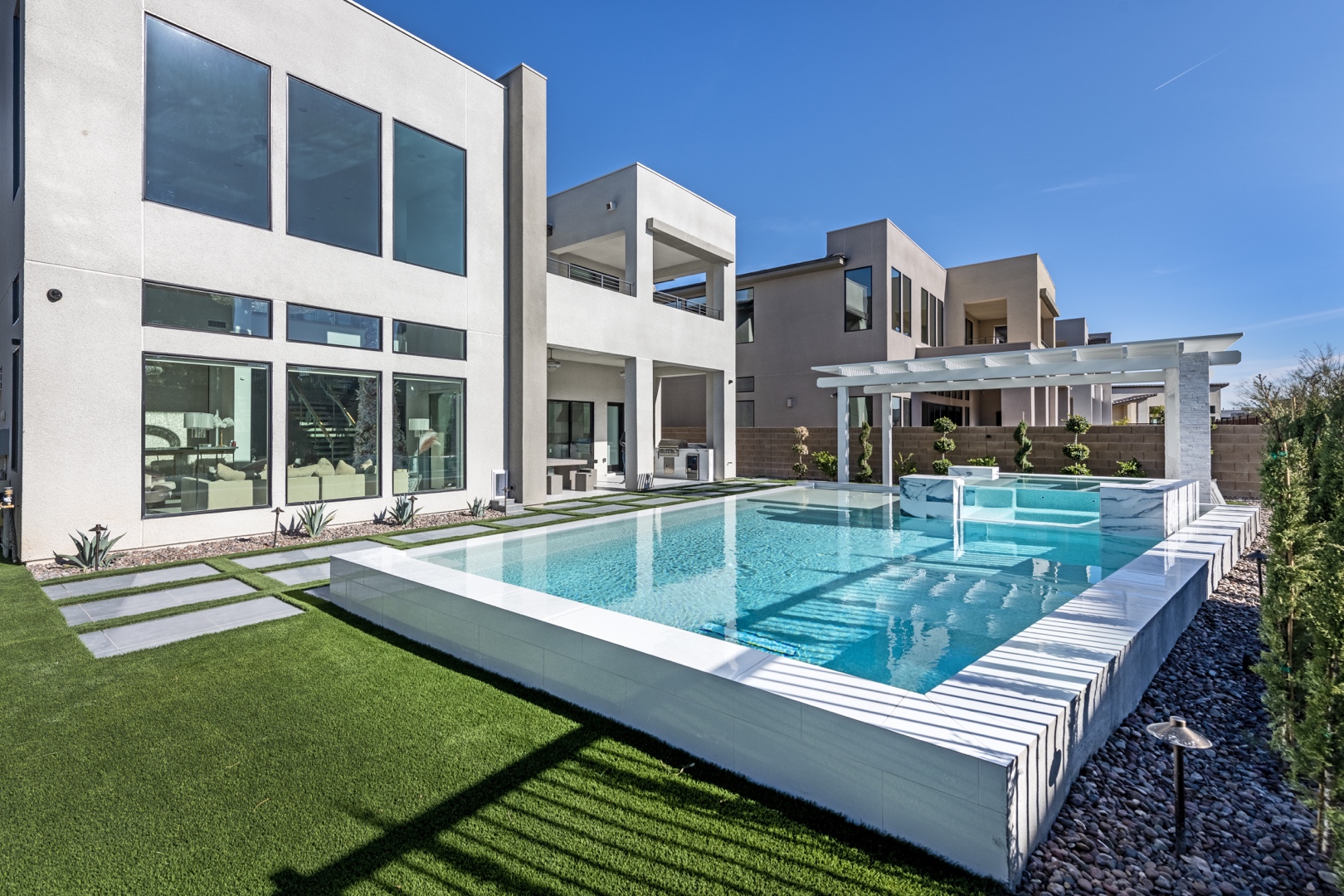
A Las Vegas landscape should not look like it is merely surviving the desert. It should feel composed, comfortable, and intentional from the view inside the home to the farthest edge of the property. The best low water landscaping Las Vegas homeowners choose does more than reduce irrigation demand. It creates shade where it matters, frames architecture, supports outdoor entertaining, and protects the long-term value of a substantial property investment.
Water-smart design is often mistaken for a simple swap from lawn to gravel. That approach may lower maintenance, but it rarely produces a refined outdoor environment. A successful desert landscape is master-planned around the site, the home’s architecture, sun exposure, drainage, circulation, and the way the owners actually want to live outdoors.
What Low Water Landscaping in Las Vegas Should Accomplish
Las Vegas presents a demanding combination of intense sun, low humidity, alkaline soil, wind, and dramatic temperature swings. Planting and materials must be selected for more than appearance on installation day. They need to perform through summer heat, remain attractive in winter, and stand up to years of use.
For luxury properties, low-water landscaping should also make the outdoor space more usable. A shaded pool deck, a well-lit arrival sequence, a private dining patio, and a garden view from the primary suite can all be part of the same plan. The goal is not to eliminate greenery. It is to place plants where their form, color, and cooling benefit have the greatest impact while avoiding wasteful, high-maintenance planting zones.
This is why a cohesive design matters. A specimen tree that shades an outdoor kitchen affects the comfort of that gathering area. The same tree may influence lighting placement, masonry details, root-zone irrigation, and the sightline from a spa or fire feature. Planning these elements together prevents the disconnected look and costly revisions that can result when each feature is treated as a separate project.
Begin With the Property, Not a Plant List
Every successful landscape begins with an honest assessment of the site. The direction of afternoon sun, reflected heat from walls and paving, existing grade changes, drainage paths, utility locations, and neighborhood requirements all shape the design. A plant that performs beautifully near a protected entry may struggle in an exposed west-facing side yard.
For new construction and major renovations, this is also the right time to coordinate pools, spas, patios, outdoor kitchens, ramadas, fire features, and landscape infrastructure. Irrigation sleeves, electrical conduit, drainage, and lighting should be accounted for before finished hardscape is installed. Doing the work in the correct sequence protects both the design and the construction budget.
Photorealistic design renderings can be particularly valuable for larger projects. They allow homeowners to see how trees will soften a wall, how a water feature will relate to a pool, or how a patio will feel after dusk. More importantly, construction documentation helps ensure that the approved concept can be built accurately, permitted where required, and maintained over time.
Design for shade as carefully as color
In the Las Vegas Valley, shade is a functional landscape feature. Thoughtfully positioned desert-adapted trees can lower the perceived temperature of seating areas and create relief along walking paths. Architectural shade structures may be the better choice where immediate coverage is needed, while trees provide scale, seasonal character, and a softer transition between the home and surrounding hardscape.
The strongest designs often use both. A pergola, patio cover, or ramada can establish an outdoor room, while planting adds depth and filters the edges. The exact balance depends on orientation, available space, maintenance expectations, and whether the area is intended for daily use, large gatherings, or a quieter private retreat.
Choose a Layered Desert Plant Palette
A low-water garden should have visual hierarchy. Rather than relying on a single material or repeating the same shrub across every bed, use a layered composition of canopy trees, accent trees, sculptural plants, flowering shrubs, groundcovers, and carefully placed seasonal color. This approach gives the landscape presence without asking it to consume excessive water.
Desert-adapted species are not all alike. Some offer airy shade, while others provide bold structure or colorful blooms. The right selections depend on sun exposure, mature size, proximity to pools or paving, and desired maintenance level. A landscape near a contemporary home may call for crisp plant groupings and clean gravel fields. A Mediterranean or transitional property may benefit from more layered planting, natural stone, and softer transitions.
Specimen plants deserve special attention. An agave, desert tree, or flowering accent can become a focal point when it is given room to be seen. Crowding expensive plants may make a new landscape look full quickly, but it often creates maintenance problems and visual clutter as the garden matures. Proper spacing is an investment in the finished appearance three, five, and ten years from now.
Gravel and decorative rock are useful tools, but they should support the planting plan rather than replace it. Excessive bare rock can create glare and absorb heat, especially around patios and south- or west-facing areas. Boulders, decomposed granite, and groundcover planting can add texture and scale when used with restraint.
Use Irrigation With Precision
Water conservation is not achieved by installing drip irrigation and forgetting it. Even a well-designed system needs appropriate zoning, pressure regulation, filtration, seasonal adjustments, and periodic inspection. Trees, shrubs, and accent plants have different root systems and watering needs. Combining them on a single zone can lead to overwatering some plants while under-serving others.
An efficient irrigation plan groups plants with similar needs and delivers water to the root zone. Drip lines, emitters, and bubblers should be selected and positioned for the mature plant, not simply the small nursery container installed on day one. As trees establish and root systems expand, watering practices should evolve.
Smart controllers can help adapt schedules to seasonal conditions, but technology does not replace horticultural judgment. Las Vegas landscapes often suffer from irrigation that runs too frequently for too little time, encouraging shallow roots and poor heat tolerance. Deep, properly timed watering is generally more effective than daily light watering, although schedules must be tailored to soil conditions, plant type, and weather.
A premium landscape also accounts for drainage. Irrigation, monsoon storms, pool splash-out, and hardscape runoff must be directed intentionally. Correct grading and drainage details help protect foundations, patio surfaces, planting beds, and neighboring properties.
Connect Xeriscape to Outdoor Living
A xeriscape can be sophisticated enough to complement a custom pool and spa, yet practical enough for everyday use. The key is to treat water-smart planting as one component of the outdoor environment, not an isolated service category.
Around a pool, planting should preserve views, avoid excessive litter in the water, and allow service access to equipment. Near an outdoor kitchen, durable paving, shade, task lighting, and open circulation may be more important than dense planting. A quiet seating court may call for fragrant shrubs, a small water feature, or privacy screening that softens surrounding walls.
Lighting is another essential layer. It makes a landscape safer after dark, highlights mature trees and masonry, and extends the use of patios during Las Vegas evenings. The most elegant systems provide visual depth without turning the backyard into a brightly lit stage. Fixtures should be integrated early so conduit, transformers, and access points are handled cleanly during construction.
Construction Quality Protects the Investment
Low-water landscaping is often described as low maintenance, but it is not no maintenance. Plants still require establishment care, pruning, irrigation monitoring, and occasional replacement. Natural materials weather. Lighting requires service. The difference is that a properly designed and built landscape makes those responsibilities manageable and preserves its appearance far longer.
Quality construction begins below the surface. Proper soil preparation, drainage, irrigation installation, masonry footings, and material transitions determine how well the finished work performs. These details are especially critical when landscaping is paired with pools, retaining walls, outdoor kitchens, or substantial hardscape.
For complex properties, working with one accountable design-build team can reduce the uncertainty of coordinating multiple trades. Green Planet Landscaping & Pools brings landscape, masonry, water-feature, design, permitting, and construction disciplines into a coordinated process, helping clients move from a broad vision to an outdoor environment built for the realities of the Las Vegas climate.
The right low-water landscape should feel generous, not restrictive. With careful planning, durable construction, and plants selected for the desert rather than forced against it, a Las Vegas property can offer a polished outdoor setting that welcomes daily living, relaxed entertaining, and years of enjoyment.