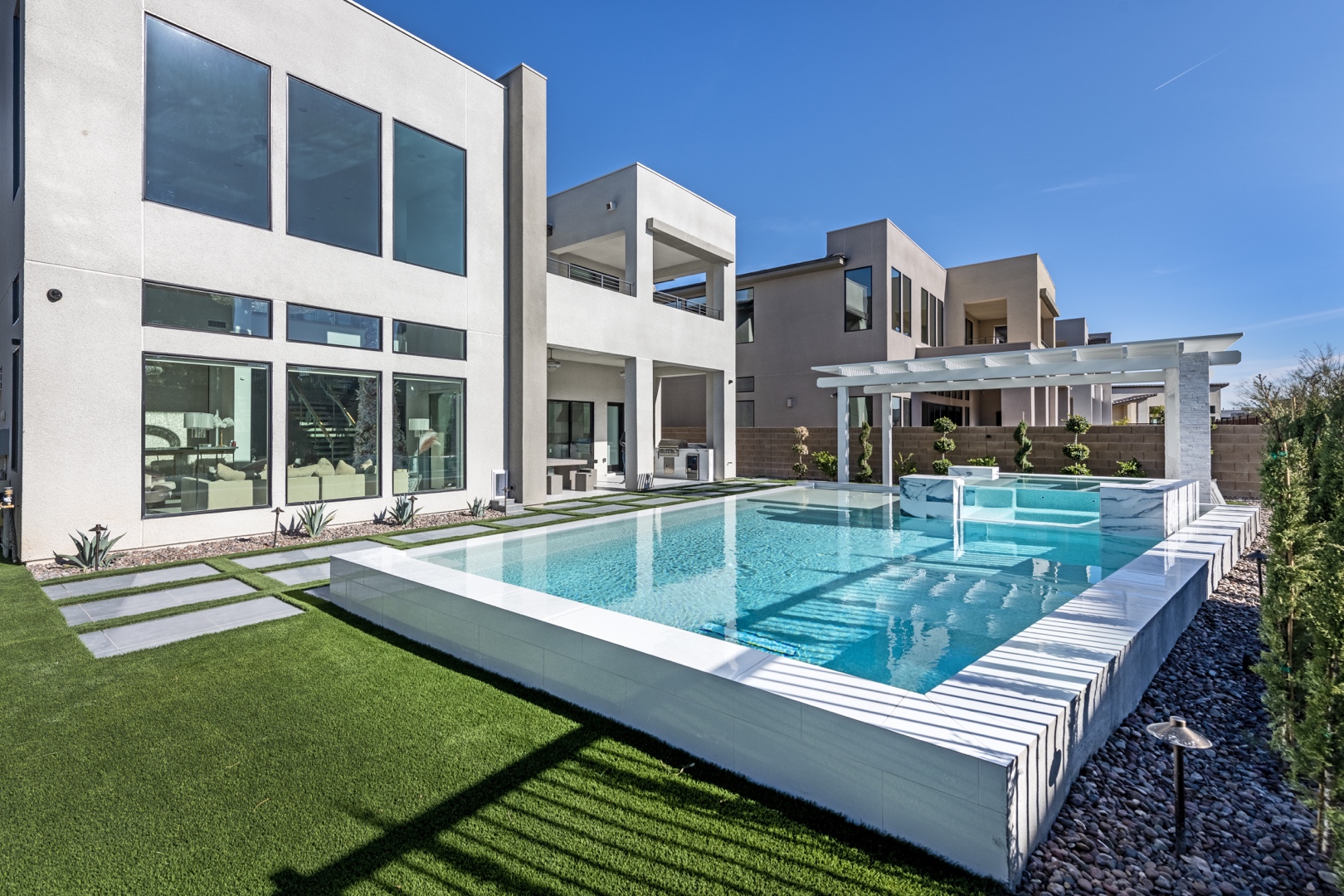
A Las Vegas landscape must perform under conditions that defeat ordinary planting plans: intense reflected heat, alkaline soil, wind, low humidity, and long stretches without meaningful rainfall. The best plants for Las Vegas xeriscape are not simply plants that survive those conditions. They should also contribute structure, color, privacy, and a polished sense of arrival around the home, pool, and outdoor living areas.
For a premium property, xeriscape should never read as sparse or improvised. With thoughtful plant selection, grading, irrigation zoning, and architectural placement, a water-wise landscape can feel composed, generous, and distinctly tailored to the way you use your backyard.
Xeriscape Is a Designed Plant System, Not a Rock Yard
A successful xeriscape reduces unnecessary water use without sacrificing visual richness. That distinction matters. Decorative rock alone may lower irrigation demand, but it also stores and reflects heat, can make a yard feel flat, and does little to create the shade and softness that make an exterior environment inviting.
The stronger approach layers canopy trees, screening shrubs, sculptural accents, flowering perennials, and carefully scaled ground planes. Each plant is selected for a particular role and placed according to its mature size, water requirements, sun exposure, and relationship to hardscape features.
A south-facing courtyard, for example, may need shade-producing trees and heat-tolerant understory planting. A narrow side yard may need upright evergreen screening. Around a pool, plant choices must also account for splash, debris, views, lighting, and clear circulation. A plant that works beautifully in an open desert garden may not be the right choice six feet from a spa or outdoor kitchen.
Best Plants for Las Vegas Xeriscape: Start With Structure
The most enduring xeriscape plans begin with trees and large shrubs. These larger forms give a property depth, soften masonry and perimeter walls, frame views, and make outdoor spaces usable through more of the year.
Desert Willow for Refined Seasonal Color
Desert willow is one of the most compelling small trees for Las Vegas properties. Its airy foliage creates filtered shade rather than a heavy canopy, while its trumpet-shaped flowers bring color through the warm season. It is especially effective near patios, seating zones, and garden edges where a softer silhouette is desired.
Because its branching can be naturally loose, desert willow benefits from informed pruning and placement. It is best used as a feature tree rather than relied upon for dense screening.
Palo Verde for Canopy and Desert Character
Palo verde offers a more unmistakable desert identity, with green bark, delicate foliage, and a bright spring bloom. It can provide valuable shade over broad planting areas and works well in larger front yards or along the outer edges of a backyard.
Its canopy needs room, and its litter may be undesirable directly beside a pool deck or frequently used dining area. Proper spacing from walls, paving, and utility lines is part of a responsible plan. The goal is to gain its shade and visual presence without creating future maintenance conflicts.
Texas Mountain Laurel for Privacy and Fragrance
Texas mountain laurel is a handsome evergreen choice for properties that need screening with a more formal appearance. Its dark green leaves retain visual weight year-round, and its spring flowers bring a distinctive grape-like fragrance. It grows more slowly than many common hedge plants, which is often an advantage for clients who prefer a landscape that will not quickly outgrow its intended proportions.
Use it where patient, long-term structure matters more than immediate maximum height. It is particularly effective along walls, gates, and view boundaries.
Shrubs That Hold Their Form in Desert Heat
Shrubs create the middle layer that ties trees and accents together. In a well-planned landscape, they can screen utilities, soften retaining walls, guide movement through the site, and maintain color when flowering plants are between bloom cycles.
Texas sage remains a standout for its silvery foliage and purple bloom flushes. It thrives in full sun and looks especially elegant when massed in broad drifts instead of planted as isolated specimens. Its soft gray-green color pairs naturally with warm stone, charcoal masonry, and contemporary pool finishes.
Hopseed bush is a useful choice for taller green screening. Its narrow profile and tolerance for desert conditions make it appropriate for side yards and perimeter plantings where privacy is a priority. It requires periodic pruning if a clean hedge line is desired, but it is more visually substantial than many low-water alternatives.
Jojoba offers evergreen texture and a natural desert character, while brittlebush can provide silver foliage and bright yellow flowers in more informal planting areas. Both work best when their habit is allowed to feel intentional rather than overly sheared. A luxury xeriscape should balance control with enough natural variation to avoid looking manufactured.
Sculptural Accents Bring the Landscape Into Focus
Architectural plants are where a xeriscape gains much of its personality. They create focal points at entries, beside water features, around fire elements, and at the corners of patios. These plants are often used sparingly, which makes selection and placement especially important.
Red yucca is a reliable favorite. Despite its name, it is not a true yucca, and its graceful, coral-pink flower spikes add movement above tidy clumps of narrow foliage. It is effective along walkways, in poolside beds set back from traffic, and in mass plantings that need a lighter texture.
Agaves bring a bold, sculptural profile that complements contemporary architecture and clean-lined hardscapes. Their sharp leaf tips require thoughtful placement. They should not be positioned where guests brush past them, near children’s play areas, or at the edge of a narrow path. Specimen agaves can be exceptional near an entry or view corridor when given enough room to be appreciated safely.
For a softer but equally dramatic alternative, consider desert spoon, also called sotol. Its fountain-like form holds up well against heat and wind, and it can add a strong vertical presence without the dense mass of a shrub. Yucca rostrata is another refined option for focal locations, valued for its blue-gray foliage and distinctive trunk as it matures.
Lantana can provide dependable warm-season color, particularly in sunny beds where a low, spreading plant is needed. Choose placement carefully around pool environments, since flowering plants may attract pollinators. That is not necessarily a drawback, but it should be considered in relation to lounge areas and outdoor dining.
Design for Shade, Views, and How the Property Is Used
Plant selection should follow the larger outdoor plan, not precede it. Before specifying a tree or accent plant, assess where afternoon heat falls, which views deserve framing, where privacy is needed, and how people move between the house, pool, kitchen, and gathering areas.
A planting bed around a fire feature needs lower plants that preserve sightlines and withstand radiant heat. Near a water feature, taller foliage can create a sense of enclosure, but plant debris and access for maintenance should remain part of the decision. In a front landscape, stronger vertical forms may establish curb appeal while lower planting protects visibility at drives and walkways.
Lighting also changes the calculation. The most successful night landscapes use plants with branching, texture, or silhouettes that respond beautifully to uplighting. A palo verde canopy, a mature desert willow, or a group of agaves can become a focal point after sunset without adding another built element.
Water-Wise Does Not Mean Water-Free
Even the toughest desert-adapted plant needs appropriate irrigation during establishment. The first one to two growing seasons are critical, particularly when planting occurs before the height of summer. Deep, less frequent irrigation generally encourages stronger root systems than shallow daily watering, although exact schedules depend on plant type, soil conditions, exposure, and season.
A high-quality xeriscape separates plants into hydrozones so species with similar water needs receive similar irrigation. Trees, shrubs, accents, and seasonal color should not automatically share one schedule. Drip irrigation should be accessible, adjustable, and installed with future maintenance in mind rather than buried beneath decorative stone without a clear service strategy.
Mulch and rock finishes deserve equal care. Smaller decorative gravel can suit contemporary designs, while boulders and specimen plants may create stronger focal moments. However, too much exposed rock can intensify heat around plants and occupied spaces. Plant mass, shade, and material color must be balanced across the entire site.
The Value of a Master-Planned Plant Palette
The right xeriscape plant palette is not a catalog of drought-tolerant choices. It is a coordinated composition that supports the home’s architecture, handles Las Vegas conditions, and improves the experience of being outdoors. Green Planet Landscaping & Pools approaches planting as one part of an integrated environment, coordinated with grading, masonry, pools, lighting, irrigation, and long-term maintenance considerations.
When each plant has a purpose, a water-wise landscape becomes more than a responsible choice. It becomes a setting that protects your investment, cools the spaces where people gather, and grows more distinctive with every season.