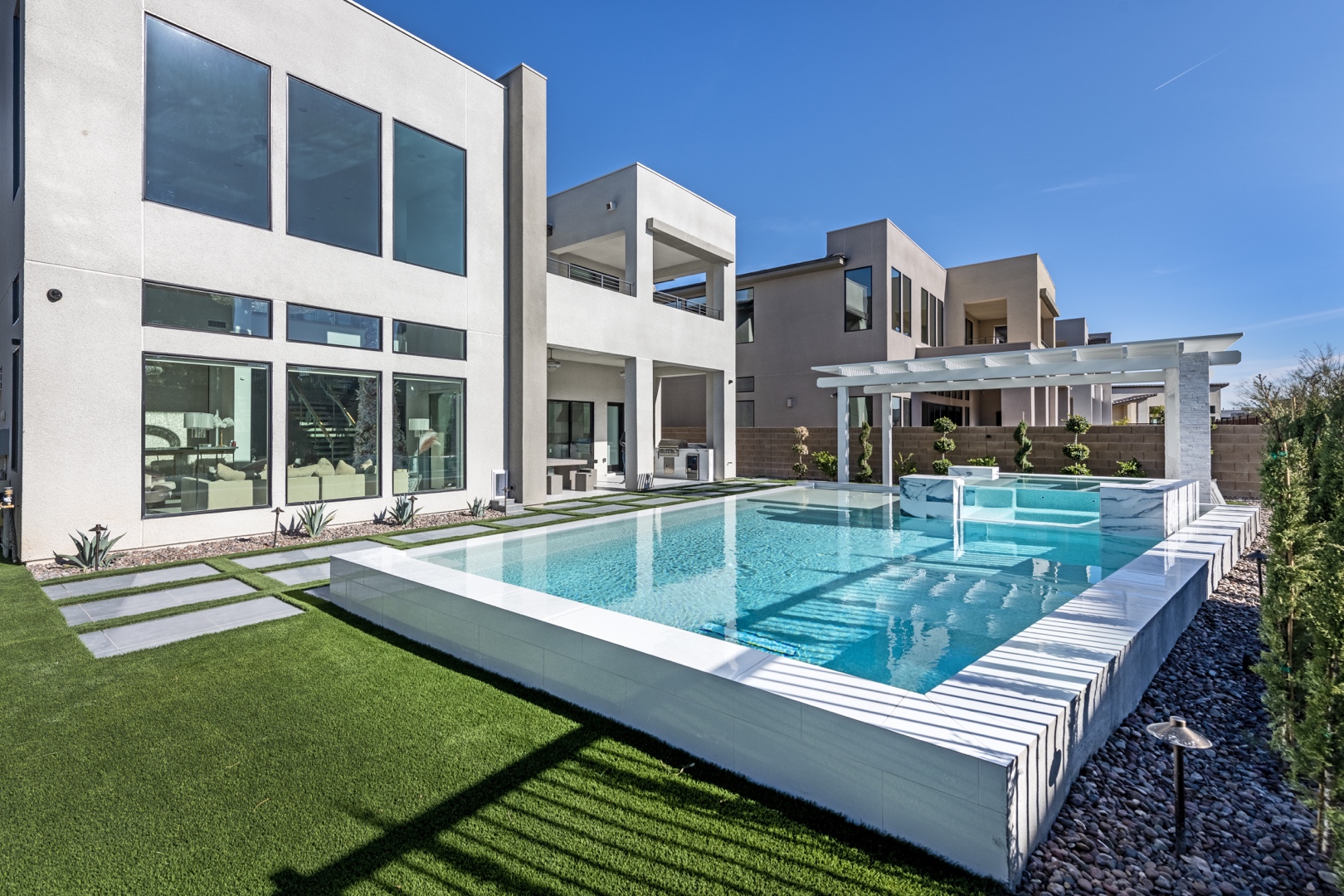
A fire feature should do more than fill an empty corner of the patio. The right custom fire pit design Las Vegas homeowners choose becomes a natural gathering place – a warm focal point for quiet evenings, family celebrations, and entertaining beneath desert skies. It should also feel intentional, as if it has always belonged to the architecture, poolscape, planting, and pathways around it.
That level of integration is what separates a built-in fire pit from a standalone feature. In Las Vegas, where outdoor living can extend through much of the year, a fire pit deserves the same thoughtful planning as a pool, outdoor kitchen, or covered patio. Materials must hold up to sun exposure, heat, wind, and daily use. Clearances, fuel connections, drainage, and local requirements must be addressed before construction begins. Most importantly, the feature needs to fit the way the property owner actually lives outdoors.
Custom Fire Pit Design in Las Vegas Starts With the Setting
The most successful fire pits are designed as part of a larger outdoor environment, not selected from a catalog after the landscape is complete. Before determining shape or finish, a professional design team considers how people move through the space. Where do guests arrive? Is the fire pit meant to serve a pool deck, outdoor kitchen, lounge area, or detached seating court? Will it be viewed from inside the home?
A fire feature beside a pool, for example, may need a lower profile to preserve views across the water and avoid disrupting the clean geometry of the deck. A fire pit serving a large entertaining area may need generous built-in seating and a broader footprint. On a compact backyard, a linear fire feature or a fire table may provide atmosphere without consuming valuable circulation space.
Scale matters as much as style. An oversized fire pit can make a refined yard feel crowded, while a small feature can disappear within a substantial hardscape installation. Photorealistic design renderings help property owners see those proportions before construction, including how the flame, seat walls, paving, lighting, and landscape materials will work together after dark.
Choose the Fire Feature That Matches How You Entertain
There is no single correct fire pit configuration. The best choice depends on the desired experience, available space, maintenance expectations, and the character of the home.
Gas Fire Pits for Controlled, Everyday Use
For many luxury properties, natural gas or propane is the preferred fuel source. A gas fire pit starts quickly, burns cleanly, and can be adjusted with a keyed valve, electronic ignition, or integrated control system. It is especially well suited to homeowners who want the option to enjoy a fire feature on a regular basis without handling firewood or cleaning ash.
Gas also allows more flexibility in design. A round bowl can create an intimate conversation setting, while a rectangular fire pit can complement contemporary architecture and structured pool lines. Decorative fire media, including lava rock, fire glass, or ceramic logs, adds another layer of visual customization. The choice should support the overall palette rather than compete with it.
Wood-Burning Fire Pits for a Traditional Experience
A wood-burning fire pit offers the familiar crackle, aroma, and ritual that some homeowners value. It can be a compelling choice for a rustic or naturalistic landscape, particularly when the space is designed for occasional gatherings rather than frequent use.
The trade-off is greater maintenance and more careful consideration of smoke, ash, storage, wind exposure, and placement. In a tightly configured residential setting, wood smoke may be less practical than a gas installation. A qualified design-build contractor can help determine whether a wood-burning feature is appropriate for the property and local conditions.
Fire Tables and Linear Features for Flexible Spaces
A fire table brings the flame closer to dining or lounge seating and can work well in smaller patios. Linear fire features are often selected for modern homes, elevated planters, retaining walls, and poolside settings where a low, architectural flame is desired. These options may not replace the communal experience of a traditional circular fire pit, but they can create a more refined visual statement when gathering space is limited.
Materials Should Be Beautiful Under Desert Conditions
Las Vegas heat is demanding. Materials that appear attractive in a showroom may not perform well after years of intense ultraviolet exposure, rapid temperature changes, and regular contact with water, sunscreen, and outdoor cleaning products. A premium fire pit is built around materials chosen for both appearance and long-term durability.
Natural stone offers depth and permanence, with each selection bringing a different character to the space. Porcelain and high-quality pavers can provide a crisp, contemporary finish with consistent color and low maintenance. Cast concrete creates tailored forms and can be finished in a range of textures, though proper construction practices are essential to manage heat and reduce the risk of cracking. Masonry veneer can be an excellent design tool when installed over a properly engineered structure.
The cap around the fire pit deserves particular attention. It must be comfortable enough for guests to rest a hand or set down a drink while remaining appropriate for the heat generated by the burner. Seat-wall heights, coping thickness, and the relationship between the fire opening and surrounding furniture should all be resolved during design, not improvised in the field.
Safety, Engineering, and Permitting Are Part of the Design
A polished outdoor feature still depends on disciplined construction behind the finish materials. Gas line sizing, burner specifications, ignition components, ventilation, drainage, structural support, and required clearances all influence the final result. These are not details to leave until the last stage of a project.
Fire pits must also be located with respect to structures, patio covers, vegetation, pool equipment, utility lines, and property conditions. Wind patterns matter in the Las Vegas Valley, particularly on exposed lots or elevated properties. A beautiful flame that is constantly disrupted by wind will not deliver the comfort or atmosphere the homeowner expected.
Permit and code requirements can vary based on the scope of work and the feature’s location. When a fire pit is part of a complete backyard renovation, it may also intersect with plans for electrical work, gas service, masonry, pools, and patio structures. Working with a licensed, bonded, and insured design-build team gives property owners one accountable partner to coordinate those components, prepare documentation, and supervise the work to established construction standards.
Design the Seating Area, Not Just the Flame
The flame attracts attention, but the surrounding space determines whether people stay. A fire pit should be designed around conversation distance, comfortable seating, and clear access from the home and other outdoor amenities. As a general principle, enough room should remain for chairs to be pulled out and for guests to move around the seating area without crossing too close to the fire feature.
Built-in seat walls create definition and can make efficient use of space, especially when paired with movable lounge chairs. They are ideal for properties where the fire pit anchors a larger patio or pool deck. Loose furniture provides more flexibility and a softer, resort-style feel, but it needs to be selected with the feature’s dimensions in mind.
Lighting is another important layer. Subtle path lighting improves safety, while carefully placed landscape lighting can frame nearby specimen plants, textured walls, or water features. The goal is not to overpower the fire. It is to preserve enough ambient light for people to navigate the space comfortably while allowing the flame to remain the visual center.
A Cohesive Fire Pit Adds Value Beyond the Patio
A custom fire pit can strengthen the entire outdoor living environment when it is planned alongside the surrounding hardscape, landscaping, pool, and furnishings. Repeating a stone detail from the home’s exterior, echoing the pool coping in the fire pit cap, or aligning the feature with a major architectural axis creates the visual order that makes a property feel considered and complete.
Green Planet Landscaping & Pools approaches these projects as part of a master-planned outdoor environment, combining custom design, construction coordination, specialized trades, and code-aware project management. That approach helps ensure the fire feature is not merely attractive on installation day, but durable, functional, and appropriate for the investment being made in the property.
The best place to begin is with the evening you want to create: a calm poolside retreat, a lively entertaining court, or a private place to gather when the desert air turns cool. When the design is built around that experience, the fire pit becomes more than a feature. It becomes the place people remember.