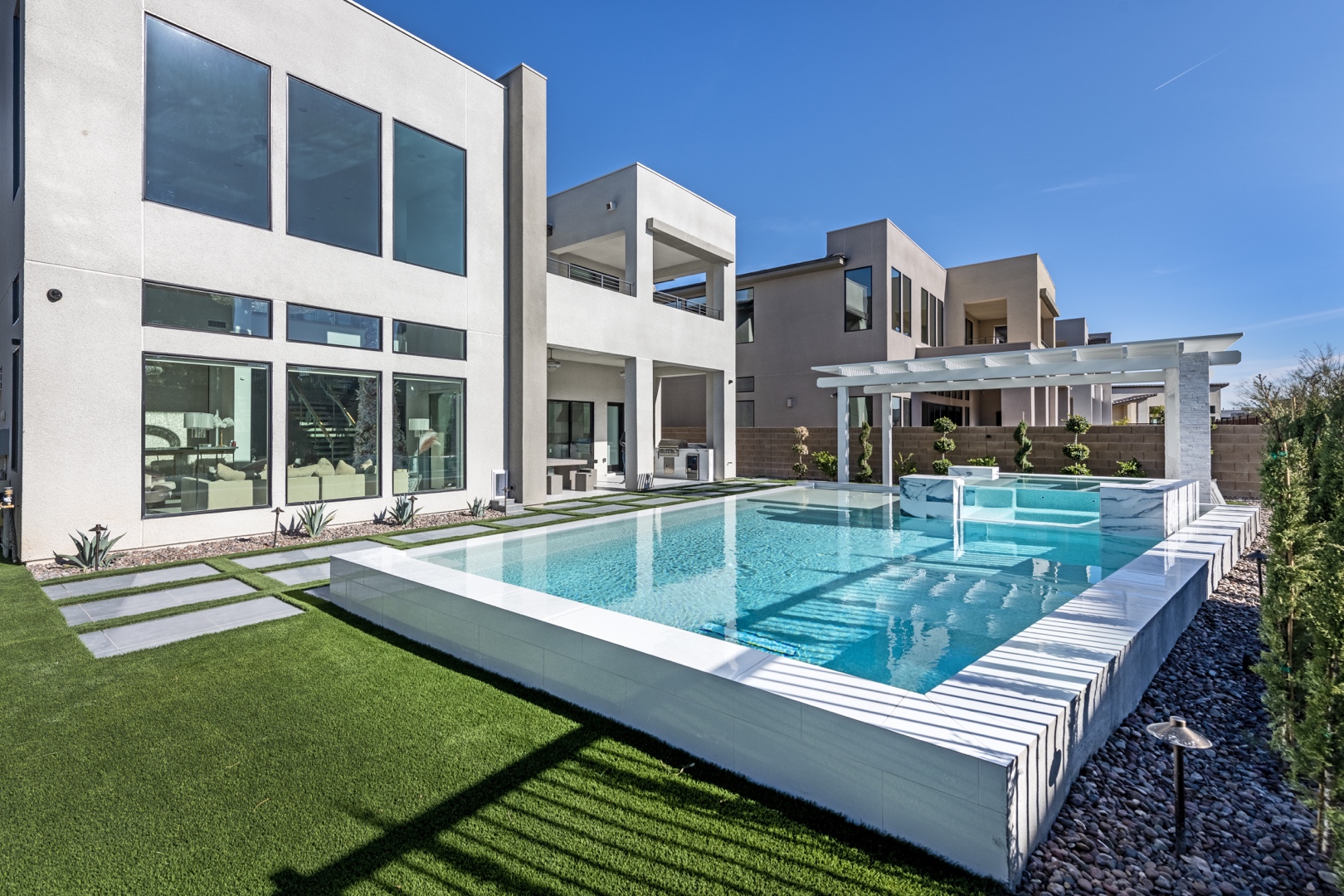
A waterfall can turn a quiet Las Vegas backyard into a private resort setting, but only when it looks and performs as though it belongs there. Backyard waterfall design Las Vegas homeowners invest in should account for intense sun, hard water, wind, pool circulation, architecture, and the way the family actually uses the space. A dramatic rock feature may be beautiful in a rendering, yet feel oversized beside a modest patio or create more splash than a nearby seating area can tolerate.
The strongest water features are not treated as decorative add-ons. They are planned as part of a complete outdoor environment, with the pool, spa, hardscape, planting, lighting, and views considered together from the first design conversation.
Start With the Experience You Want to Create
Before selecting boulders, tile, or a pump, define what the waterfall needs to do for the property. Some homeowners want the gentle sound of moving water to soften traffic noise and create a more relaxing poolside retreat. Others want a visual centerpiece that can be seen from the great room, outdoor kitchen, or second-story balcony. For a family pool, a waterfall may also create an engaging play feature without making the entire design feel casual.
The answer affects every design decision. A low, broad sheet fall produces a polished, architectural look and a quieter water sound. A series of cascades through natural stone creates movement, texture, and a more substantial acoustic presence. Scuppers set into a raised masonry wall offer clean lines that complement contemporary homes, while a grotto-style feature can provide shade, depth, and a sense of discovery around a larger pool.
Scale matters as much as style. A waterfall should have enough visual weight to hold its own against a two-story residence, expansive pool deck, or outdoor pavilion. At the same time, it should not block mountain views, crowd circulation paths, or overwhelm the architecture. Photorealistic design renderings are especially valuable here because they let homeowners assess height, sightlines, material color, and the feature’s relationship to the pool before construction begins.
Backyard Waterfall Design Las Vegas Properties Can Support
Las Vegas is not a forgiving setting for poorly planned water features. High temperatures increase evaporation, wind can push spray onto decking and windows, and mineral-heavy water can leave visible deposits on stone, tile, and equipment. These factors do not rule out a waterfall. They make proper engineering, material selection, and maintenance planning essential.
A well-designed feature begins with controlled water movement. The lip, fall height, basin placement, and pump output should work together to create the intended sound and appearance without excessive splash-out. This becomes particularly important near an outdoor dining area, fire feature, or sliding glass door. A waterfall that sounds peaceful during a walkthrough can become disruptive if its flow is too forceful or its equipment is undersized and strained.
Equipment access deserves the same attention as the visible stonework. Pumps, valves, filters, and automation components need to be located where they can be serviced without disrupting finished patios or landscape beds. When a waterfall is integrated with a pool or spa, circulation design must be coordinated carefully so the feature performs reliably without compromising filtration, heating, or water chemistry.
Material choices should reflect both the home’s design language and Southern Nevada conditions. Natural stone can deliver timeless character, but the selected pieces must be placed with a trained eye for stability, proportion, and water flow. Porcelain tile, glass tile, masonry, and cast elements can create a more refined modern presentation. In either direction, durable substrates, quality waterproofing, properly detailed coping, and disciplined installation protect the investment behind the finished appearance.
Make the Waterfall Part of a Master-Planned Backyard
A water feature has greater impact when it is connected to the rest of the outdoor living space. The best location may be at the pool’s far edge, where it establishes a focal point from inside the home. On another property, it may belong beside an elevated spa, allowing water to spill toward the pool while visually linking two distinct elevations. In a courtyard setting, a compact wall fountain may be more appropriate than a large pool waterfall.
Consider how the feature works after sunset. Thoughtful underwater and landscape lighting can highlight falling water, give stone texture depth, and make the pool area feel more inviting without creating glare. The lighting plan should also support safe movement across steps, deck transitions, and nearby walkways.
Planting creates the transition between built materials and the surrounding landscape. In Las Vegas, that does not mean trying to imitate a lush tropical setting with thirsty plant material. A water-smart palette can frame a waterfall beautifully with sculptural desert plants, ornamental grasses, flowering accents, and carefully placed specimen materials. The goal is contrast and softness without creating an irrigation burden that conflicts with the property’s long-term water strategy.
Hardscape selection also changes the result. Cool-toned contemporary pavers, natural flagstone, textured concrete, and porcelain decking each create a different backdrop for water and stone. Slip resistance, heat retention, drainage, and the relationship between deck elevations and the pool edge should be resolved before installation. These are construction decisions, not finishing touches.
Choose Sound and Movement With Care
Homeowners often focus on how a waterfall looks in a still image. In daily life, its sound may matter more. Water falling from a high point into a deep basin has a sharper, louder note. Water rolling over a wider surface produces a lower, softer sound. Multiple small drops can create a layered effect that feels natural, while a single formal descent can feel more tailored and architectural.
There is no universal right answer. A property near a busy street may benefit from a feature with enough sound to provide privacy. A backyard designed for intimate dinners may call for a quieter circulation pattern. If the waterfall sits close to bedrooms or a neighbor’s wall, sound control becomes even more important.
Variable-speed equipment and automation can provide useful flexibility. Homeowners may prefer a stronger water flow during a weekend gathering and a gentler setting during a quiet evening. The system should be selected and programmed around that lifestyle, rather than designed for a single operating condition.
Protect the Investment During Construction
Luxury outdoor projects rely on more than an attractive concept. They require accurate site evaluation, engineered details where needed, proper drainage, code awareness, and skilled execution across multiple trades. Water features involve structural work, plumbing, electrical coordination, masonry, waterproofing, finish materials, and equipment installation. When these elements are handled as disconnected scopes, quality control becomes more difficult and the final environment can lose cohesion.
A design-build team can coordinate the waterfall with pool construction, patio grades, retaining walls, irrigation, lighting, and outdoor living elements before crews begin work. This approach also provides clearer accountability for details that are easy to overlook, such as equipment placement, drainage channels, access panels, and transitions between the water feature and adjacent finishes.
Green Planet Landscaping & Pools, Inc. approaches custom outdoor environments through this level of coordinated planning, combining design visualization, licensed construction expertise, permit management, and on-site supervision. For homeowners making a significant property investment, that coordination helps preserve both the design intent and the long-term performance of the finished space.
Plan for Lasting Beauty, Not Just Opening Day
Every waterfall needs routine attention, particularly in a desert environment. Water chemistry should be managed carefully to reduce scale buildup. Filters and pumps require regular service, and stone or tile may need periodic cleaning based on the finish and water conditions. Properly designed access makes this work far less intrusive.
It is also wise to be realistic about water use. A recirculating waterfall does not continuously consume water in the way a non-contained feature does, but evaporation and splash still require monitoring. A design that controls overspray, uses correctly sized equipment, and integrates with a responsible pool-maintenance plan is both more practical and more sustainable for Las Vegas.
The right waterfall should feel inevitable in its setting: proportioned to the home, engineered for the climate, and built to enhance every hour spent outdoors. Begin with the experience you want your backyard to deliver, then let disciplined planning turn that vision into a water feature that remains compelling long after the first reveal.